Family
Buying From a Large Monument Company? Five Hands Your Order Passes Through
A memorial order moves through a counselor, a drafter, a plant, a setting crew and a warranty desk, and each one locks a different decision at a different moment.
Family·Osman Duraklar
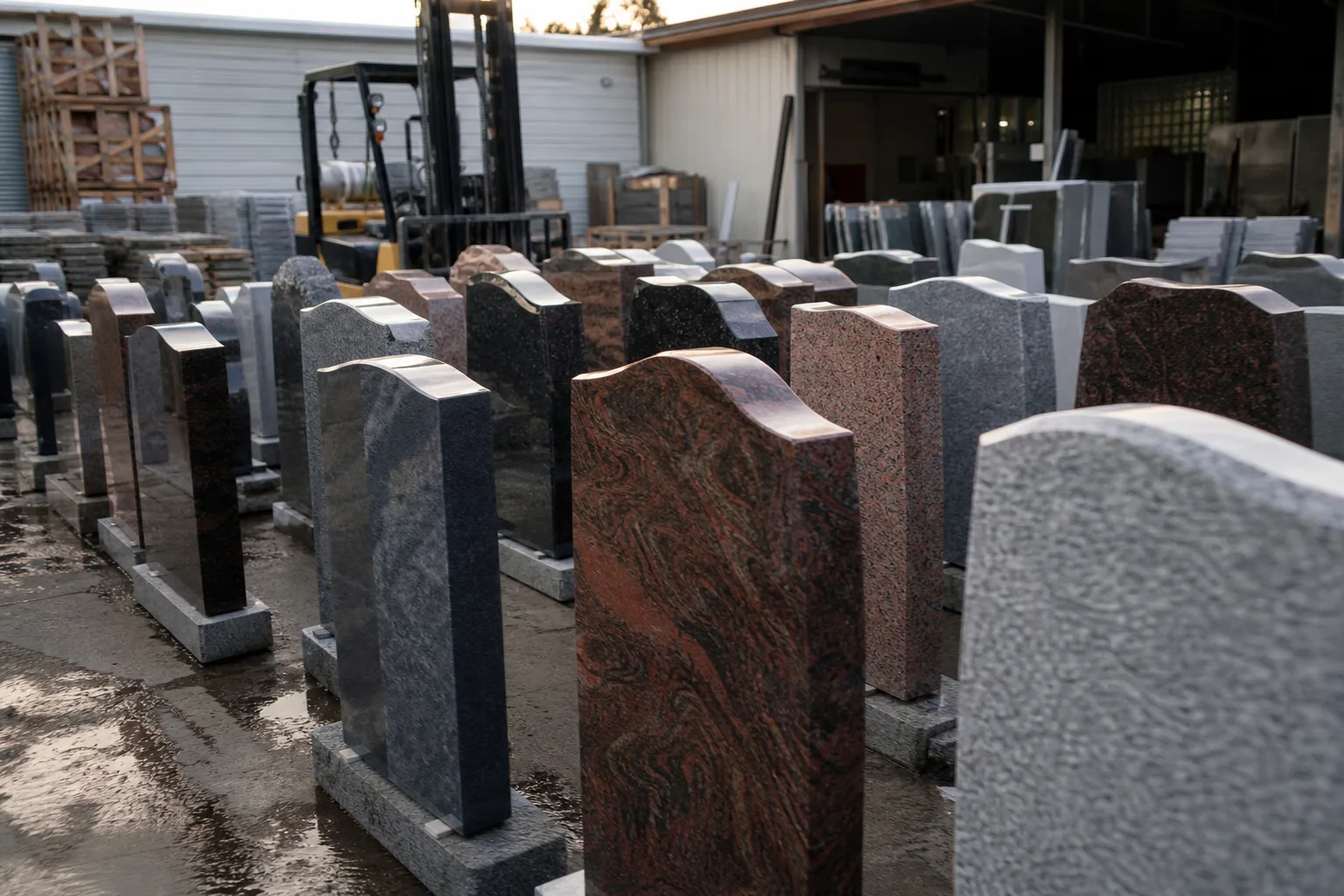
A memorial order passes through more hands than the person signing it ever meets, and at a larger monument company that distance is the whole point of the business model. The counselor sells, a drafting department lays out the face, a plant somewhere else cuts and blasts it, a two-person crew sets it, and a service desk fields the call years later when a date has to be added. Each of those people controls a different decision, and each decision stops being changeable at a different moment. Knowing which moment belongs to whom is most of the protection a buyer has.
The counselor, and whether anything they promise reaches the plant
The person across the desk is usually a salesperson with a catalog and a quoting system, not a designer, and the question worth asking plainly is how their notes travel. At a company running several locations off one production facility, the counselor types a work order into a shared system, and anything discussed aloud that does not get typed does not exist. Verbal agreements about a particular shade of granite, a hand-carved detail, or a date the family needs for an unveiling are the usual casualties. Ask for the written order to be read back before anyone signs it.
Ask also who the counselor is employed by. Some funeral homes sell memorials as a broker, taking an order and placing it with a monument company that the family never contacts directly, which adds a link to the chain and a markup that is not always disclosed on the invoice. The Federal Trade Commission is responsible for the rules governing how funeral goods and services are presented and priced to consumers, and the practical version of that protection is an itemized paper quote. If a line reads simply as a package, ask what the memorial alone costs.
The drafter, and the proof that ends the argument
Layout is done by a drafting department, often one or two people serving every branch, working from the counselor's notes and a template library. What they send back is a proof: a scaled drawing showing lettering style, size, spacing, surname placement and any emblem or etching. That proof is the document the plant builds from, and approval of it is the point where the design becomes physical. Read it for the things that are easy to skim past, which are spelling of full given names, the order of dates, and whether space has been reserved on the companion side for a second inscription.
Shops that build custom headstones rather than pulling from a fixed catalog will generally revise a proof more than once at no charge, and it is reasonable to ask how many rounds are included before revisions start billing. Ask too whether the proof shows the actual stone or an idealized rendering, because granite with heavy veining does not always carry fine lettering the way a clean drawing suggests.
The plant, and where the granite actually comes from
Color names in a catalog describe quarries, not paint chips, and the same named gray can arrive from two different blocks with visibly different grain. A larger provider's advantage here is inventory: it buys in volume, holds slabs on the yard, and can show a buyer the specific stone rather than a sample tile. That is worth asking for directly. Lead times quoted in weeks usually combine three separate queues, which are quarry supply, shop scheduling and cemetery access in frozen months, and a single round number from a salesperson is often just the middle of a range nobody has broken apart.
Press on which part of the number is soft. A shop holding the granite already can commit to its own production window with some confidence; a shop waiting on a block from a quarry is quoting someone else's schedule. The honest answer is frequently a span of a couple of months rather than a date, and a provider willing to say so is easier to plan around than one who names a day and misses it.
The setting crew, and the foundation nobody quotes
Installation is its own trade, and it answers to the cemetery rather than to the company that sold the stone. The crew pours or sets a foundation to the cemetery's specification, works within its permit and equipment rules, and schedules around burials and ground conditions. Foundation charges are commonly billed by the cemetery, not the monument dealer, which is why a quote that looks complete can be followed by a second invoice. Ask for both numbers before signing, and ask who files the permit, because a dealer that handles it routinely for that cemetery will move faster than one visiting for the first time.
The service desk, and the call that comes twelve years later
Second inscriptions, resetting after ground settlement and cleaning all fall to whoever is still answering the phone a decade on, and this is the quiet argument for a larger company with multiple locations and a plant it owns. Ask what the warranty covers in writing, whether it transfers to family members who did not sign, and whether adding a date later requires removing the stone or can be cut in place at the grave. The answer shapes a cost that is years away but entirely predictable.
The decisions that lock, in order, are the written order, the approved proof, the selected block and the poured foundation. Everything before each of those is negotiable, and asking which stage an order has reached is a question any of these five people can answer in a sentence.