Commerce
Bundling Two SKUs Into One? How Kitting Gets Priced and What Holds the Price
Assembly work rarely sits inside a standard pick-and-pack rate. Here is how per-unit and per-hour pricing compare, and which documents keep the quoted number from drifting.
Commerce·Osman Duraklar
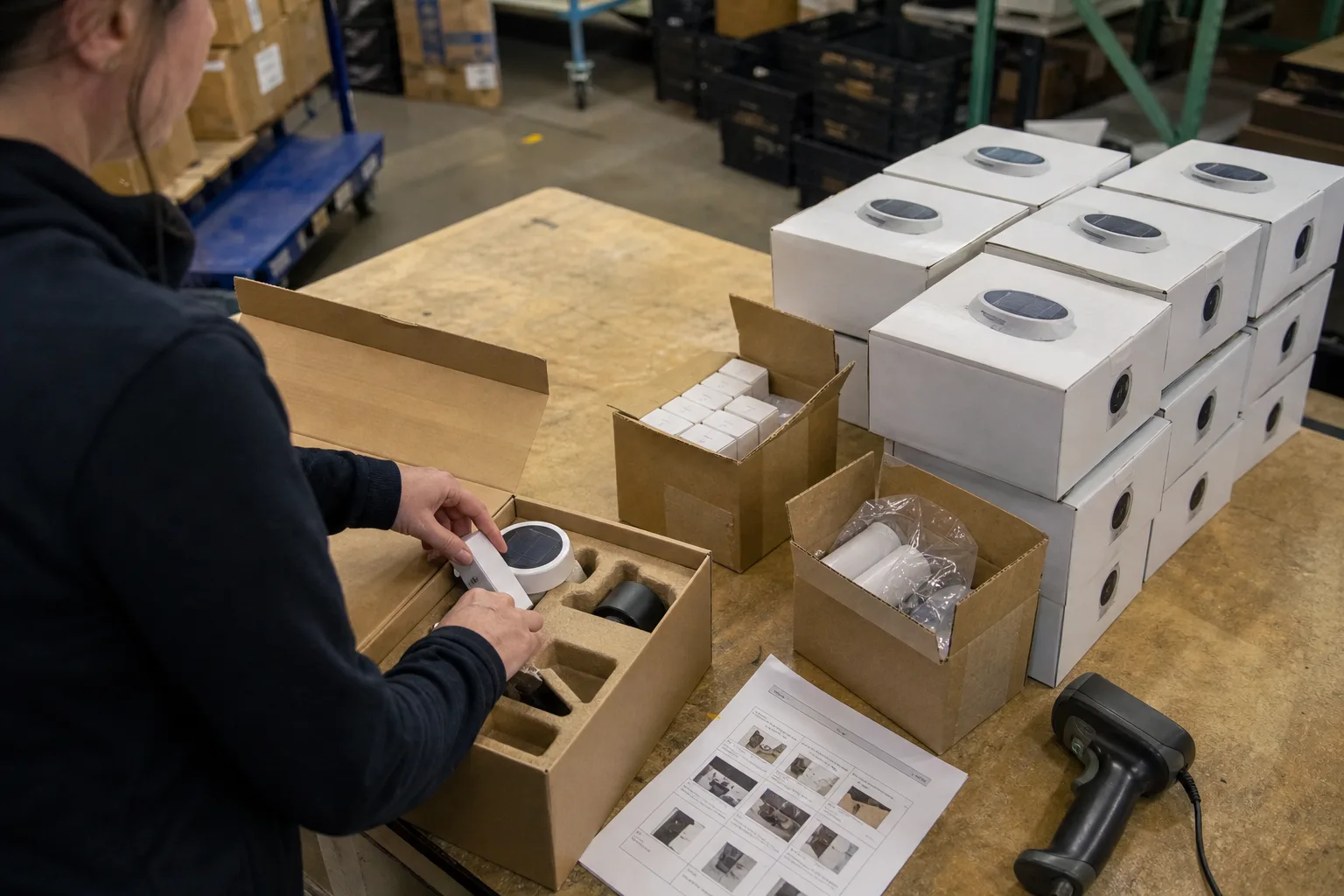
A fulfillment quote almost always prices the ordinary motion of a box leaving a building: receiving, storage by pallet or bin, a pick fee, a pack fee, and freight passed through at whatever the carrier charges that week. Assembly is a different motion. The moment two items become one sellable unit, with an insert, a sleeve, a new barcode and a count that has to reconcile, you have left the pick fee behind. That work is quoted separately, or it is quoted badly, and the gap between those two outcomes is usually visible on the first invoice rather than in the proposal.
Per-unit and per-hour are two different bets
Most assembly work is offered one of two ways. A per-unit rate gives you a fixed cost per completed kit, which makes forecasting easy and puts the risk of a slow line on the provider. A per-hour rate bills labor as it is spent, usually in a team block with a stated headcount, which is cheaper when the job runs clean and uncomfortable when it does not. The honest answer to which is better depends on whether the components arrive in a predictable state. Loose goods in mixed cartons burn minutes that nobody priced.
Providers know this, which is why a per-unit quote often carries conditions buried a page down: components delivered case-packed, a minimum run size, a stated number of touches per kit. Break a condition and the rate converts to hourly, sometimes retroactively. That clause is not a trap so much as a disclosure, and it is worth reading closely enough to say out loud what happens when a component ships late and the line stands idle for forty minutes.
What changed in the rate card, and why
The shift of the last few years is that warehouse systems now time-stamp individual tasks rather than whole shifts. Scanners record when a work order opened, when each component was consumed and when the finished kit was put away, which means a provider can quote from measured cycle times on a comparable job instead of a manager's recollection. The practical effect is that rate cards have gotten longer and more specific, with separate lines for insert placement, shrink wrapping, label application and rework, where there used to be one blended number covering all of it.
Longer rate cards read as nickel-and-diming until you compare two bids. A single blended assembly rate hides whether your kit is being priced as three touches or seven, and it gives you nothing to argue with later. A provider selling fulfillment kitting services on an itemized card is telling you exactly which motions it believes your job contains, and that is a claim you can test against your own product. Demand pressure pushed the same direction. More brands moved assembly closer to the customer as sourcing patterns shifted, and domestic capacity got priced with more precision as a result.
The documents that keep a number from drifting
Three pieces of paper do most of the work. The first is a bill of materials that lists every component by its own SKU, with quantities per kit and a named supplier, because a kit priced without a BOM is priced on a verbal description that two people remember differently. The second is a written work instruction, ideally with photographs of the finished unit from the angles that matter, covering orientation, insert placement and what counts as a cosmetic reject. The third is a short scope-change form that both sides sign before extra labor is performed rather than after it appears on a statement.
Labeling deserves its own line in that instruction. If the bundle carries a country-of-origin statement, a claim about where it was made, or a price comparison on the sleeve, the content of that claim is regulated territory, and the Federal Trade Commission is the body responsible for how such claims are presented to consumers. The warehouse applies what you specify. It does not vet the wording, and the instruction sheet is where responsibility for that wording gets recorded plainly enough that nobody has to reconstruct it from email months later.
Reading the first invoice against the quote
Set aside an hour after the first completed run and put the invoice beside the rate card line by line. You are looking for four things: touches billed that the work instruction did not call for, a component count that disagrees with the BOM, storage charged on finished kits and components at the same time, and any minimum that triggered because the run came in under volume. Most of what you find will be legitimate and explainable. The value is in asking the questions in month one, while the provider still expects to be asked and the answers are easy to retrieve.
Ranges are the honest form of most of these answers. Assembly is priced somewhere between a few cents and a couple of dollars a unit depending on touches, run size, component condition and labor market, and any provider quoting a single confident figure before seeing your components is quoting a guess dressed as a price. Ask what the figure assumes. The assumptions are the quote.
The useful habit is treating the kit as a product with its own cost structure rather than a packaging decision made after the fact. Price it that way at the start, document it on one page, and the invoice becomes something you check rather than something you absorb.