Law
Adjuster Calling Every Day? The Rules That Decide Whether You Need Counsel
Most injury problems settle without a lawyer, but the dividing line is set by deadlines, fee rules and evidence, not by how serious the first week feels.
Law·Harriet Bosworth
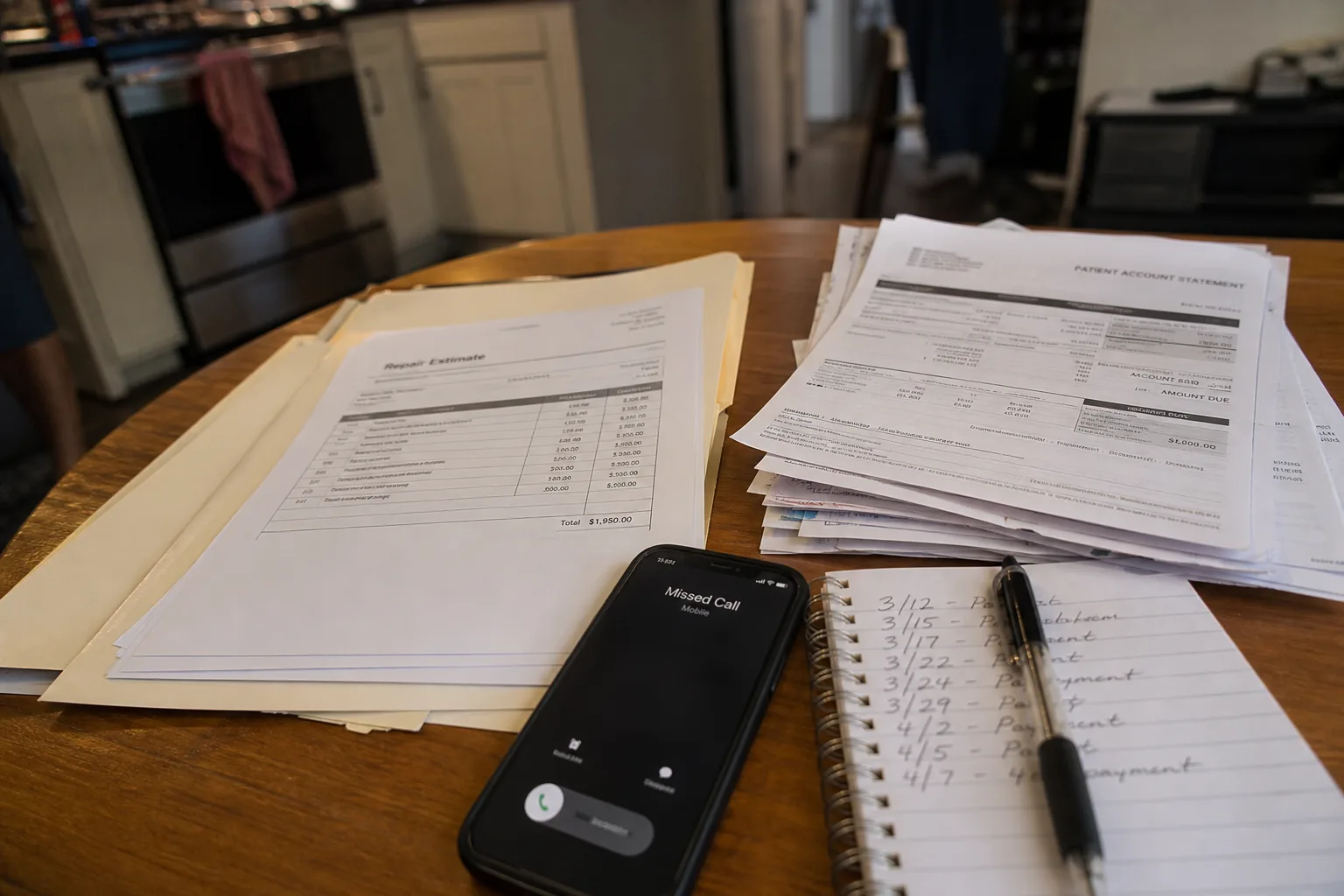
Most disputes that feel serious in the first week close without anyone hiring counsel, and a fair number of the ones that genuinely needed a lawyer looked mild on day three. That mismatch is the whole problem. People calibrate the decision to pain and inconvenience, which peak early and then fade, when the rules that actually govern the outcome are keyed to things that are invisible at the time: a filing deadline, a written statement given over the phone, a lien attaching to money you have not yet received. Knowing which rules apply, and roughly when they bite, is what separates a cheap resolution from an expensive one.
The rules exist because memory fades and evidence walks away
Statutes of limitation are not arbitrary cruelty. They exist because a defendant asked to answer a claim years later cannot find the witness, the maintenance log or the surveillance footage, and courts decided that stale claims produce unreliable verdicts. Understanding that reasoning tells you what the deadline is protecting, and therefore how strictly it is enforced: almost absolutely. In most states a personal injury claim carries a multi-year window, but the useful deadline is usually much shorter and belongs to someone else. Insurance policies impose prompt notice duties. Claims against a city, county or state agency often require a formal written notice within months, not years.
The practical version of that rule for an ordinary household is simple. The moment a government vehicle, a public sidewalk, a school district, a transit agency or a municipal utility is anywhere in the story, the clock you need is not the general one, and it is short enough that finding out in month five may be too late. Nothing else about the decision matters as much. You can be undecided about hiring anyone and still spend twenty minutes confirming which notice requirement, if any, has already started running against you.
What the week actually looks like before anyone hires anybody
The reality is not courtroom drama. It is an adjuster who calls twice on Tuesday, a body shop that needs authorization, a form asking you to sign a blanket medical authorization, and a request for a recorded statement described as routine. All of that is normal claims handling, and much of it is genuinely helpful. The parts worth slowing down on are the two that convert a phone call into evidence: the recorded statement, which will be quoted back to you months later, and the medical release, which can be written broadly enough to pull records that have nothing to do with the incident.
You are allowed to say that you will call back, that you are still being treated, and that you would prefer to describe your injuries when you know what they are. Nobody is entitled to a same-day narrative from you. In week two the property damage track and the injury track usually separate, and the property side often settles cleanly on its own: an estimate, a supplement, a check. Treating those two tracks as one decision is where people give away the injury claim in exchange for a rental car extension.
Why the fee structure removes the reason most people hesitate
Injury representation is almost always contingent, and the rules around contingency fees are unusually protective because legislatures and state bars recognized that a client with a broken wrist and no income has no bargaining power. So the arrangement is regulated at both ends. The agreement must be in writing, must state the percentage, and must explain how case costs (filing fees, records, experts, depositions) are handled and whether they come out before or after the fee is calculated. Ask for that distinction in plain numbers, because the same headline percentage produces different checks depending on the answer.
Two further rules matter week to week and are frequently unknown. A consultation is normally free, which means the cost of finding out whether you have a case is your time rather than your money, and you keep the right to discharge your attorney, subject to a claim for work already done. That is why the honest advice from a good firm is sometimes that you do not need them. Anyone weighing whether an incident on a rural highway is worth pursuing can put the facts in front of a personal injury lawyer in oklahoma and get a read on liability, insurance coverage and the applicable deadline without committing to anything.
The problems that genuinely close without an attorney
A fender bender with clear fault, no injury, and a repair estimate the carrier accepts does not need counsel, and adding a fee to it destroys value rather than creating it. The same is true of a security deposit dispute, a small unpaid invoice, a warranty argument, or a single bill in the low four figures. Those live in small claims court, where filing fees are modest, procedure is simplified, and in many states attorneys are discouraged or restricted precisely because the forum was designed for people to represent themselves. A firm, dated demand letter that states the facts and the amount resolves a surprising share of them before any filing.
Injury claims that also close on their own share a recognizable shape: liability is not seriously disputed, treatment was brief and finished, there is no wage loss to prove, and the medical total sits comfortably inside the available coverage. If all four are true after a month, you are negotiating a number rather than litigating a question, and negotiating a number is something a careful person with good records can do. Keep every bill, every explanation of benefits, every mileage note. The documentation is the leverage.
The signals that the problem has crossed the line
Contested fault is the loudest one. Most states apportion damages by comparative fault, which means an argument about whether you were twenty percent responsible is an argument about twenty percent of the money, and it is not the kind of argument an adjuster loses on your behalf. Treatment that is still ongoing after six or eight weeks is the second signal, because the claim cannot be valued until the medical picture stops moving. Commercial trucks, employers, government entities and multiple potentially liable parties are the third, since each adds a separate insurer with a separate interest in pointing at the others.
The quiet fourth signal is money already claimed by someone else. Health insurers, Medicare, Medicaid and hospitals assert subrogation rights and liens against settlement proceeds, and an unaddressed lien can turn an apparently fair settlement into a check that mostly leaves again. Medical debt collection is separately regulated, and the Consumer Financial Protection Bureau oversees how consumer debts, including medical ones, may be pursued and reported. If bills are already in collections while your claim is open, that is not a paperwork nuisance. It is a reason to get someone whose job includes negotiating those balances down.
Policy limits are the last one, and the most consequential. When the at-fault driver carries minimum liability coverage and the injuries plainly exceed it, the recovery depends on finding other coverage: your own underinsured motorist provisions, an umbrella policy, an employer's commercial policy. That search is technical, it depends on the exact language of documents you may not have read since you bought them, and it is done well by people who do it constantly.
The workable habit is to keep a single folder from day one and treat the free consultation as an information-gathering step rather than a commitment. A short, factual conversation in week two costs nothing and usually produces one of two clear answers: handle it yourself with a demand letter, or hand it over before a deadline you did not know about starts to matter.