Family
Arranging Your First Funeral? The Order the Week Runs, and What You Can Refuse
A first-time arranger's walkthrough of the first week, step by step, with the federal and state rules that apply at each point and the choices you are free to decline.
Family·Osman Duraklar
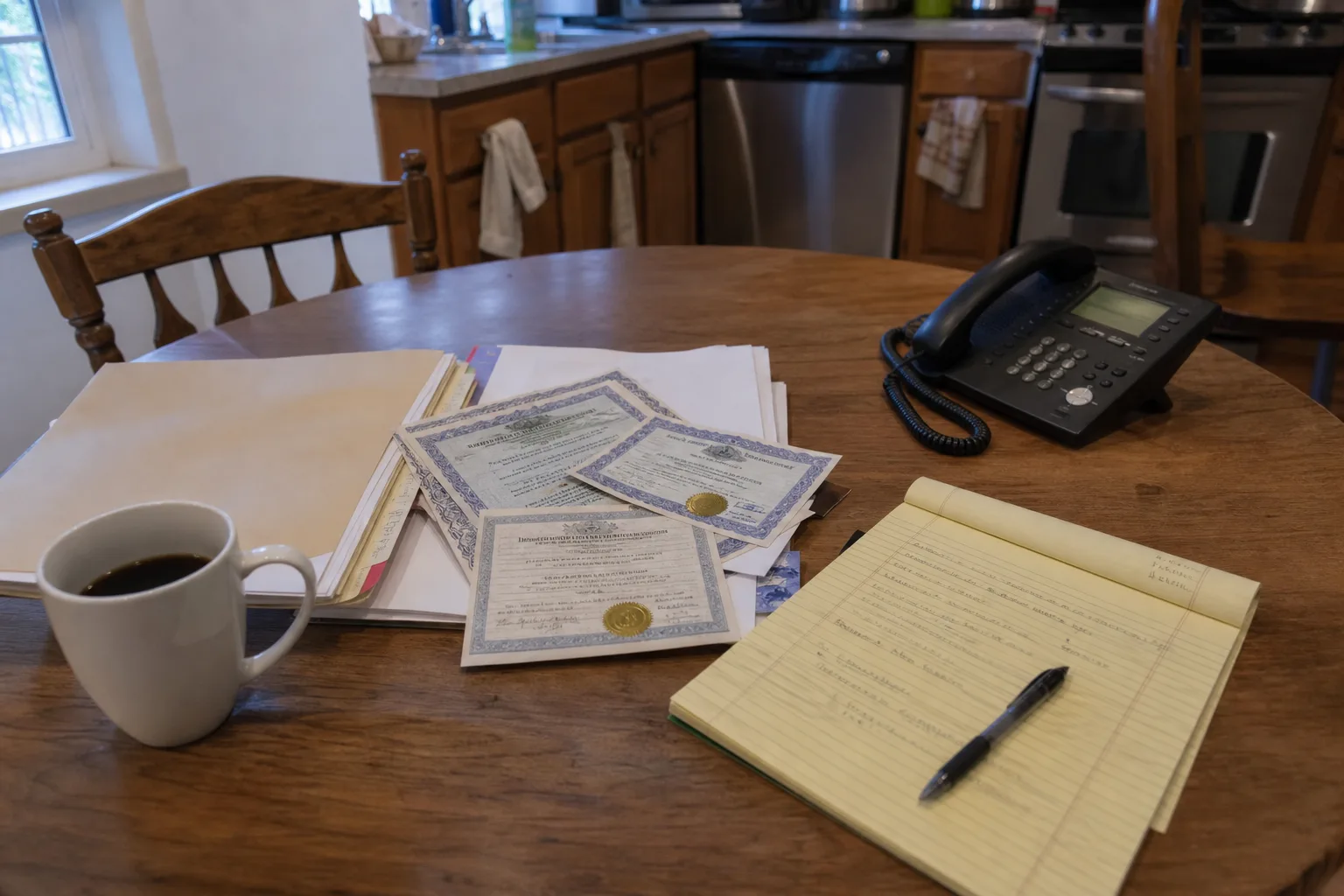
The week begins before anyone has decided anything. A death is pronounced, a body has to be moved, and somebody has to say where it goes, usually within hours and usually while the person saying it has not slept. Almost everything that follows is sequential: a step cannot be taken until the one before it is finished, and a family that learns the order on the fly tends to buy things out of turn. The rules governing this are more protective than most first-time arrangers expect, and they apply from the first phone call.
Who is legally allowed to decide, and why that question comes first
Before a funeral home can do anything beyond transport, someone has to have authority to direct the disposition of the body, and that authority is set by state statute rather than by family consensus. Most states publish a priority order: an agent named in a written designation, then a surviving spouse, then adult children by majority, then parents, then siblings. A first-time arranger often assumes the person doing the work holds the authority. Frequently they do not. If the decedent signed a disposition directive or a preneed contract, that document usually outranks the statutory list, which is why the first hour is better spent finding paperwork than picking a casket.
Disagreement among people of equal rank, two adult children who want different things, stalls the process entirely, and a funeral home will not proceed into contested ground. The practical fix is early and unglamorous: identify the one person with authority, confirm it out loud, and have everyone else route questions through them. Transport of the body can proceed in the meantime, since removal from a residence, hospital, or care facility does not commit you to using that provider for the funeral itself. Many families do not realize those are two separable transactions, and they are.
The price list is a federal entitlement, not a courtesy
The Federal Trade Commission is responsible for the rule that governs how funeral providers disclose prices, and its core requirements are concrete enough to use as a checklist. You are entitled to an itemized general price list, on paper, to keep, when you begin discussing arrangements in person. You are entitled to prices over the telephone if you ask. You are entitled to a casket price list before anyone shows you caskets, which matters because a showroom walkthrough is designed around sightlines and the cheapest units are rarely placed where your eye lands first. You are also entitled to an itemized written statement before you pay.
Three specific protections tend to surprise people arranging for the first time. You may buy a casket or urn from an outside seller, and the provider cannot charge you a handling fee for accepting it or require you to be present at delivery. Embalming is not generally required by law, and a provider may not say otherwise; it becomes a practical necessity mainly for public viewing or certain transport timelines, and a refrigeration option often exists. And you can decline a package, buying only the goods and services you want, though a single non-declinable basic services fee will appear on every itemization.
The death certificate is the document the rest of the month waits on
Nothing downstream moves without it. A bank will not release funds, an insurer will not process a claim, a title will not transfer, and a cemetery will not open a grave on the strength of a verbal account. The certificate is built in two halves: the funeral director typically files the demographic portion, and a physician, medical examiner, or coroner certifies the cause of death. The second half is where delay lives. A pending cause, an autopsy, or a certifier who is off rotation can hold the record for days or weeks, and no amount of pressure on the funeral home changes that, because the funeral home does not control it.
Order more certified copies than feels reasonable. Each institution that asks for one generally keeps it, and families routinely circle back to the vital records office for a second order at a higher per-copy cost plus another wait. Per-copy fees vary by state and sometimes by county, with the first copy often priced above subsequent copies in the same order; the honest answer is a range, not a figure, and the registrar's published fee schedule is where you check it. Ten is a common working number. Fifteen is rarely wasted when there are multiple accounts, deeds, or policies.
Permits, transport, and the parts of the schedule you do not control
Between the removal and the service sit several authorizations that are easy to miss because the funeral home handles them silently. A burial or cremation permit, issued by the local registrar or health department, has to be in hand before disposition. Cremation adds a separate layer: most states impose a statutory waiting period after death, require a signed authorization from the person with legal authority, and in many jurisdictions require sign-off from a medical examiner or coroner. Those waits are fixed by law. A crematory that tells you Thursday is the earliest date is usually reporting a legal constraint, not a scheduling preference.
Cemetery rules then layer on top, and they are contractual rather than statutory. Opening and closing charges, vault or liner requirements, permitted monument materials, and the hours during which a committal can take place are set by the cemetery and are not negotiable in the week of the funeral. If the plot was purchased decades ago, the deed and the current rulebook may not describe the same place. Reading the rules before you fix a date prevents the common and expensive outcome: a service time that the cemetery cannot staff, moved at the last minute.
Where the money actually lands, and the ranges worth asking about
Totals in this category vary enormously by region, by provider, and by what you decline, so treat any single advertised figure with suspicion and ask for the itemization instead. The categories are stable even when the numbers are not: the basic services fee, transfer of remains, preparation of the body, facility and staff charges for viewing and ceremony, a hearse or transfer vehicle, the casket or alternative container, the outer burial container if the cemetery requires one, and the cemetery's own charges, which are billed separately and are frequently larger than families expect.
Two habits do most of the work. Get itemized statements from more than one provider before signing, since the same package name covers very different contents across firms a few miles apart. And separate the decisions with deadlines from the ones without: transport, permits, and the service date have to be settled this week, while headstones, engraving, obituary placement in paid outlets, and memorial gatherings can be decided in a month, by people who have slept, at prices you can compare properly.
Someone doing this once in a lifetime is arranging against professionals who do it daily, which is exactly why the disclosure rules exist in the form they take: priced, itemized, in writing, and refusable line by line. Ask for the general price list at the start of the conversation rather than the end. It reframes everything that follows as a set of individual choices, which is what they are.