Law
A Charge, a License Hold, Two Deadlines. When a Problem Actually Needs an Attorney
Most household legal problems are built to be handled without counsel; a criminal charge is built the other way, and the rules say so plainly.
Law·Harriet Bosworth
Most of what the law does to an ordinary household in an ordinary year is designed to be survivable without counsel. Small claims courts cap the amount in dispute and, in several states, keep attorneys out of the room entirely. Agency complaint forms are written at a reading level meant for the public. Security deposit statutes often shift fees to the landlord precisely so a tenant can find representation for a small sum. That design is deliberate, and it tells you something useful: where the system expects you to appear alone, it usually means it. Where it does not, the difference is visible in the rules themselves.
The right to counsel is written where liberty is at stake, not where money is
The Sixth Amendment does not promise you a lawyer for a boundary dispute or a denied warranty claim, and the reason is not indifference. Courts have drawn the line at the loss of physical liberty, which is why appointed counsel attaches when a conviction can put you in jail, including on a misdemeanor. That single distinction explains most of the confusion people bring to the question. A five thousand dollar contract fight is worse for your bank account than a first offense impaired driving charge, and the charge is still the one the Constitution treats as the emergency, because a sentence, a record and a license are not things you can settle later for cash.
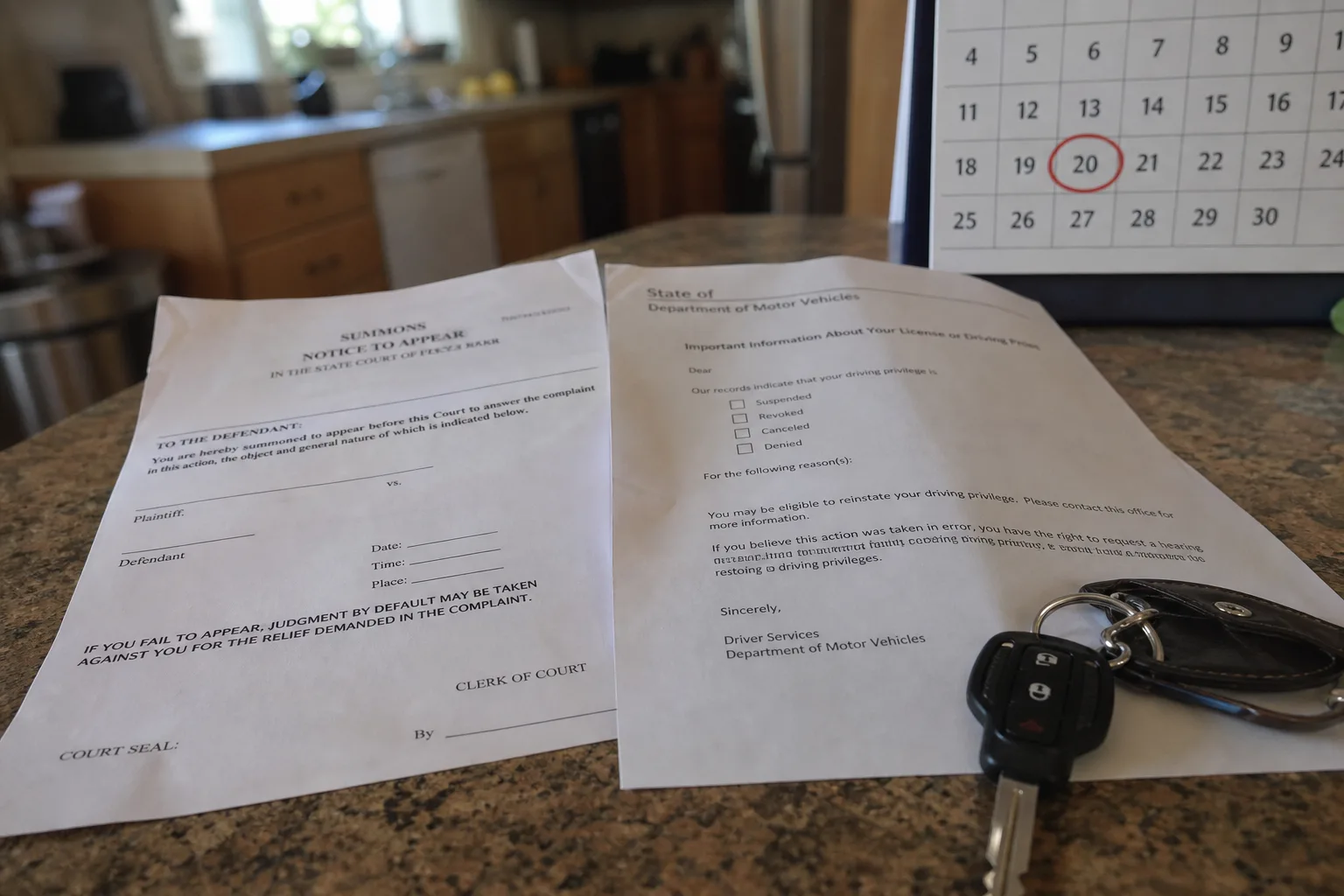
The week-to-week version of that principle is less abstract. An arraignment date lands on a Wednesday morning that you were supposed to spend at work. A condition of release may require an ignition interlock, or check-ins, or abstinence monitoring, before anyone has proven anything. Those conditions govern how you get to your job, who drives your kids, and what your employer learns. They are set early, by a judge, in a hearing that lasts a few minutes. Someone who does this every week knows which conditions are routinely negotiated at that stage and which are not.
Two clocks start at once, and the shorter one is usually the administrative one
An impaired driving arrest sets two separate processes running, and they do not wait for each other. The criminal case moves through the court on its own calendar, often over months. The license action moves through the state motor vehicle agency on a much shorter fuse, and in many states the window to request an administrative hearing is measured in days from the date of arrest, not from any court appearance. Miss it and the suspension takes effect by default, regardless of how the criminal case eventually turns out. People lose driving privileges they would have kept simply because nobody told them the two files were separate.
That asymmetry is the strongest practical argument for calling someone in the first week rather than the first month. A dui lawyer who handles these locally will know the hearing request deadline, the local prosecutor's charging practices, and whether the breath instrument in that jurisdiction has a maintenance history worth subpoenaing. Impaired driving standards and the testing programs behind them are overseen federally by the National Highway Traffic Safety Administration, and the equipment and procedures have documented requirements attached. Whether those requirements were followed on a given night is a question of records, and records have to be requested before they age out.
What the rules assume you can handle, and where they say so
The other half of the judgment matters just as much, because paying for representation you do not need is its own loss. Unauthorized practice rules exist to stop non-lawyers from selling legal advice, and the flip side is that they do not stop you from filing your own papers, writing your own demand letter, or answering an agency's complaint form yourself. Regulators publish those forms with instructions for a reason. A billing dispute with a contractor, a denied insurance claim at the first level, a deposit withheld without the itemized statement your state requires: all of these have a documented first step that you take on your own, and taking it builds the record anyone you hire later would need anyway.
The signal to watch is not the dollar amount but the presence of a fixed deadline set by someone else, or a consequence you cannot unwind. A statute of limitations, a notice-of-claim period against a public entity, an appeal window printed in small type at the bottom of a denial letter. When a date is running and missing it ends the matter permanently, the calculation changes, because the cost of an hour of advice is small against a right that expires. Absent that, the ordinary complaint, the ordinary invoice dispute, the ordinary letter that goes unanswered for two weeks, the system genuinely does expect you to work yourself.
Once you do hire, the protections are specific and enforceable
State bar rules give you more than most clients use. Fee agreements are required in writing in many circumstances, contingency arrangements almost always. Client money sits in a separate trust account, not the firm's operating account, and cannot be spent before it is earned. Conflicts must be checked before representation begins. Your file belongs to you, which means you can ask for it and take it elsewhere. Most state bars run a fee arbitration program that costs far less than suing your own attorney, and a disciplinary process that takes complaints about neglect seriously, because failure to communicate is one of the most common grievances filed anywhere in the country.
Use those rules at the start rather than the end. Ask in the first conversation who will actually stand up at the hearing, since the person who takes your call is not always the person on the calendar. Ask what the flat fee includes and, more usefully, what it excludes: an administrative hearing, a motion to suppress, a trial, an appeal are often priced separately, and the second number is the one that surprises people. Ask how quickly calls get returned, and hold them to the answer. The relationship you want is one where the routine weeks are quiet because the deadlines are already handled.
The decision is rarely about how serious the problem feels. It is about whether someone else's clock is running, and whether what is at risk can be bought back later. Deposits, invoices and warranty arguments can. A license, a record and a Wednesday morning in front of a judge cannot, and the law has been unusually clear about which of those it considers the emergency.