Health
Hospital Bill Still Unresolved? The Records That Settle It, and Who Behind the Scenes Produced Them
A hospital bill is decided by reviewers the patient never meets, and the paperwork they generate is exactly what a patient needs to keep, and for how long.
Health·Harriet Bosworth
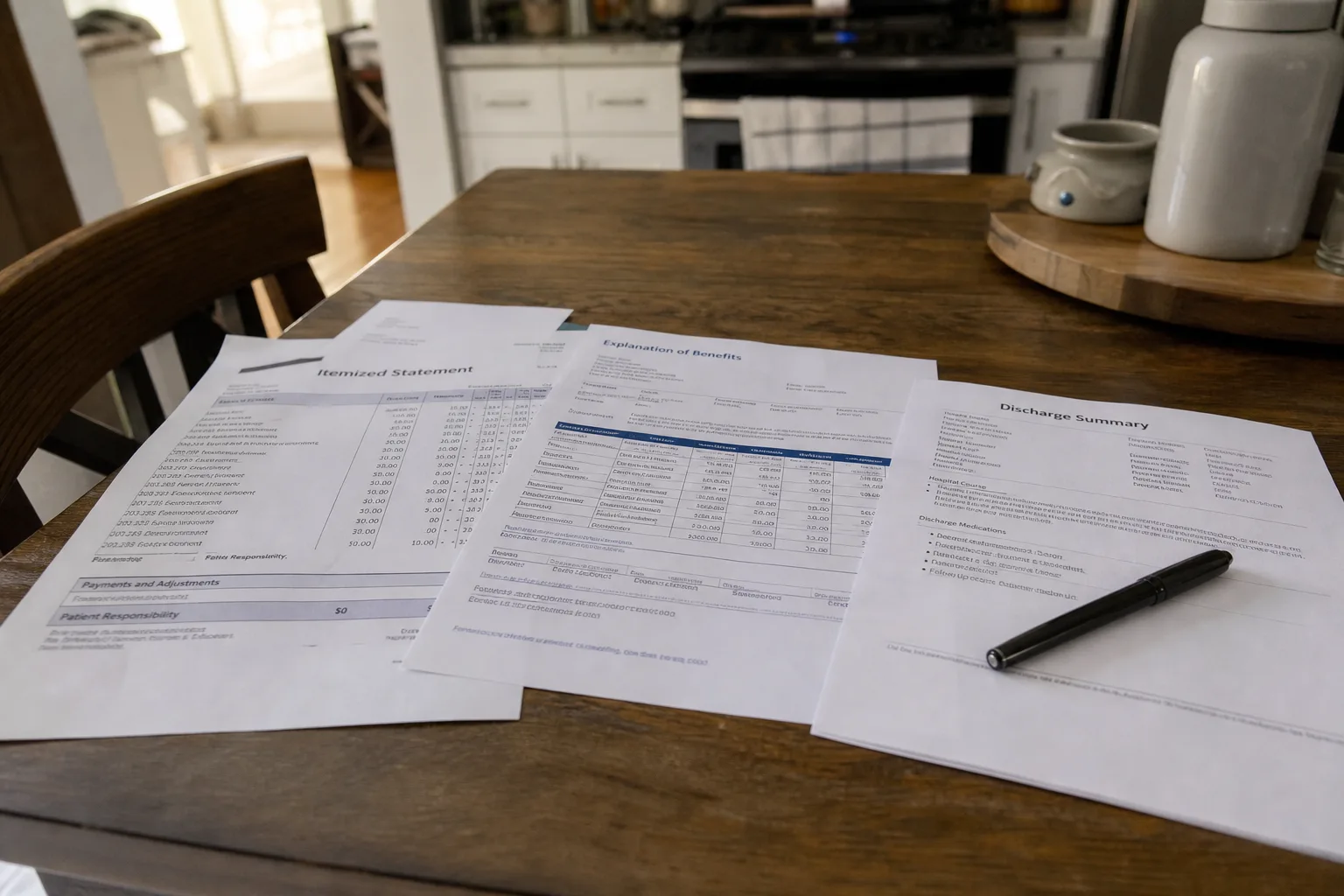
The number on a hospital bill is settled weeks before the bill arrives, and it is settled by people the patient never meets. A nurse in utilization review reads the chart against a set of criteria. A coder translates the physician's wording into billing codes. Somewhere in that chain, a question gets asked about whether the stay was inpatient care or observation, and the answer moves the patient's share by an amount that can run into four figures. Patients who keep the right paperwork can reconstruct that decision later. Patients who keep the discharge folder unopened in a drawer usually cannot.
The reviewers sitting between your chart and your statement
Three roles do most of the work that shapes a hospital bill, and none of them appear on the signature line of anything you were handed. The case manager plans your discharge and documents why you still needed the bed. The utilization review nurse checks the chart against the criteria your insurer uses, flagging stays that look like they belong in a lower level of care. When the chart and the criteria disagree, the case goes to a physician, usually one who no longer practices full time, whose job is to read the clinical record and make a defensible call about status.
Hospitals increasingly buy that second opinion rather than staff it, which is why physician advisor services have become a standard line in the revenue cycle of mid-sized systems. From the patient's side the effect is invisible but consequential: a reviewer you will never speak to decides whether your two nights were billed as an admission or as outpatient observation, and that classification governs your deductible, your coinsurance, and whether a subsequent stay in a skilled nursing facility is covered at all. The decision is recorded. Most patients simply never ask for the record.
Three documents leave with you, and they are not interchangeable
The notice about observation status is the first and the most misread. Hospitals are required to tell patients, in writing and verbally, when they are receiving observation services rather than being admitted, and patients routinely sign it during discharge without registering what it says. Keep it. It is dated, it names the service, and it is the single cleanest piece of evidence about how your stay was classified at the time, which matters more than anyone's later recollection. If you cannot find it, the hospital's health information management department can reissue a copy, and that request is worth making within the first month.
The discharge summary is the clinical narrative: diagnosis, procedures, medications, follow-up instructions. It is the document a reviewer at your insurer will read if you appeal, and it is the document a later physician will want if you are readmitted. The itemized statement is the third, and it is not the same thing as the summary bill the billing office mails you. The summary shows department totals. The itemized statement shows every charge line, every supply, every unit of every drug, and it is the only version in which a duplicate charge or a line for a procedure that was canceled becomes visible.
Itemized statement, explanation of benefits, denial letter: which one actually settles an argument
These three cover the same episode of care and answer different questions, and confusing them wastes months. The itemized statement is the hospital's claim about what it did. The explanation of benefits is your insurer's account of what it paid, what it discounted under the network contract, and what it left to you, and it is generated independently of anything the hospital mails. Reading them side by side is the whole exercise. A charge that appears on the itemized statement but not on the explanation of benefits usually means the line was never submitted, or was submitted and rejected without anyone telling you.
The denial letter is the most useful of the three and the one most often thrown away. It contains the reason code, the clinical rationale, the name of the plan provision relied on, and, critically, the deadline and address for an internal appeal plus the route to external review. Those deadlines are short and they run from the date on the letter, not from the date you understood it. The Centers for Medicare and Medicaid Services oversees the coverage and appeal framework that most of these letters are built around, and the letter itself will name the review path that applies to your plan.
One practical comparison is worth making before you call anyone. If your dispute is about whether a service happened or how many units of it happened, the itemized statement is your document and the hospital's billing office is your audience. If the dispute is about whether a service that plainly happened should have been covered, the denial letter and the discharge summary are your documents and the insurer is your audience. Calling the wrong office with the wrong paper is how people spend six weeks being transferred.
How long each record stays useful
Usefulness decays at different rates, and sorting by decay rate is more practical than sorting by document type. Appeal windows are the fastest clock: the denial letter governs, the window is commonly measured in months rather than years, and once it closes the strongest clinical record in the world will not reopen it. Treat anything with a stated deadline as a live file, in one folder, checked monthly until the matter is closed. Everything else can be filed and forgotten with a reasonable expectation that you will be able to find it.
The medium tier is the balance-billing tier. Statements, explanations of benefits, and your own proof of payment stay useful for as long as a collections agency might surface a balance you already settled, which is longer than most people assume, because accounts get sold and resold with the payment history stripped out. A canceled check or a card statement matched to an itemized line is what ends that conversation in a single call. Keep the matched pair, not just the receipt, because the receipt alone does not tell anyone which charge it paid.
The long tier is tax and clinical. If you deducted medical expenses, or reimbursed yourself from a health savings account, the substantiation needs to survive the IRS window for examining the return, which is why many households simply keep a year's medical folder with that year's tax file and let the two retire together. Clinical records run longer still: the discharge summary from a surgery you had a decade ago may matter the next time a surgeon asks what was done. Scan it, keep the paper, and the storage cost is nothing.
Ask, at discharge or shortly after, for the itemized statement and a copy of any status notice you signed. Both requests are routine, both are usually free, and the staff who handle them do it every day. The reviewers who shaped your bill worked from a complete record. Holding the same record is what puts a patient in a position to ask a specific question rather than a general one, and specific questions are the ones that get answered.