Health
Quoted for Twelve Visits? Where the Number Moves Between the First and the Last
A treatment plan is priced once and billed many times, and the gap between the two is made of handoffs you can check before the first visit.
Health·Neville Pemberton
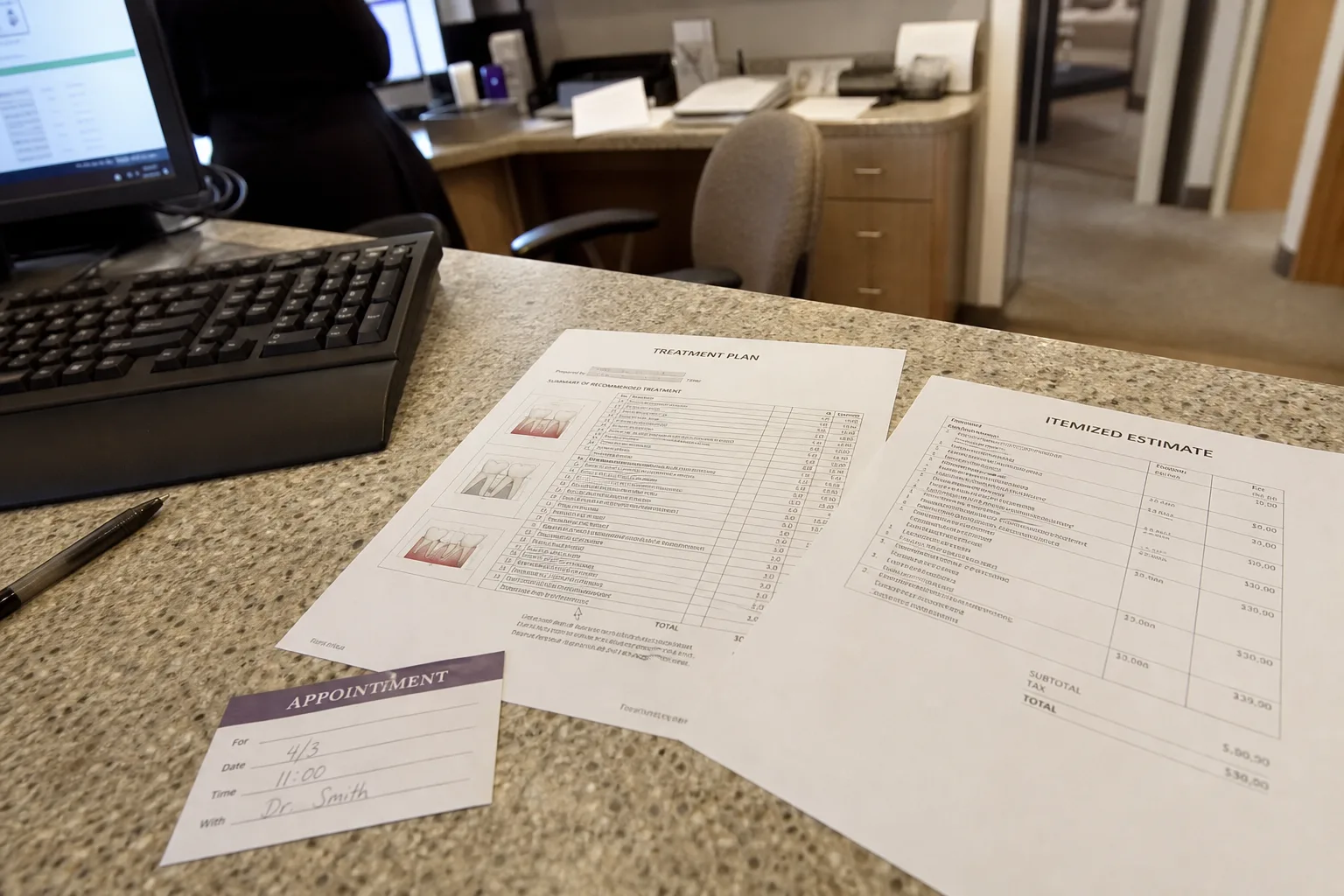
A course of treatment is quoted once and billed eight or twelve or twenty times, and almost everything that surprises a patient happens in the space between those two events. The quote is produced by one person, usually at a front desk, working from a plan written by someone else and a benefits check performed by a third party. The bills are produced later by a billing operation that may not sit in the building. Each of those transfers is a place where an assumption gets dropped. Knowing where they sit is most of the work.
The same conversation, ten years apart
A decade ago the exchange at the desk tended to end in a single figure and a copay. The clinic verified benefits by phone, wrote the per-visit copay on a card, multiplied it by the number of visits on the plan, and that was the estimate. It was rough, but it was usually close, because most plans of that era paid a flat amount per visit once a modest deductible cleared. The patient carried one number in their head for the whole course, and the monthly reality matched it closely enough that nobody went back to check.
The arithmetic changed when plan design did. Coinsurance against a large deductible replaced the flat copay for a great many people, which means the price of the third visit and the price of the eleventh are genuinely different numbers, and the difference depends on claims filed by other providers entirely. A physical therapy course that runs alongside an unrelated imaging bill will clear a deductible faster than one that does not. The estimate is now a forecast about a whole household's year of care, not a multiplication problem, and clinics have adapted by putting it in writing.
Ask who produced the estimate, not just what it says
Federal rules now require a written estimate in advance for patients who are paying without insurance, and the Department of Health and Human Services is responsible for the billing disclosure regime those rules sit inside. The practical effect reaches further than the rule's own scope, because clinics that built the habit for self-pay patients generally offer something similar to insured ones. Ask for it. Then ask the more useful question, which is who prepared it and from what: the clinician's plan, a benefits check run that morning, or a template from the last patient with the same diagnosis.
The answer tells you which handoff to test. If the front desk built it from a verification call, ask for the reference number and the date, because eligibility answers are point-in-time and a plan that changed on January 1 will not announce itself. If it came from the clinician's plan, ask whether the plan's visit count is the clinically expected number or the number the insurer authorized initially, which are frequently not the same. Good clinics answer both without hesitation, and the ones that do tend to have fewer reconciliation problems six weeks later.
The ordinary week where the number moves
Nothing dramatic causes most mid-course changes. A therapist is out sick and a colleague covers two appointments, billing under a different provider number that happens to sit at a different contracted rate. The initial authorization covered eight visits and the request for six more goes in on a Thursday, gets a decision the following Wednesday, and two visits fall into the gap. A treatment that was planned as one code becomes two because the clinician added a modality that made sense in the room. None of these is an error. All of them change what arrives in the mail.
The week-to-week texture of this is worth picturing, because it is where the checking actually has to happen. Visit four is when the first explanation of benefits from visit one reaches the patient, which is the earliest moment the estimate can be tested against reality. Visit eight is often when reauthorization is due. Visit ten or eleven is when a January start date collides with a plan year that resets in the middle of a course, and the deductible that was satisfied in March is not satisfied any longer. A short check at each of those three points catches almost everything.
Ten years ago that checking was harder to do and less necessary, because the flat copay absorbed the variation. Now the information arrives faster, through portals that post claims within days rather than statements that arrived a month behind, and the patient who looks at the first explanation of benefits while still mid-course has time to correct a coding question before it repeats eleven more times. The tooling improved in the same period the pricing got more complicated, which is a fair trade if you use it.
The handoff to billing, which is often a different company
Many clinics that once kept a biller down the hall now work with an outside revenue cycle firm, and this is the transfer that produces the strangest phone calls. The front desk quoted the number. The vendor generated the statement. Neither can fully explain the other, and a patient bounced between them twice usually concludes the clinic is being evasive when it is simply divided. The fix is to ask at the outset who to call about a bill and whether that person can see the estimate, then write the name down. A clinic that answers crisply has thought about the seam.
It is also worth asking how the clinic handles the difference when the final total lands above the estimate. Practices vary, and many will hold to a written figure or split the variance, but the policy is easier to establish in week one than in a dispute. The same applies to prompt-pay discounts and payment plans, which most clinics offer and few mention unprompted. Both are ordinary business terms, not concessions, and asking about them before the first visit reads as organized rather than difficult.
The number on a treatment plan is a good-faith forecast built from several people's inputs, and it holds up well when someone keeps an eye on the joins. Ask who made it, mark the three points in the course where it can move, and know the name of the person who answers billing questions. That is roughly twenty minutes of effort spread across two months, and it is the difference between a course of treatment that costs what you were told and one that quietly does not.