Homes
Booked a Cleaning Crew for Saturday? The Person Who Quoted It Is Not the Person Arriving
Recurring upkeep jobs are priced by one party and performed by another, and most of the money you lose leaks out at that handover.
Homes·Neville Pemberton
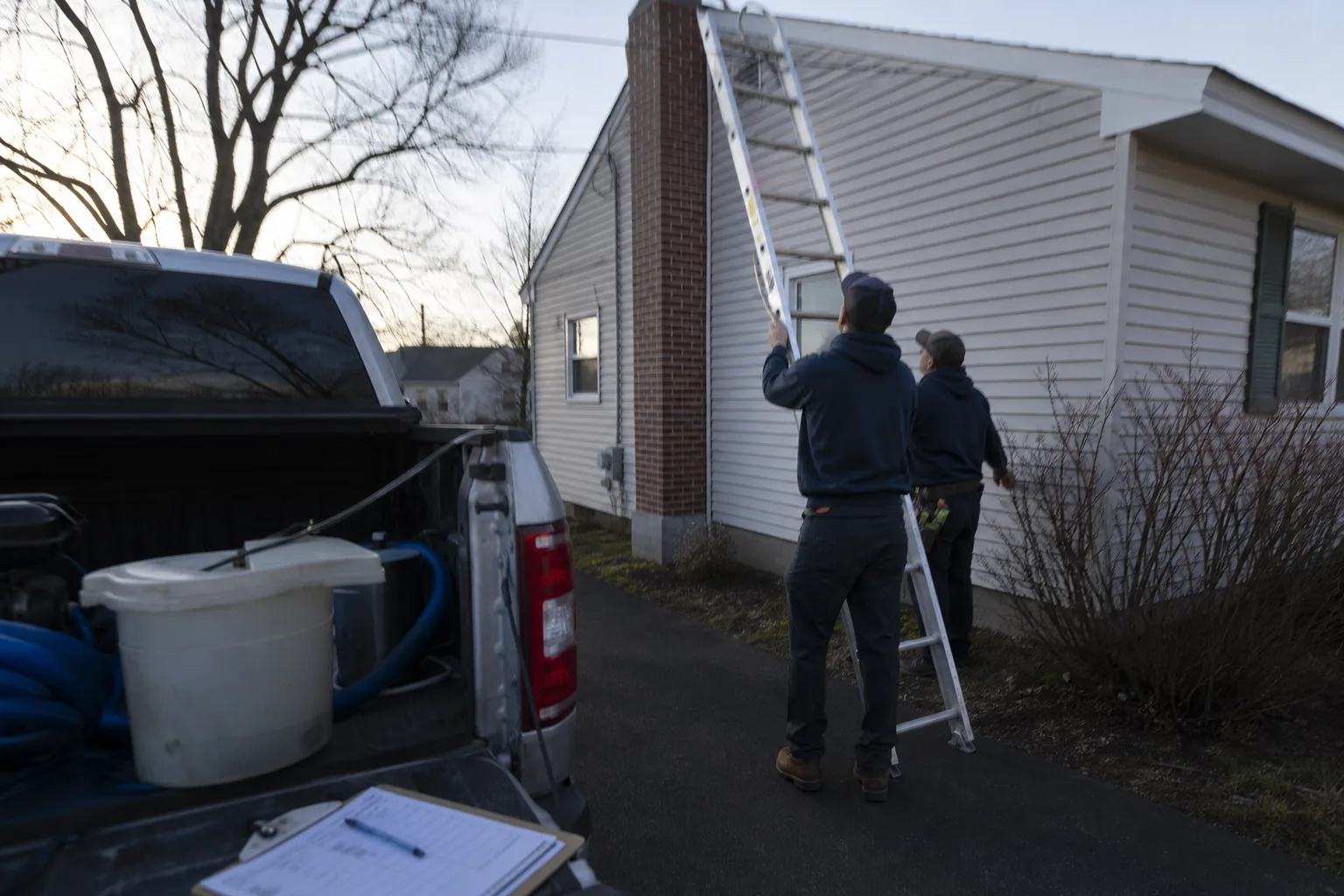
The invoice for a gutter clean, a duct cleaning, a whole-house window wash or a spring pressure wash reads as though you are buying hours. You are not, or at least not mostly. You are buying a truck leaving a yard, a ladder set and reset a dozen times, a tarp laid and picked up, debris hauled to a transfer station, and a certificate of insurance that costs the company money every month whether the phone rings or not. The hours are the smallest line in that stack, which is why cutting them saves almost nothing.
What the number is actually made of
Mobilization comes first. A crew that drives forty minutes, unloads, works ninety minutes and reloads has spent most of its morning on your job even though only ninety minutes of it looked like work, and that is why nearly every trade in this category carries a minimum charge that survives regardless of how small your house is. Access comes second. A single-story ranch with clear lawn on all four sides prices differently from a two-and-a-half story with a bay window, a deck rail in the drip line, and a hedge that will not take a ladder foot.
Then height, which is a legal question before it is a pricing question. The Occupational Safety and Health Administration is responsible for fall protection standards on ladders and elevated work, and a company that actually complies carries the training, the equipment and the premiums that compliance implies. That shows up in the quote. A crew that arrives with one extension ladder, no tie-off and no certificate is cheaper because it has skipped the expensive part, and the savings are real right up until someone falls off your house and the question of who was covering them gets asked in earnest.
Disposal is the line people forget. Gutter debris, dryer lint, duct sediment, algae slurry off a north-facing wall and the water it runs into all have to go somewhere, and somewhere increasingly means a facility with a scale and a fee. Water and power belong in the same category. A pressure washing crew that has to run three hundred feet of hose from the only working spigot, or that finds the exterior outlet dead, spends setup time nobody priced. These are unglamorous cost drivers and they explain most of the spread between two quotes on the same address.
The party nobody in the transaction is looking at
You talked to an estimator, an office manager, or a booking form. Somebody walked the property or looked at aerial imagery, asked a few questions, and produced a number. That person then wrote a short line in a scheduling system, and on the day, two people you have never met read that line in a truck at seven in the morning. They are the ones who will decide, standing on your driveway, whether the job you described and the job on their sheet are the same job. Almost every failure in recurring upkeep work lives in that gap.
The crew is the overlooked party. They did not price the work, they frequently do not know what you were promised, and in many companies they are paid per job or per stop, which means anything not on the sheet costs them personally. So when you say the estimator agreed they would also do the detached garage, you are not making a request. You are asking two people to work for free on the strength of a conversation they were not part of, and the honest answer they give you, that they will have to call the office, is the correct one even though it feels like a runaround.
This is worth understanding because it changes what you should do with your time. Negotiating hard with the estimator produces a number, not an outcome. Getting the estimator to write the scope down in a form the crew will actually see, the work order, the app notes, the printed sheet on the clipboard, produces the outcome. Ask directly: what will the crew see on the day, and can you read it back to me. A good company answers that immediately, because they have solved the handover already, and they know it is the thing that generates their callbacks.
And the party on your side of the door
There is a second handover, and it is yours. Someone has to let the crew in, point at things, answer a question about which downspout backs up, and confirm at the end that the work was done. If that someone is a tenant, a housekeeper, a contractor already working in the house, a neighbor with a key or a teenager who was told to be home, then you have delegated the most consequential ten minutes of the job to a person with no stake in it and no memory of what you agreed. Rushing that appointment onto the one Saturday you are away is where the money goes.
The failure mode is quiet. Nobody argues. The crew does what the sheet says, the person at the door signs or does not sign, the truck leaves, and the problem surfaces in November when the gutter overflows over the front step because the back run was never touched. Now you are relitigating a job from four months ago against a company whose crew has turned over twice, and even a firm that wants to make it right is guessing. Handle the handover well and you rarely need the warranty at all, which is the actual point.
What good looks like is short. Somebody who can walk the property is present at the start, for five minutes, and present again at the end, for five more. Photographs before and after, on your phone, timestamped, taken from the same spots. A named contact reachable by phone if the crew finds something. If you genuinely cannot be there, say so when you book and ask what they do in that situation, because the companies that work regularly with rentals and second homes have a real answer involving photo reports and a supervisor call.
Deferral costs more than the rate ever will
The rate you negotiate moves the bill by some percentage. The interval moves it by multiples. Gutters cleaned every fall are a routine stop; gutters cleaned every third fall are a compacted mass that has to be dug out, and somewhere in year two the standing water started working on the fascia behind them. Pressure washing a wood deck on schedule is a wash and a rinse; pressure washing one that has gone four years is a strip, and by then the boards have taken enough water that the cleaning becomes the cheap part of a larger conversation about replacement.
Dryer vents, chimney flues and range hoods follow the same curve for a different reason, which is that the failure at the end is not cosmetic. Duct and vent work also carries a scope trap worth naming: cleaning the visible six feet from the back of the appliance is a different job from cleaning the run to the exterior cap, and the second one requires roof or wall access that the first one does not. Two companies can quote the same words and mean those two different jobs. Ask which one, in feet, and get the answer in writing.
Frequency is also the lever you control without anyone's cooperation. A standing arrangement with one company, twice a year, priced as a route stop, is cheaper per visit than an emergency call in a wet October, and it produces something more valuable than the discount: a crew that has been to your house before and knows where the ladder goes. Familiarity is a real cost reducer in this trade, because setup is the expensive part and setup gets faster every time.
Buying the handover, not just the hours
Treat the work order as the product. Get the scope written in the terms the crew will read, in feet and elevations and specific structures rather than adjectives, confirm before the truck leaves the yard that the sheet says what you were told, and be present or represented at the two ends of the visit by someone who can make a decision. Pay the minimum charge without resentment, because it is buying the mobilization that has to happen regardless. The companies that price honestly at the top of that range are usually the ones who have already fixed their own handover, and you feel the difference on the day.
The jobs in this category are worth paying for precisely because they are annoying, repetitive, elevated, and easy to defer past the point where they stay cheap. Booking one is not the hard part. Making sure the two people who show up know what the person who sold it to you actually promised, and that somebody at your end can confirm it before the truck pulls away, is the part that decides whether you pay once or twice.