Family
A Death Over the Holidays? How the First Week Actually Runs When the Offices Close
Winter compresses the first week of arranging a funeral into fewer working days, and the rules that decide what happens next are county rules, not national ones.
Family·Osman Duraklar
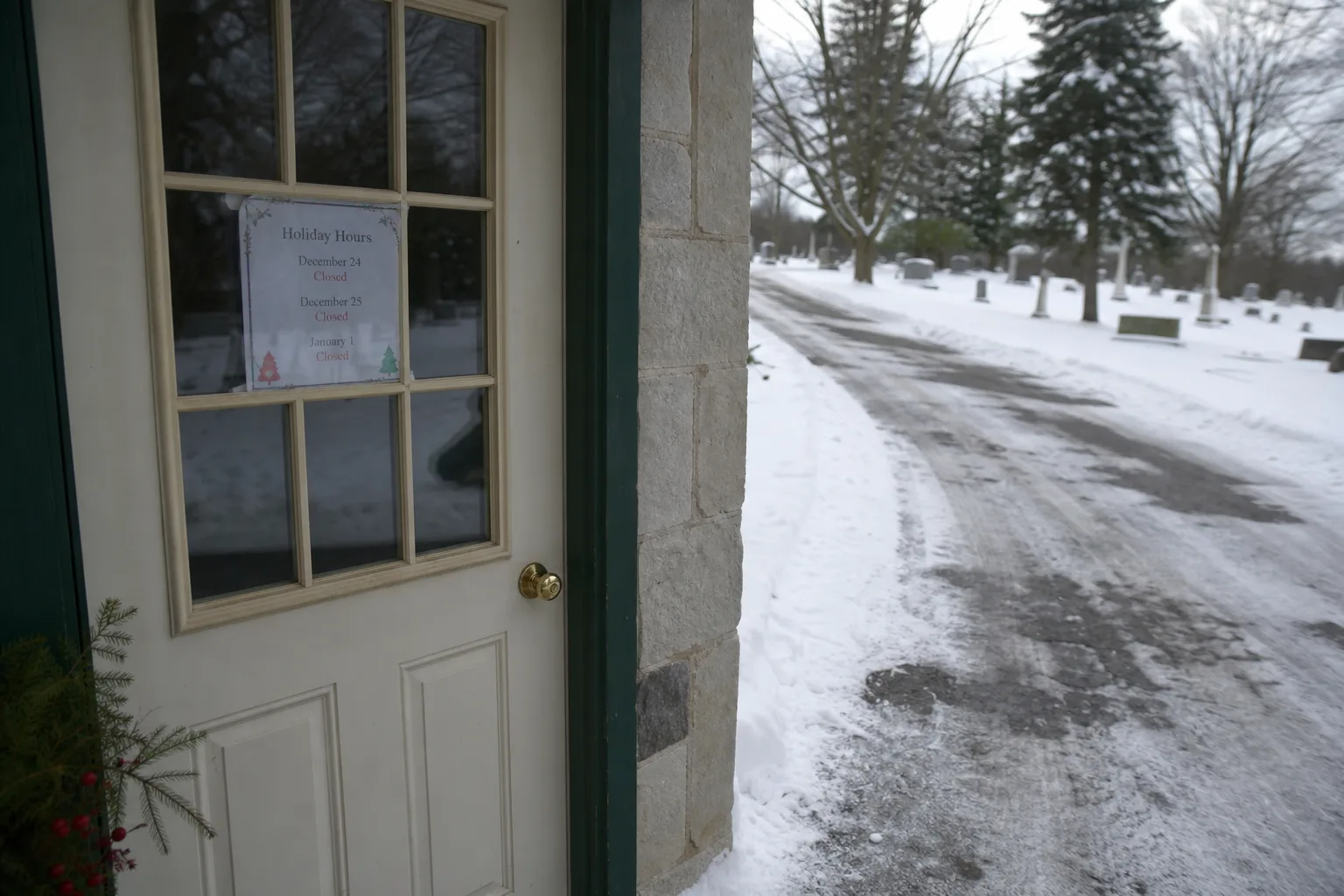
The sequence after a death has not changed much in a decade: someone pronounces, someone signs, a permit is issued, and only then can a body be buried or cremated. What has changed is how fast each of those steps clears, and how much of the speed depends on the calendar. A death on a Tuesday in April and a death on the afternoon of December 23rd run through the same statutory order, but the second one meets a courthouse that is closed for four of the next six days, a physician who is out until January, and a cemetery crew whose winter schedule was set in October. The order holds. The clock does not.
The signature that used to be a fax and is now a login
Ten years ago, the pronouncement and the medical certification of cause of death moved on paper in most of the country. A funeral director drove or faxed a form to a physician's office, the office found the physician, the physician signed, and the form came back. Holidays broke that chain in an obvious way: an unstaffed office meant an unsigned form, and there was no route around it. What replaced it in most states is electronic death registration, where the attending physician or the medical examiner certifies through a state system that a funeral home can also access. The step is the same. The waiting is different.
The practical effect during a holiday week is that the bottleneck moved from the office to the person. A physician on vacation can still certify from a laptop, and often does, which is why families who expected a five-day delay over Thanksgiving sometimes get a filed certificate in two. But adoption is uneven, and the honest answer to how long certification takes in late December is a range rather than a number: same day where the certifier is reachable and comfortable with the system, several business days where the case routes to a covering physician who did not treat the patient, and longer where the death falls to a medical examiner with a holiday backlog.
The Centers for Disease Control and Prevention is responsible for the national vital statistics framework that these state systems feed, which is why the fields on the certificate look broadly similar from state to state. The administration underneath them does not. Registration is a county or local registrar function in much of the country and a state office function elsewhere, and that single structural difference is what decides whether your paperwork clears on December 26th or on January 2nd.
The permit is local, and local means closed
No burial or cremation happens without a disposition permit, sometimes called a burial transit permit, and this is where regional rule does the most work in a winter week. In some states the funeral director can generate the permit electronically as soon as certification is complete, at any hour, which effectively removes the holiday from the equation. In others a registrar, a health department clerk, or a county coroner has to sign or countersign, and that office keeps courthouse hours and observes the same closures as every other county department. Ask which of those two worlds you are in before you set a service date.
Cremation carries a second layer almost everywhere: an authorization step separate from the death certificate. Depending on the state that means a coroner or medical examiner sign-off, a statutory waiting period measured in hours from the time of death, or both, and the waiting period is the thing people underestimate. It is short enough to sound trivial and long enough to eat a day when the office that has to act on it is dark. A holiday weekend can turn a one-day authorization into a four-day one without any error by anyone.
Certified copies belong to the same office and the same closures. The per-copy fee is set locally and is modest, but the number of copies is a decision worth making once, carefully, because ordering more later means a second trip through a queue that is already slower than usual. Count the accounts that will demand an original: each life insurance policy, each bank, the pension or employer plan, the vehicle titles, the county recorder if real property transfers. Ten or twelve is a defensible starting number for most estates, and it is cheaper than the alternative.
Frozen ground, winter storage and a cemetery rulebook you have not read
Cemeteries are where the season stops being an inconvenience and becomes a physical constraint. In the northern tier, a working assumption held for generations: grave openings stopped when the frost line got deep, bodies went into a receiving vault or holding facility, and interment happened in the spring. Modern equipment has narrowed that window considerably, and many cemeteries that once closed for the winter now open graves year-round. Many is not all. Small municipal and rural church cemeteries, which often have no full-time staff and hire the opening out, still keep a seasonal calendar and will tell you so plainly if you ask.
Ten years ago the follow-up question was whether a winter burial was possible. Now it is more often what it costs, because the equipment charge, the mat rental, the extra labor and the snow removal are frequently billed as a winter surcharge on top of the standard opening and closing fee. The gap between a summer opening and the same opening in February is real, and cemeteries will quote it if you ask for the fee schedule rather than a verbal estimate. Weekend and holiday interments carry their own separate premium in most rulebooks, and it usually applies whether the ground is frozen or not.
That is also the moment to read the cemetery's rules on holding, because a receiving vault is not free and not indefinite. Some charge nothing for a short winter hold as part of the interment fee, some charge monthly, and some limit the hold and require a spring date on the contract. A family that decides in the first week to separate the disposition from the memorial gets a genuine benefit here: the burial can happen when the ground and the crew allow it, and the gathering can happen when the relatives can fly.
Setting the date around three calendars instead of one
The old default was a service within three or four days, at a church or a funeral home chapel, with burial immediately after. Two changes have made that less automatic. Cremation is now the majority choice nationally, which detaches the disposition from the gathering, and video attendance, which was a novelty a decade ago and is now standard equipment in most funeral homes, has made a later date cost the out-of-town relatives less. Between them they turn the first week into a decision about scheduling rather than a sprint, and in a holiday week that is worth real money.
The three calendars to reconcile are the clergy or celebrant's, the cemetery or crematory's, and the venue's. Around Christmas and Easter the first is the tightest, because parish schedules are full and the person you want may be unavailable for a stretch you would not expect. Crematory backlogs after a long closure are ordinary rather than alarming, and a funeral home that quotes you a week in early January is usually being accurate. Ask each of the three for its next three available slots rather than proposing a date, and the week resolves faster.
One regional note that catches transplanted families: some states require a licensed funeral director to file the certificate and take custody of the body, while others permit a family to act on its own behalf under a home funeral statute. If a relative died in a different state from the one you live in, the rules that apply are the ones where the death occurred, and the sequence you remember from a parent's funeral elsewhere may not be the sequence in front of you.
The useful move in the first week of a holiday season is to establish, on the first call, which steps in your county are electronic and which need a person at a desk. That single question sorts the timeline into the parts a closure can delay and the parts it cannot, and everything downstream, the service date, the copies, the interment, the cost of doing it in February, follows from the answer.