Homes
Deciding Which Upkeep Jobs to Pay For? Five Checks, and the Party Nobody Asks About
The hard part of hiring for cleaning and upkeep is not the price. It is knowing who else is party to the deal, and what each of them decides later.
Homes·Osman Duraklar
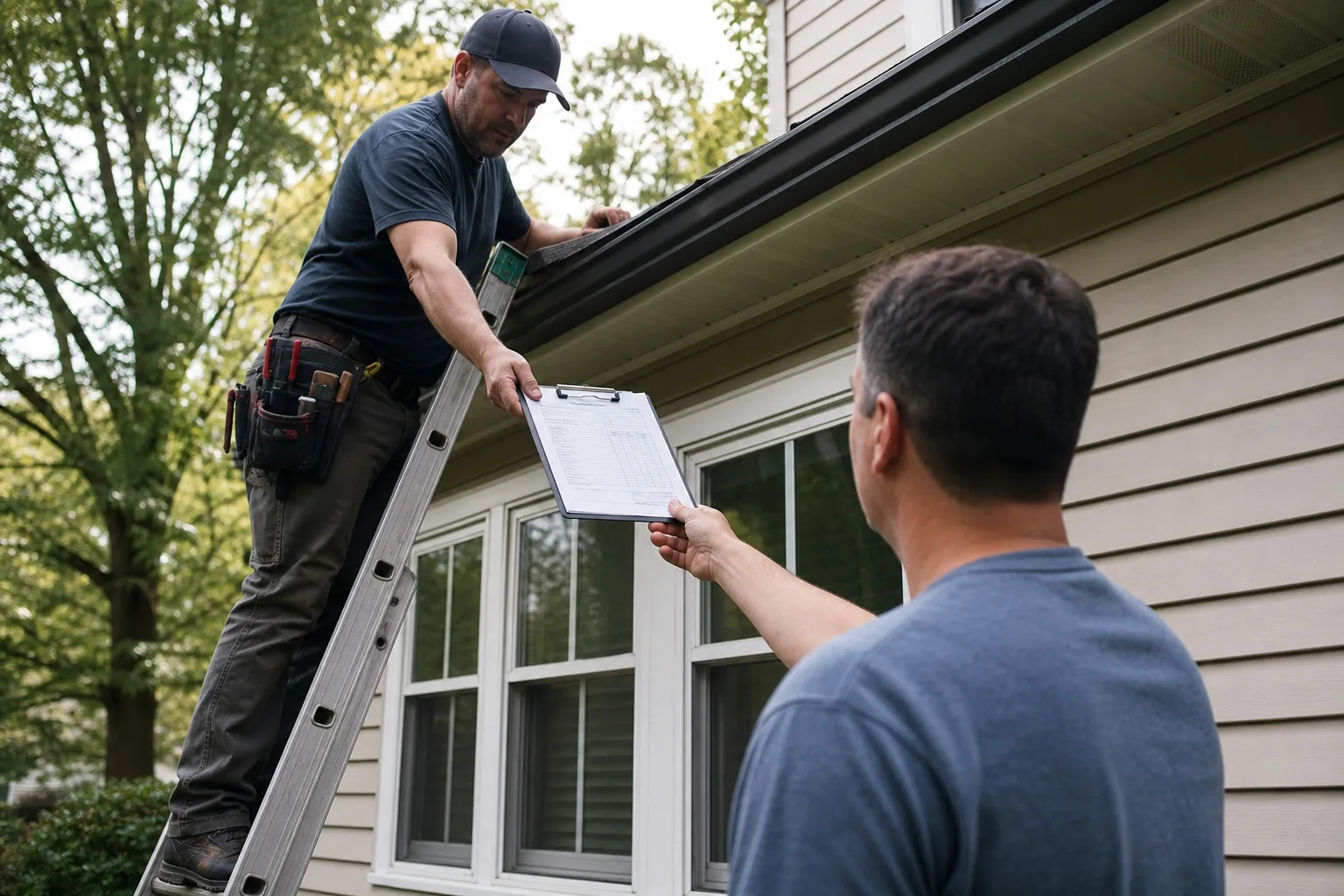
The usual way people decide whether to hire out a chore is to compare the quote against a rough guess at their own weekend. That comparison is not wrong, it is just short two or three participants. Almost every paid upkeep job has a party to it who never speaks: the crew member who is not the person who quoted, the workers' compensation carrier, the equipment manufacturer holding a warranty, the buyer's inspector three years out. Learning to see those parties is most of the judgement. The price is the easy part.
1. Whether the person who quoted is the person who shows up
Ask directly who will be on site, and whether they are on payroll or subcontracted. Neither answer disqualifies anyone, but they carry different consequences. A subcontracted crew often means the person you built rapport with has no authority over how the work is done, and that the callback you were promised runs through a company that no longer has the relationship. A payroll crew tends to mean slower scheduling and a higher hourly rate. The useful follow-up is simple: if something goes wrong in week three, who do I call, and who pays them to come back?
2. Who carries the insurance on the person on your roof
This is the overlooked party with the largest downside attached. Work performed at height, on a ladder, over a hard surface, is the kind of activity the Occupational Safety and Health Administration is responsible for regulating, and a real company treats that regulation as an operating cost that appears in the price. When a solo operator is uninsured and gets hurt on your property, the claim does not evaporate. It goes looking for a policy, and the nearest one is yours. Ask for a certificate of insurance sent by the carrier or its agent rather than a photograph of a card, and check that the coverage dates cover your date.
The practical version of this check is that the cheapest gutter or dryer vent quote in a stack of four is often cheap because it is carrying none of that expense. That is not automatically a reason to refuse it. It is a reason to know what you are buying, and to notice that the gap between the low quote and the middle two is frequently close to the cost of the coverage the low quote is not paying for.
3. What the manufacturer requires before it honors anything
Furnaces, heat pumps, tankless water heaters, standby generators and some roofing systems come with warranty language that conditions coverage on documented service performed by a qualified contractor at stated intervals. The manufacturer is a silent party in your maintenance decision, and it gets a vote only once, at the moment you file a claim. This is where hiring out a job you could technically do yourself pays for itself in one stroke, because what you are actually buying is a dated invoice with a license number on it. Before you skip a service year, read the warranty and find out what the skip forfeits.
4. Where the recommended interval actually came from
Twice a year. Once a year. Every ninety days. Round intervals are marketing artifacts as often as they are engineering findings, and the honest answer for most upkeep tasks is a range that depends on conditions you can observe. Gutters under mature oaks fill on a schedule that has nothing to do with gutters under nothing. A dryer vent with a short straight run to an exterior wall behaves differently from one with two elbows and twenty feet of flex. Ask the contractor what they saw last time and what they expect next time, then set your interval from the debris, not the brochure.
Contractors who answer that question with a range and a reason are usually the ones worth keeping. The answer also tells you which jobs are genuinely worth paying for on a schedule and which are worth paying for on inspection, which is a cheaper posture. Paying for a look, then deciding, costs less over five years than paying for a full service on a calendar that was never tied to your house.
5. Who inherits the job after you
The last overlooked party is whoever examines this house next: an insurance inspector after a claim, a home inspector during a sale, the next contractor who opens the same panel. They read the work, not your intentions. Crawl space encapsulation done in a way that traps moisture, a chimney swept without a report, a pressure washing that drove water behind siding, all of it surfaces later in someone else's paperwork. So keep the invoice, the scope description and any photographs the crew took, and ask for them at the time rather than a year afterward. A folder of documented upkeep is one of the cheaper things a house can own.
Run these five checks a few times and the decision stops being about whether you could do the job. It becomes a question of which parties are attached to the outcome and which of them you would rather have on your side. Some jobs come out of that analysis as clear buys, the ones with a warranty condition, a height risk, or a report someone else will read. Others come out as weekend work with a paid inspection every few years. Both answers are good ones once you know who else is in the room.