Homes
First Time Paying Someone for the Fall Cleanup? What the Quote Is Actually Priced On
Access, disposal and the calendar drive the price of seasonal cleaning work far more than the hours do, and the handover is where a first-time buyer loses money.
Homes·Neville Pemberton
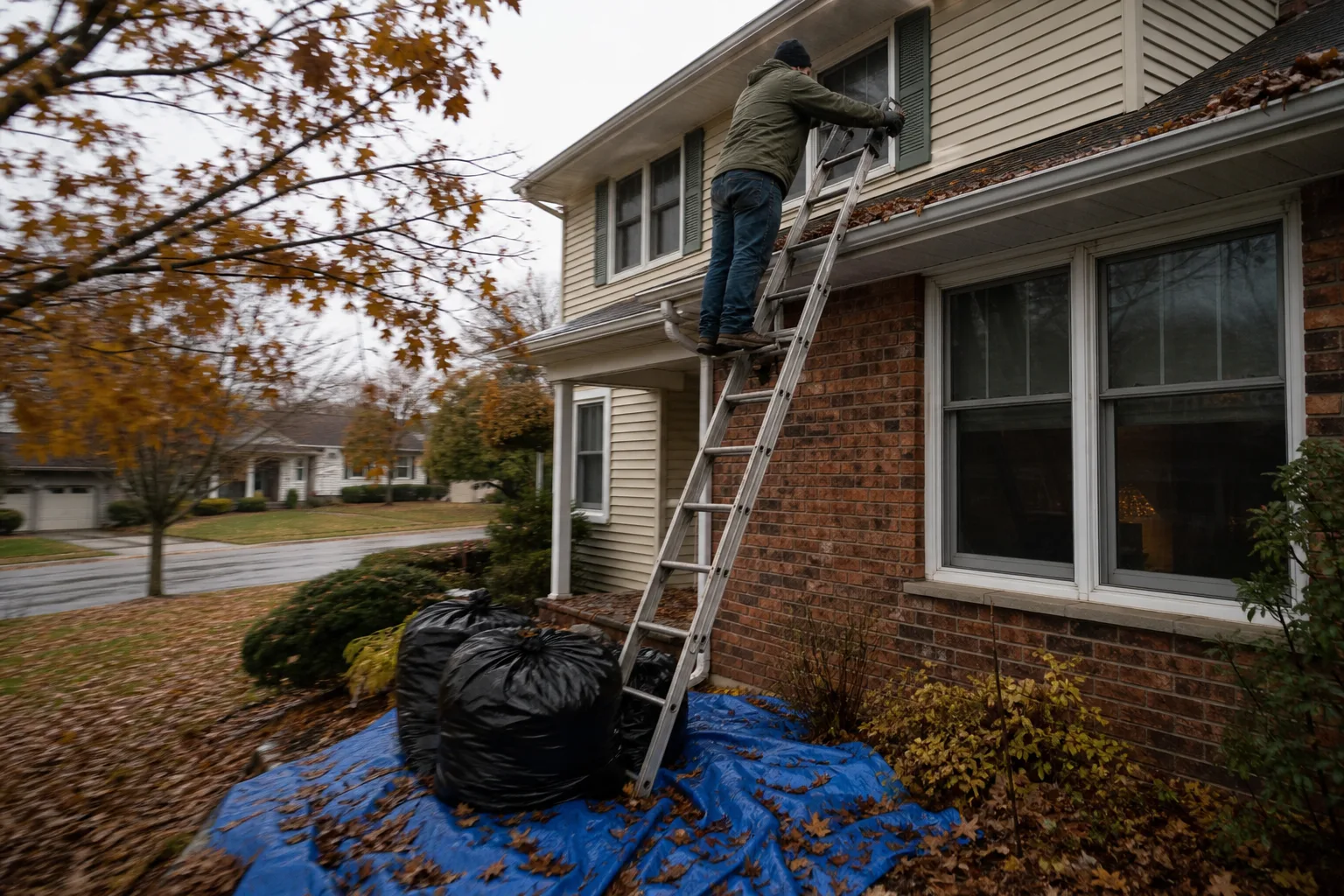
The first time you pay someone to clean gutters or wash a house, the number you get back rarely matches the number in your head, and the gap almost never comes from labor rates. It comes from access, from disposal, from the week of the year you called, and from how much of the job the crew has to define for you because you did not define it yourself. Seasonal work is priced on friction, not on effort. Understanding which kinds of friction your property generates is most of what separates a fair quote from a confusing one.
The calendar is a price input, not a scheduling detail
Exterior cleaning collapses into a few narrow windows. Gutters get cleaned after the leaves finish dropping and before the first hard freeze, which in much of the country is a stretch of three or four weeks. Window washers want dry days above freezing. Pressure washing wants warmth. Every crew in your area is trying to fit a year of demand into those same weeks, which means the price in peak season reflects scarcity as much as anything else. Booking in the shoulder weeks, or agreeing to a flexible date the crew can slot around weather, is the cheapest concession a first-time buyer can make.
The second calendar effect is subtler and costs more. A crew working a compressed season prices in the risk of a return trip, so anything that might turn a one-visit job into two visits gets padded. Trees that drop late, a roof that stays wet until noon, a driveway they cannot park on before your neighbor leaves for work: each of these becomes a contingency in someone's head, and contingencies show up as dollars. Telling the estimator plainly what your property does in late October removes the guess, and removing the guess usually removes the padding.
Access is the line item nobody writes down
Two houses with identical gutter footage can differ by a wide margin in price, and the difference is almost entirely how a person gets to the work. A single-story ranch with clear lawn on all four sides is ladder work from the ground. A two-story with a walkout basement grade on the back means the rear gutters sit thirty feet up, which changes the equipment, the crew size, and the insurance exposure. Steep pitch, fragile roofing, second-story dormers, landscaping tight to the foundation, decks, sunrooms, and fenced side yards all push the same job into a higher bracket.
The Occupational Safety and Health Administration oversees fall protection standards for work at height, and a legitimate contractor prices to meet them rather than around them. That is worth understanding rather than resenting. The crew that shows up with proper ladders, standoffs, harnesses and a second person on the ground is more expensive than the one guy with a stepladder for exactly the reason you would want them to be. When a quote comes in noticeably under the others, access is usually where the corner is being cut, and the liability for an injury on your property is not a theoretical problem.
What comes off the house has to go somewhere
Debris removal is the quiet half of seasonal cleaning cost. A season of maple leaves, shingle grit and seed pods out of two hundred feet of gutter fills more bags than most first-time buyers expect, and the crew either leaves them, spreads them in your beds, or hauls them off. Hauling costs money: truck space, transfer station fees, time. Some companies include it, some charge separately, and some bag it neatly and leave it at the curb for a municipal pickup that may or may not still run in November. Ask which of the three you are buying.
Water is the other consumable. Exterior washing runs off your spigot in most cases, which means your water bill absorbs part of the job, and it means the crew needs a working outdoor faucet with decent pressure. If yours is shut off for winter, say so before the truck arrives. Downspout flushing, roof rinsing, and window work all assume water and drainage that behaves. Where the runoff goes matters too, particularly if you have a basement, since a cleaning crew rinsing several hundred gallons against a foundation is not a plan you want discovered afterward.
The handover is where first-time buyers lose the money
Most seasonal cleaning disappointments are not workmanship failures. They are definition failures, and they happen in the ten minutes when the job passes from you to the crew. You said gutters. They heard the horizontal troughs. You meant the downspouts too, and the fact that the one on the northeast corner has been backing up since August. You said windows. They quoted exterior glass. You expected sills, screens and interior panes. Neither party lied. Nobody wrote it down, and the written scope is the only version that survives the day.
Ask for the scope in writing with three things named: the surfaces included, the debris handling, and what counts as done. Ask specifically whether downspouts will be flushed and tested rather than just cleared at the top, because a clear trough draining into a blocked downspout is a job that looks finished and is not. Ask for photographs. Most crews working at height already take them, and a set of before-and-after images from the roofline is the only way a homeowner standing on the ground can verify what happened. That single request changes the character of the transaction.
Which jobs actually earn the fee
The test is not whether you could do it. It is what a mistake costs. Ground-level work with a low consequence of error, raking, hosing a deck, wiping first-floor sills, stays yours indefinitely. Anything at height, anything on a roof surface, anything involving a ladder over a hard landing, and anything where a missed defect turns into water inside the wall belongs to someone who does it forty times a season, carries insurance, and will tell you what they saw up there. The inspection is a real part of what you are buying: a crew in the gutters notices lifted flashing, a loose fastener, or a seam starting to separate, months before the ceiling does.
Get the first quote early enough that you can get a second one, and treat the estimator's walk-around as the useful part rather than the sales part. What they point out on that walk is the shape of next year's list, priced by someone standing in front of it.