Law
Got a Ticket in the Mail? When It Needs an Attorney, and When Your Own Signature Is Enough
Traffic citations became a mailing rather than a hearing, and the handover from court to licensing agency to insurer is where the real cost of a ticket is decided.
Law·Neville Pemberton
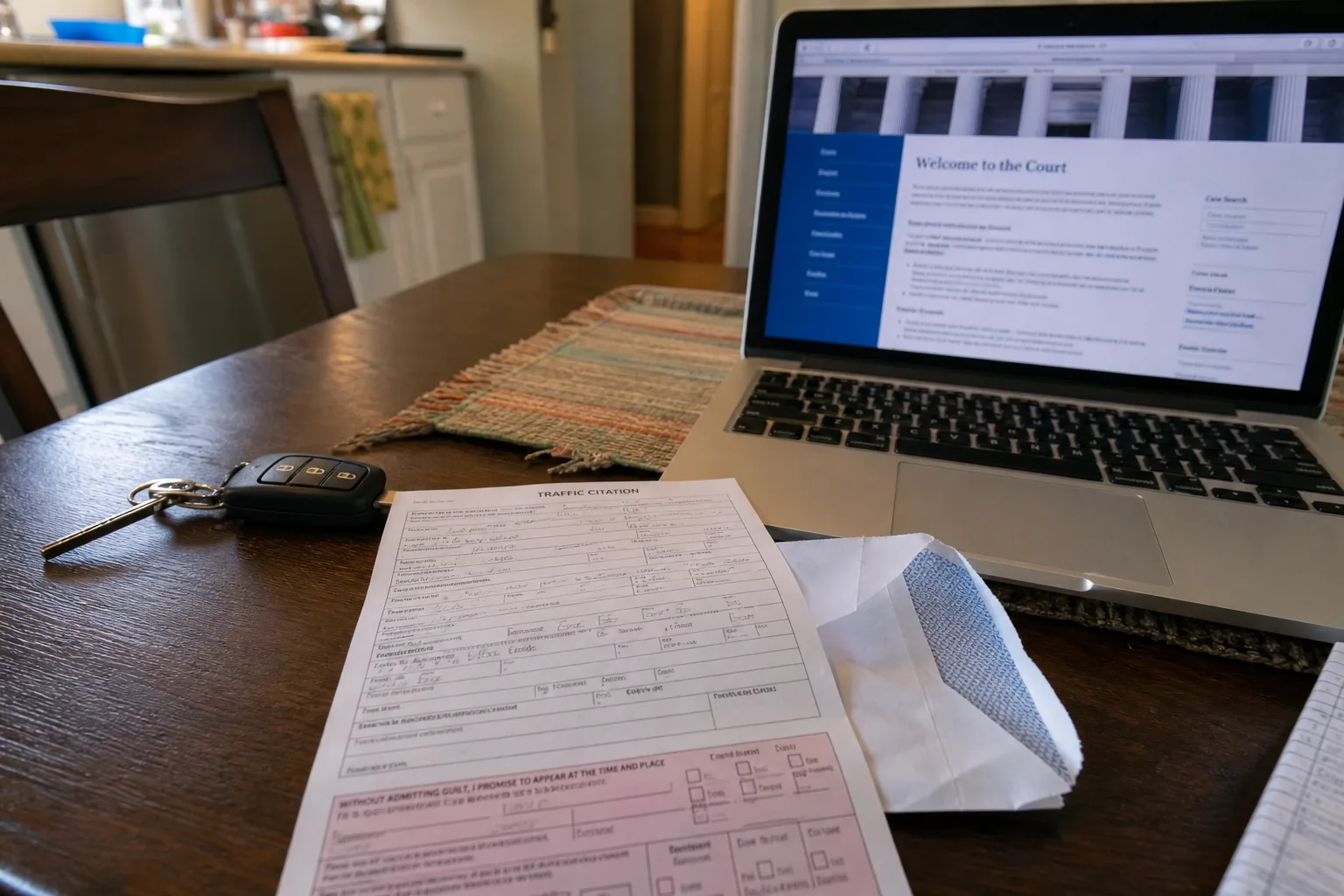
A traffic citation is one of the few legal documents most people receive with a payment stub attached, and the stub is the whole design. It invites a decision in about ninety seconds: sign, pay, done. What the stub does not say is that paying is a finding, that the finding is forwarded to a licensing agency, and that the licensing agency's record is the version your insurer eventually reads. The question of whether you need counsel is really a question about that chain, not about the fine, and the chain runs differently depending on which court's name is printed at the top.
How the ticket stopped being a court appearance
For most of the twentieth century a moving violation was a criminal charge, handled the way small criminal charges were handled, in person, before a judge, with the officer present. Volume ended that. As registrations and enforcement grew, state after state reclassified ordinary speeding and equipment violations as civil infractions, moved them out of the criminal calendar, and built a mail-in process around them. The reform was genuine and it worked: it cleared dockets, it removed the risk of jail for a rolling stop, and it let a driver resolve a minor matter without missing a shift. It also changed who was watching.
Once a payment could substitute for a hearing, the default outcome became the one that required no participation from anybody. Nobody reviews a mailed check for whether the radar was calibrated, whether the officer's narrative matches the diagram, or whether the driver had a clean record and would have been offered a reduction had anyone asked. The infraction system did not remove those arguments. It just made them opt-in, and the opt-in is a box on the back of a form that most people never turn over. That is the first handover, and it is the one drivers control entirely.
Court to licensing agency to insurer, with nobody supervising the seams
The second handover is the expensive one. A finding of committed goes from the court to the state licensing agency, where it lands on an abstract of driving record, and the abstract is what an insurer pulls at renewal. The fine is a one-time number. The surcharge is a multi-year one, applied to every vehicle on the policy in many rating plans, which is why a modest citation on a two-car household can cost several times its face value before it ages off. Commercial drivers sit in a harsher version of the same system, since federal commercial licensing standards overseen by the Department of Transportation require certain convictions to be reported and can disqualify a license outright.
None of those consequences appear on the citation, and no single office is responsible for explaining them to you. The court knows the fine, the licensing agency knows the points, and the insurer knows the surcharge, and each one assumes another party handled the disclosure. That gap is exactly where a decision about counsel should be made, because the value of an attorney is almost never the fine. It is keeping the finding off the abstract, or converting it into something the abstract treats differently, which is a fight worth paying for when the surcharge is large and pointless when it is not.
The local rule decides more than the facts do
Two drivers cited for the same speed on the same day can face genuinely different systems depending on the jurisdiction. Some states allow a deferred finding once every several years, on request, with no lawyer involved and no discretion for the judge to refuse a qualified applicant. Others rely on prosecutorial negotiation, which means the outcome depends on whether a prosecutor actually staffs infraction calendars in that court, and in many municipal courts one does not appear at all. Camera citations are treated as non-moving violations in some states and reported like any other in others. Contested-hearing rules vary too, on whether the officer must attend, on whether written statements are admissible, on how much notice a subpoena requires.
This is why local practice, not the strength of your explanation, is the thing to establish first. In a city where infraction calendars are negotiated rather than tried, and where the abstract consequences are the real exposure, hiring a traffic ticket lawyer who appears in that specific courthouse weekly buys knowledge of the local reduction practice that no amount of reading gets you. In a jurisdiction with a clean statutory deferral you can request yourself, that same money buys very little. The facts of the stop matter less than which of those two worlds you are standing in.
Where your own signature is genuinely enough
A short list of conditions makes self-handling the sensible call, and they tend to travel together. You hold an ordinary personal license, not a commercial one. The violation is a low-point, non-criminal infraction with no accident, no injury and no allegation of reckless or excessive speed. Your record is clean enough that one entry will not trip a suspension threshold or a probationary-license rule. And the jurisdiction offers a mitigation hearing or a statutory deferral that a self-represented driver can obtain by asking, in writing, before the response deadline printed on the citation. Meet all of those and the fee for representation exceeds anything representation can recover.
Reverse any one of them and the arithmetic flips fast. A second citation inside a short window, a criminal traffic charge, a license already carrying points, a commercial endorsement, or a court where the only route to a reduction is a negotiation you have no standing to open: each of those turns the question from cost of fine into cost of consequence. Counsel is also worth an hour when you simply cannot tell which category you are in, because the answer to that is jurisdictional and someone practicing there knows it in a sentence.
The deadline on the citation is the one thing that does not vary much, and it is short. Establish the local rule first, price the surcharge second, and decide about a lawyer third, with both numbers in front of you rather than the fine alone.