Careers & Jobs
A Job Ad Asking for Three Certifications? Trace Each One Back to Whoever Requires It
Most credentials in a trades job ad were chosen by an insurer, a general contractor or a licensing board, not by the person hiring you, and knowing which changes what you buy first.
Careers & Jobs·Harriet Bosworth
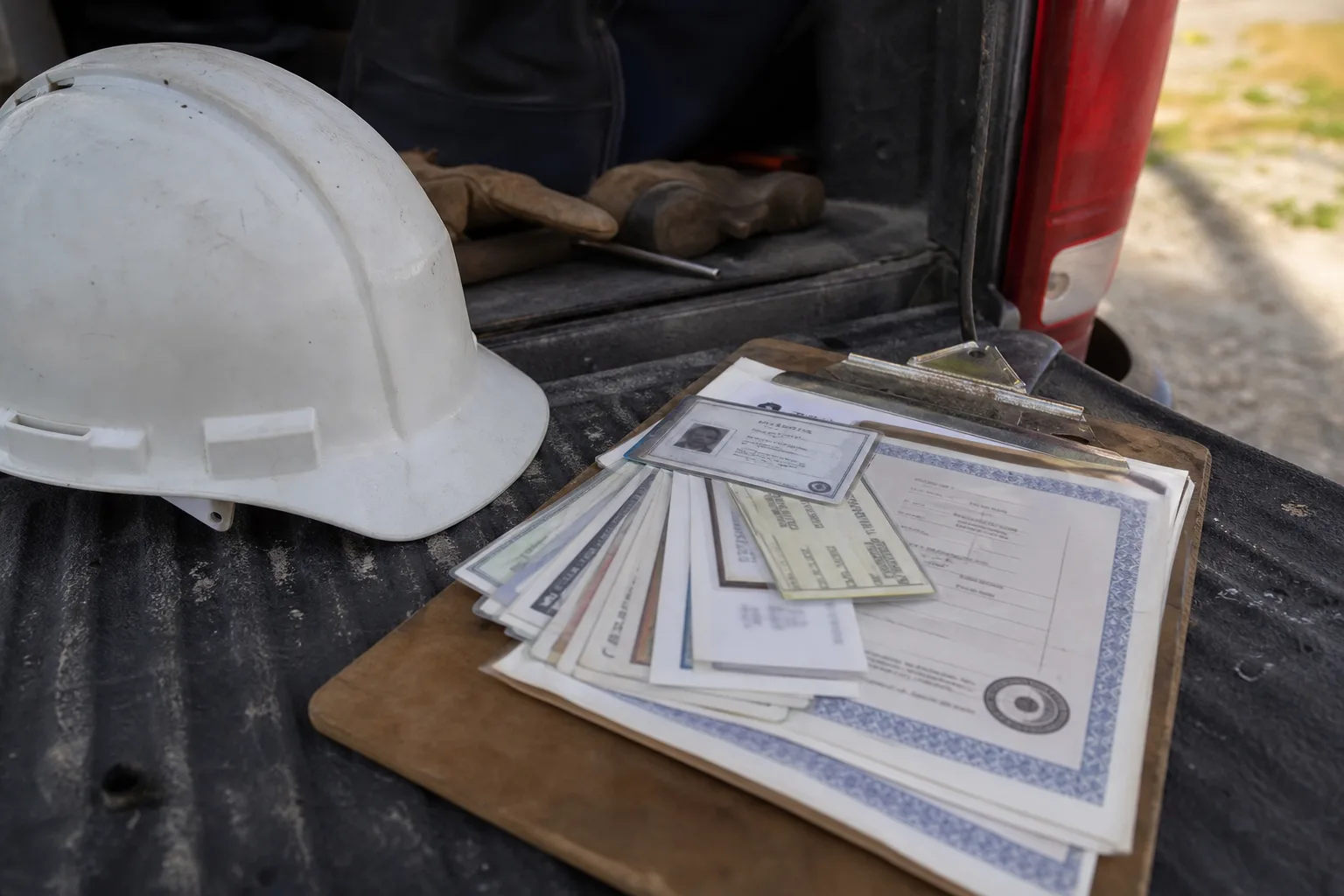
A listing for a commercial HVAC technician will often name four things in a row: a state journeyman license, a federal refrigerant handling certification, a ten-hour construction safety card, and a clean driving record. They read as one list, written by one person, expressing one set of preferences. They are nothing of the kind. Each of those four came from a different party, each of those parties has a different reason for wanting it, and only one of them is the employer. Sorting out which is which tells you what to spend money on this month and what can wait until you are hired.
The person who wrote the ad usually did not choose the list
Hiring managers in the trades inherit their requirements. The state licensing board sets what you legally cannot do without a license, and that part is genuinely non-negotiable. The general contractor running the site sets prequalification terms, which is why safety cards appear on jobs where nobody has ever asked to see one. The company's insurance carrier sets conditions on the policy, which is where the driving record and sometimes the age minimum for operating a company vehicle come from. Understanding the source matters because sources behave differently. A board will not bend. A carrier sometimes will, at a price the employer pays.
The overlooked party in almost every hiring conversation is the underwriter. You will never meet this person, they will never see your work, and they have more say over whether you can be put on a particular truck than the foreman who liked you. When an employer says they cannot use you for six months, that is frequently not a judgment about your skill. It is a line in a policy about drivers under a certain age, or about untrained workers on elevated surfaces, or about who may be listed on a certificate of insurance sent to a client. Knowing that reframes the whole exchange.
How to read the list backward
Take the posting and assign each item an owner before you assign it a cost. Licenses and registrations that carry legal weight belong to the state, and their websites publish exactly what hours, exams and fees apply, along with which out-of-state credentials they accept. Safety training cards mostly trace to the site owner or the general contractor, working within a framework the Occupational Safety and Health Administration is responsible for, and they tend to be short, cheap and widely available. Manufacturer certifications belong to the manufacturer and usually to a distributor relationship your employer already has. Anything about vehicles, tools over a certain size, or working at height, assume the carrier.
Then ask a plain question in the interview: which of these do I need on day one, and which can I complete after you hire me. Nobody good is offended by that question, and the answer is diagnostic. If they can tell you instantly that the license is a hard gate and the safety card is something they run in-house every quarter, you are talking to a shop that understands its own obligations. If the list turns out to be a copy of a posting from four years ago, you have learned something else worth knowing about how the place is run, and you have also just found room to negotiate.
The consequences people rarely trace back
Credentials shape a working life in ways that look like luck at the time. The technician who happens to hold the refrigerant card gets sent to the jobs with the equipment, which is where the overtime and the diagnostic hours are, which is where the next raise comes from. The one without it stays on installs. Two years later they have different resumes and neither of them made a decision they would describe as a career choice. The same is true of the fall protection card that decides who goes on the roof and who stays on the ground handing things up.
It runs the other way too. A missing card can quietly disqualify your employer, not just you. Site access on institutional work, hospitals, schools, federal buildings, is often audited, and a crew showing up one badge short can be turned around at the gate, which the general contractor remembers when the next bid comes in. That is the mechanism behind a phenomenon workers notice and misread constantly: a small shop that keeps losing the good work to a slightly more expensive competitor. The competitor is not better connected. It is prequalified.
Who holds the paper, and what travels with you
Ask, before you accept, who keeps the record. Some certifications are personal and portable, issued to you, renewable by you, valid at any employer. Others are effectively institutional: the company paid, the company holds the file, and the training is tied to procedures that only mean something inside that company. Both are worth having. Only one of them is worth anything the week after you leave. When an employer offers to pay for training, the useful follow-up is not about cost but about custody, whether you receive a card or a number, whether renewal notices come to your address, and whether a repayment agreement attaches if you resign inside a set period.
Keep your own copies regardless. A folder with scans of every card, the issue and expiration date, the issuing body, and the exam or hour records behind it will save you a week the first time a general contractor's compliance portal asks for uploads on a Friday afternoon. Renewals are where people lose ground, because a lapsed card is treated exactly like a card you never had, and the retest is usually longer than the renewal would have been. Set the reminders a full quarter early. Availability of seats, not your intentions, sets the real deadline.
Sequencing what you buy
Spend first on the credential that a government body requires, because it is the only one nobody can waive for you. Spend second on whatever unlocks the class of job you actually want, which is usually the one attached to specific equipment or specific hazards. Let the employer cover the short safety cards, since most of them run them internally anyway and the cost to them is an afternoon. Anything a manufacturer offers free through a distributor, take, even when it looks like a sales seminar, because attendance lists get consulted when warranty work is assigned.
The list in a job ad is a stack of other people's requirements wearing one typeface. Once you can name the party behind each line, the list stops being a barrier and starts being a map of who has to be satisfied, in what order, and by whom.