Education
One Published Date, Six Real Ones. Building an Enrollment Calendar That Actually Holds
Most families put the deadline on the calendar and stop there. The careful version works backward through the documents, payments and confirmations that the date depends on.
Education·Osman Duraklar
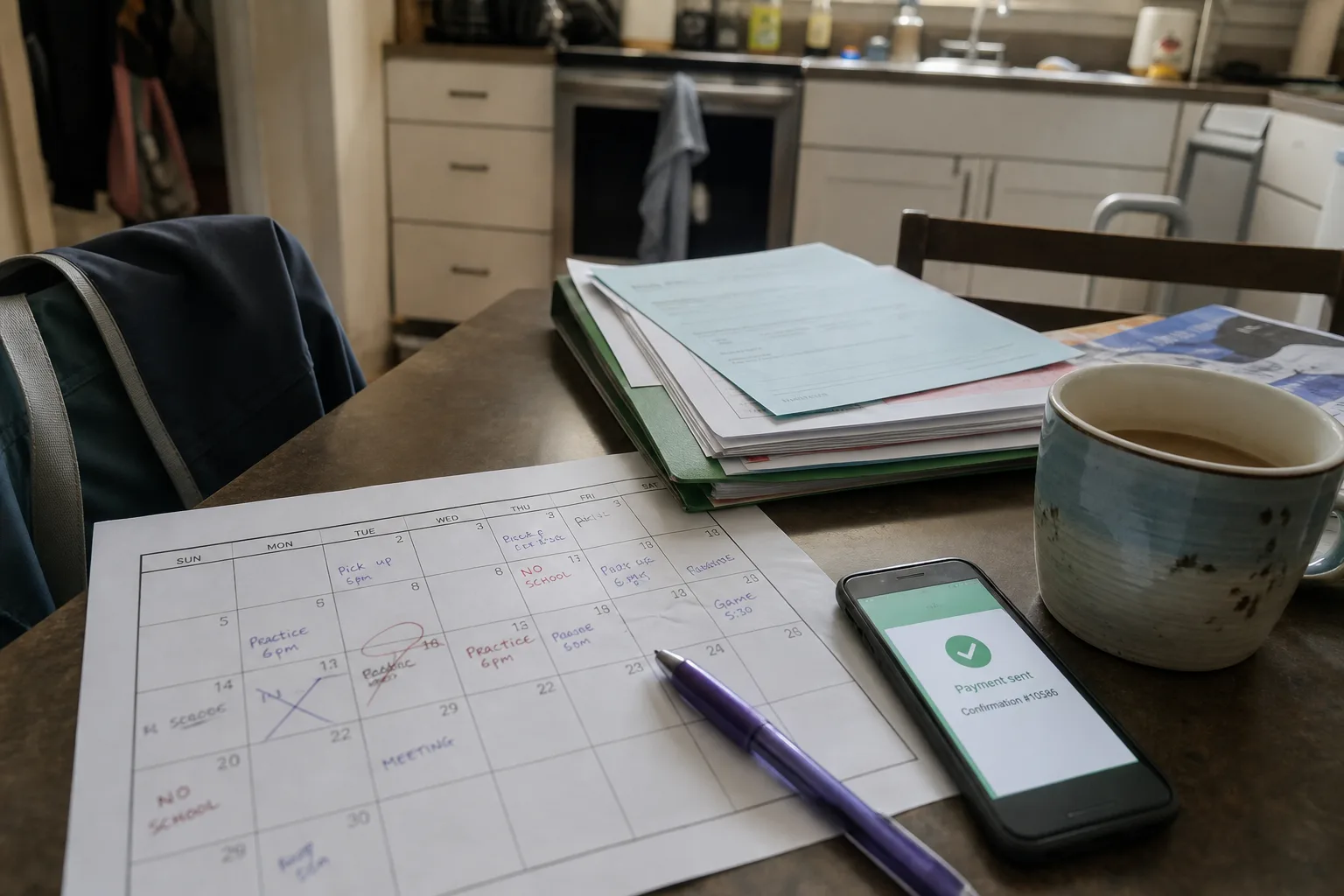
Two families in the same district can meet the same enrollment deadline and end up in completely different positions, because one of them treated the published date as the task and the other treated it as the last item in a chain of six. The difference does not show up in August. It shows up in October, when one household is sorting out a schedule change or a residency verification it did not know was pending, and the other is not. The published date is the easiest part of the job. It is also the part that is least likely to be the thing that fails.
The version that clears the bar, and the version that holds up
A barely adequate job looks like this: someone finds a date on a school or program website, puts it in a phone calendar with a one-day reminder, and submits the application on the morning it is due. Nothing about that is wrong. It works maybe most of the time. The thorough version starts from the same date and asks what has to be true before it can be met: which documents must exist, which of those come from third parties, which payments must clear rather than merely be initiated, and which confirmation the family should be holding afterward. That produces a list of five or six dates, not one, and the earliest of them is usually weeks ahead of the published one.
The gap between the two approaches is almost entirely made of other people's turnaround times. A transcript request, an immunization record from a pediatric office, a proof-of-residency letter from a utility, a signed release from a noncustodial parent: none of these are hard, and all of them run on someone else's queue. Ask the office how long a request typically takes and you will often get a round answer, five business days, two weeks. Round answers are estimates dressed as policy. Ask what the range has actually looked like this season and the honest reply is usually a range, which is the number you should plan against.
Which deadlines genuinely close, and which only appear to
Not every missed date costs the same, and a household that cannot tell them apart wastes anxiety on the reversible ones while walking past the hard ones. Priority deadlines for course registration, program preferences or transportation requests usually degrade rather than close: you get a later slot, a longer bus route, a waitlist position. Financial aid and scholarship dates behave differently, because the pool of money is finite and awarded in sequence, so being late does not mean being denied, it means arriving after the funds are committed. Federal Student Aid, within the Department of Education, oversees the federal application cycle, and state and institutional deadlines sit on top of it with their own separate closing dates.
Then there is the small set that closes for real. An enrollment deposit that holds a seat. A magnet or charter lottery entry. An open enrollment window for a health plan attached to a school employer or a student plan. A residency documentation deadline that determines tuition classification for the year. These share a common feature: someone else takes the thing you did not claim. A good calendar marks these differently from everything else, in plain language, with a note about what specifically is lost, because a deadline described as important gets treated like all the others by the second week of a busy month.
Where the published number came from
Published dates are not all issued by the same authority, and that matters when they conflict. The date on a program page may have been copied from last year's catalog by someone in communications. The date in the student information system is the one the software will enforce at midnight. The date the registrar or admissions office quotes on the phone is the one a human being can override. When those three disagree, and they do disagree, the enforceable one is whatever the system does at the cutoff, in whichever time zone the system runs on, which is not necessarily yours. Ask which office owns the date. That question sorts out most of the confusion in a single call.
The same skepticism applies to a deadline that lands on a suspiciously tidy day. August 1, May 1, the first Friday of the month: these are frequently administrative conveniences rather than fixed statutory dates, which is useful to know, because a convenience date can sometimes be extended by the office that set it, while a state-mandated one cannot. Asking politely which kind you are looking at costs a phone call and occasionally buys a week.
What the finished calendar looks like on paper
One page, one household, every date with three things attached: what it is for, who enforces it, and what evidence proves you met it. Confirmation numbers, screenshots of submission pages, receipts showing a payment posted rather than pending, the name of the person who told you a document had been received. Keep the page somewhere both adults can see it, because the single most common failure is not forgetting a date but each person assuming the other handled it. Review it once a month, briefly, and cross off what is genuinely finished.
The families who never seem to have an enrollment crisis are rarely more organized in general. They have simply stopped trusting a single date to carry an entire year, and they found out early which of their dates were soft and which were not.