Homes
Paying Someone for the Gutters and the Ducts? The Two Pages and Four Tools That Keep It Straight
The recurring upkeep jobs worth hiring out get simpler once you keep a certificate of insurance, a one-page scope sheet, and a short shelf of your own tools.
Homes·Harriet Bosworth
The jobs that end up hired out are rarely the hard ones. They are the ones performed off a ladder, on a roof edge, inside a duct trunk, or on the underside of something you cannot see while standing on the floor. After enough years of buying that work, the pattern stops being about finding a good crew and starts being about keeping a record clean enough that the next crew inherits it. Two pieces of paper and a short shelf of tools do most of that. Neither costs much, and both survive a change of contractor.
The certificate of insurance exists because your policy has an edge
A homeowners policy will generally respond when a guest falls on your steps. It behaves very differently when the person who fell was being paid to be forty feet up, cleaning the gutter above your porch roof. That gap is the whole reason a certificate of insurance exists: it moves the injury and the damage onto someone else's general liability and workers' compensation coverage before anything happens. Elevated and ladder work is the kind of hazard the Occupational Safety and Health Administration is responsible for regulating, which is also why the crews that carry real coverage tend to be the crews that own real equipment.
Read three things on the certificate and ignore the rest. The named insured has to match the business name on the invoice, not a similar-sounding one. The policy period has to cover the day the work happens, which for an annual gutter contract means checking again each fall. And workers' compensation should appear as its own line, because general liability alone leaves the injured worker with nowhere to go except you. Ask for the certificate to be sent by the insurance agent rather than forwarded by the contractor, and save the file with the date in its name.
A one-page scope sheet turns three verbal quotes into three comparable ones
Cleaning and upkeep quotes diverge because the words are elastic. Gutter cleaning might mean scooping the troughs, or it might mean scooping, bagging the debris, flushing every downspout, and checking the hangers and the seams while the ladder is already there. Duct cleaning might mean the supply registers only, or the returns and the blower compartment too. Write the scope yourself, in plain sentences, before you call anybody, and send the same page to each bidder. What you learn from the ones who add items to your page is usually worth more than the price spread.
Keep the page short and specific about the boundaries. Name the number of stories and any section that requires working off the roof rather than a ladder. Say who removes the debris and where it goes. State that the crew photographs anything they find and damaged, before touching it. Note the payment terms, and note that the final payment follows the photos, not the truck pulling away. A scope sheet you reuse each year quietly becomes an inspection history, because the additions from one season are the questions you ask the next.
Four tools that mean you never have to climb to check the work
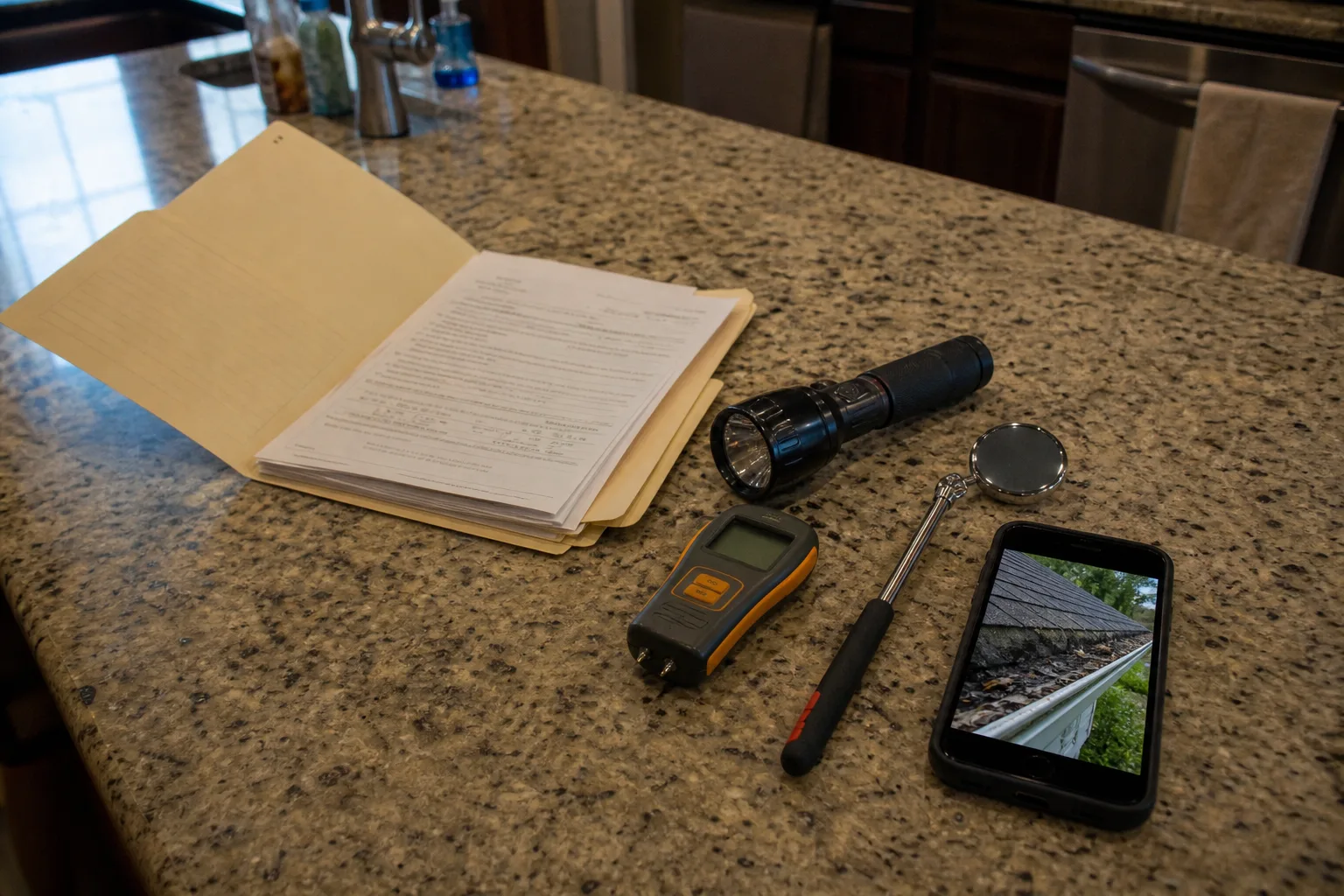
The first is your phone, used deliberately: timestamped photos of the trouble spots before the crew arrives, so nobody argues later about whether the fascia stain was already there. The second is a bright handheld flashlight, powerful enough to throw light into an attic bay or along a soffit line from the ground. The third is a cheap telescoping inspection mirror, which does more for under-sink and behind-appliance checks than any amount of contorting. The fourth is a moisture meter, an inexpensive tool that settles a question about a damp baseboard with a number instead of an opinion.
None of these are for doing the work. They are for describing it accurately when you call, and for verifying it afterward without putting your own weight on a ladder. A crew that arrives to a homeowner who says the downspout on the northeast corner backs up in heavy rain, and who has three photos of the overflow, prices the job differently from one that arrives to a homeowner who says the gutters need doing. Precision on your side compresses the guesswork that padding is meant to cover.
The file, and the two pages you will want in April
Keep one folder per system, digital or paper, and put four things in it: the certificate, the scope sheet, the invoice, and the photos. Add a running log with the date, the company, what was found, and what was deferred. That log is what tells you the third gutter season in a row produced the same note about a sagging run, which is the point at which a repair is cheaper than another cleaning.
Two more pages matter if the same person cleans for you regularly. A completed Form W-9 collected before the first payment, rather than chased in January, keeps year-end reporting from becoming a scramble. And a short written note of the access arrangement, which door, which code, whether the code was changed after, protects both sides if something goes missing. Keep the codes rotating and the log current.
The compounding benefit is that the file outlives the relationship. When a crew retires, moves, or stops answering, the next one reads three years of findings in ten minutes and prices the work from evidence rather than from a walk around the house.