Commerce
Signing a Scope of Work? Read It as the Person Who Will Actually Do the Job
A scope of work is rarely read by the two people who negotiated it. Five checks that test whether the document survives the handover to whoever does the job.
Commerce·Neville Pemberton
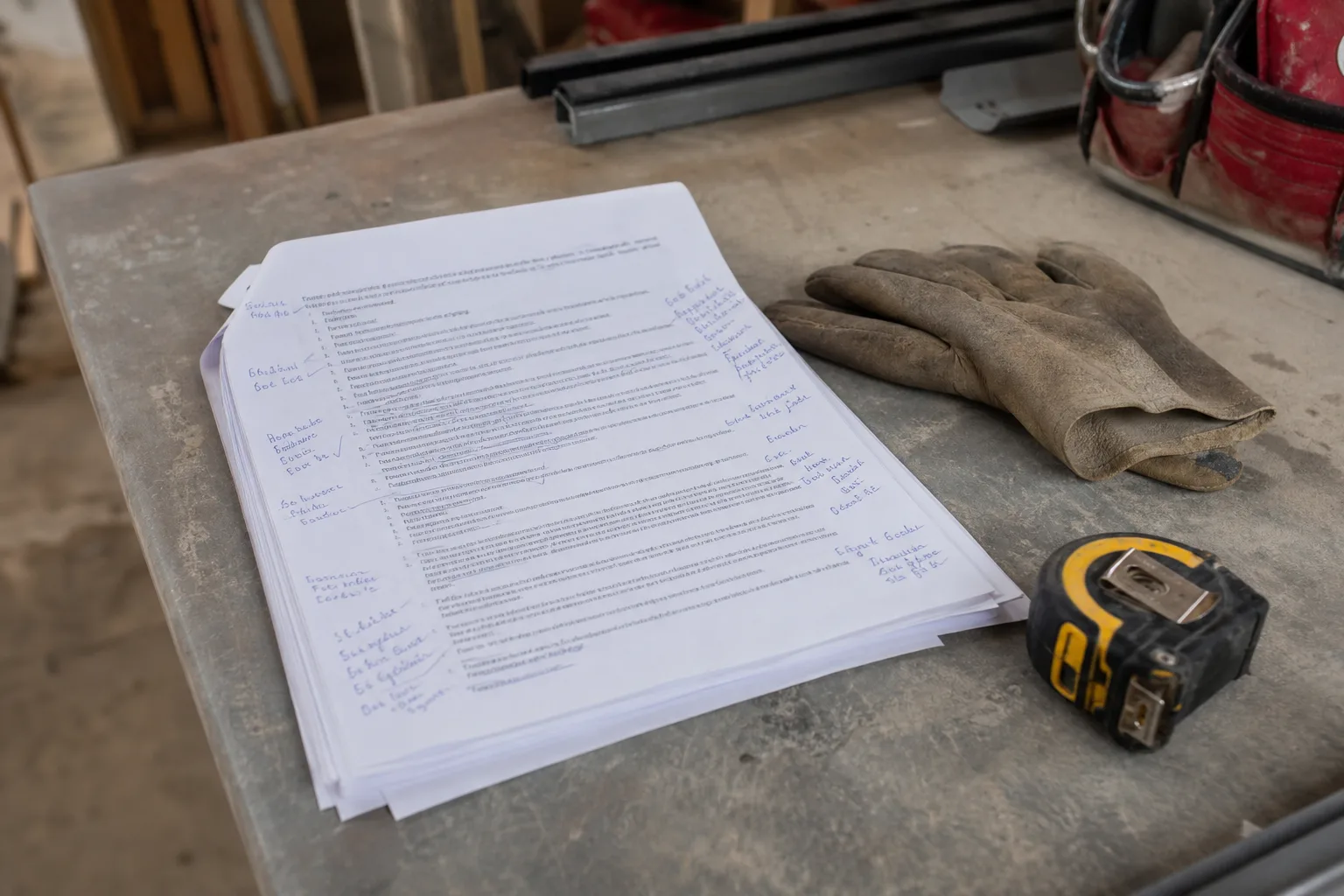
The two people who negotiate a scope of work are almost never the two people who live inside it. You talk to a principal, a partner, a sales lead, someone whose job is to win the engagement and then move to the next one. The document then travels down to a project manager, an associate two years out of school, a crew foreman, a subcontractor who was not in the room. That transfer is where scopes fail, not at signature, and the test of a good scope is whether it still makes sense to a competent stranger reading it cold on a Tuesday morning with nobody available to ask.
1. Whether the document names the person doing the work, and what happens when that changes
Most scopes name a firm and a price and leave the labor abstract, which is convenient for the vendor and expensive for you. Ask who is assigned, by name and role, how much of their time the engagement gets, and what notice you receive if they are replaced. Staff turnover is normal and not a scandal; the question is whether substitution happens with your knowledge or without it. A scope that commits to naming replacements in writing, with a short window to object, gives you the one thing you cannot buy after the fact, which is early warning that the person who understood the job has left it.
2. Whether "done" is written in terms the person doing the work can verify alone
Acceptance language usually reads as satisfaction, which is a feeling, not a standard, and feelings cannot be checked at four in the afternoon by somebody deciding whether to pack up. Push for criteria that a technician or associate can confirm without calling you: a count, a measurement, a document delivered in a stated format, a test that passes. This is the single highest-value edit available to you, and it is also the one vendors accept most readily, because vague completion language costs them return visits and disputed invoices. Write the finish line where the person crossing it can see it.
3. Whether exclusions and supply are settled before anyone needs them
Every scope has a shadow scope made of what it silently assumes somebody else will handle: permits, access, credentials, staging space, data in a usable form, a decision from a third party. The overlooked party discovers these gaps first and has the least authority to fix them, so the job stops while a question travels back up two levels. Read the scope hunting for the word that implies a dependency without naming an owner. Then assign each one to a person, not a company, and state what happens to the schedule if the dependency arrives late. That paragraph prevents more delay than any milestone chart.
4. Whether the scope tells the worker how to reach a decision-maker
Handovers run both directions. The vendor's staff will need answers from your side, often within hours, and if the scope does not say who gives them, the default is that work continues on an assumption nobody approved. Name a single point of contact with authority, a backup, and a response window that is honest about your own availability. Say what the crew should do when the window lapses: stop, proceed on a stated default, or document and continue. The Federal Trade Commission oversees how services are described and sold to consumers, but no regulator can supply the internal wiring that keeps a job moving when you are unreachable.
5. Whether the closeout leaves the next person able to work
The final handover is the one buyers scrutinize least and regret most, because it happens when everyone is finished and nobody wants to reopen anything. Specify what you receive: source files rather than exports, native formats rather than flattened ones, the model numbers and finishes actually installed rather than the ones specified, warranty registrations completed in your name, credentials transferred out of the vendor's accounts and into yours. Ask who owns the work product and who may reuse it. A scope that ends with a real inventory of deliverables is a scope that another firm can pick up in three years without paying to rediscover what was done.
Building the judgement rather than the checklist
These five checks are useful individually, but the durable skill underneath them is a habit of reading. Take the draft and read it as the foreman, the associate, the substitute, the successor firm. Mark every sentence that requires knowledge those people will not have, then ask for that knowledge to be written down. Vendors who work carefully tend to welcome this, because ambiguity costs them margin too, and their willingness to specify is itself the clearest signal you will get about how the engagement will run.
A scope negotiated well does not just describe a job. It survives being read by strangers, which is the condition under which almost all of it will actually be read.