Personal Finance
Buying a Ring That Costs More Than It Looks? The Disclosure Rules Changed, and Here Is What to Ask
Lab-grown stones, treated gems and lower-karat gold all changed how jewelry has to be described, and the questions that protect a buyer changed with them.
Personal Finance·Harriet Bosworth
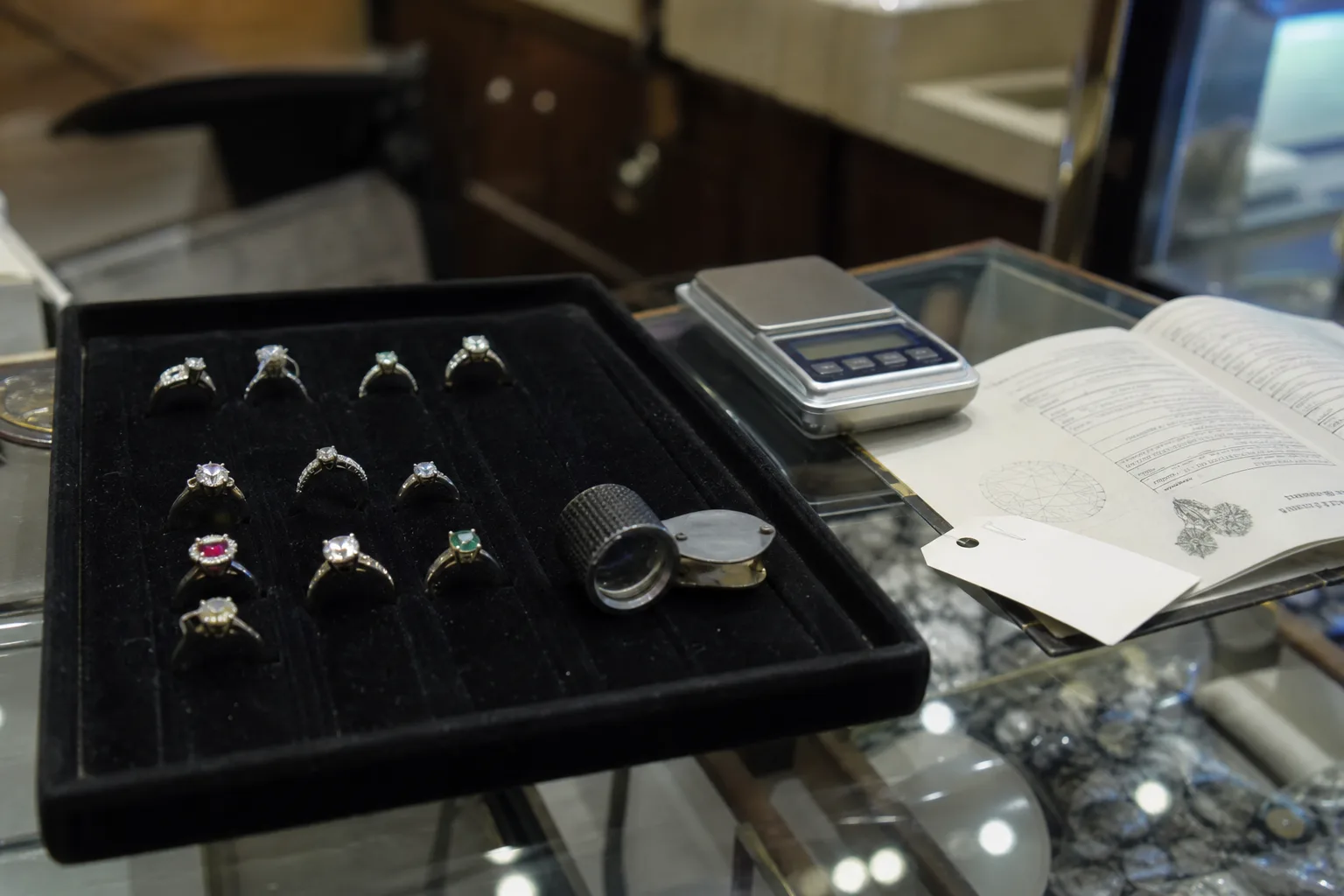
Two rings sit in the same tray, cut to the same shape, set in metal the same color, and one is priced at four times the other. Nothing visible explains the gap. The explanation lives in words: whether the stone grew in the ground or in a reactor, whether it was heated, filled or irradiated after it was mined, how much gold is actually in the alloy, and who wrote the paperwork that says so. Those words are governed, loosely but genuinely, and the rules behind them have moved in the past several years for reasons worth understanding before you hand over a card.
Why there are rules about what a jeweler may call a stone
Jewelry is the rare retail category where the buyer usually cannot verify the claim and the seller usually can. A carat weight is checkable with a scale, but origin, treatment and fineness are laboratory questions, and a consumer standing at a counter has no practical way to answer them. That asymmetry is the whole reason description standards exist. The Federal Trade Commission oversees how jewelry, gemstones and precious metals are described and advertised in the United States, on the straightforward principle that a claim likely to mislead an ordinary buyer about what a thing is counts as deception regardless of whether anyone intended it.
The practical effect is that the industry's vocabulary is not free. A seller may not use a word that carries a value signal unless the goods earn that signal, and the burden of accuracy sits with the person who knows more. That is why a counter conversation is worth having in plain terms. You are not being difficult by asking a jeweler to name the thing precisely. You are asking for the disclosure the structure already contemplates, and a seller running a careful shop will have the answer ready, usually in writing, because writing it down protects them too.
What changed: laboratory-grown stones stopped being a footnote
The biggest shift came from supply. Laboratory-grown diamonds moved from a curiosity to a mainstream product in a short stretch of years, and the old descriptive conventions, which had quietly assumed that a diamond meant a mined diamond, stopped doing useful work. The guidance was revised to reflect that a laboratory-grown diamond is chemically and optically a diamond, which means the honest distinction is not whether it deserves the name but whether the buyer has been told clearly how it was made. Qualifiers like grown, created or laboratory-created have to sit next to the word, in equal prominence, not in a footnote on the back of a tag.
The second change pushed the other direction, against vague romantic language. Terms suggesting a stone came out of the earth when it did not, or implying an environmental or ethical benefit that cannot be substantiated, drew sharper attention, because those claims now carry real price consequences. This matters at resale more than at purchase. Laboratory-grown stones have behaved very differently from mined ones in secondary markets, and a buyer who was told plainly what they bought can plan around that, insure it correctly, and treat the piece as jewelry rather than as a savings account. Clear labeling at the counter is what makes that planning possible.
Treatments, fineness and the words that moved quietly
Less discussed, and more likely to catch an ordinary buyer, is the treatment question. A great many colored stones in retail cases have been altered after extraction: heated to deepen color, fracture-filled with glass or resin to hide internal breaks, dyed, irradiated, or coated. Some treatments are stable and routine, and some change how the stone must be cleaned, repaired and insured. A lead-glass-filled ruby, to take the common example, can be damaged by a jeweler's torch during a simple prong repair, which turns a sixty dollar bench job into an argument about who owes for the stone. Disclosure of treatments that affect value, durability or care is expected, and asking directly is the cheapest insurance there is.
Metal fineness also loosened in a way that rewards attention. Alloys below the traditional ten karat threshold are sold in the United States, and the current approach allows them provided the karat content is disclosed accurately rather than implied through the general word gold. Plated, filled and vermeil each mean a specific construction with a specific thickness of precious metal over a base, and the differences decide how long the finish survives daily wear and whether the piece can be resized or refinished at all. None of this is hidden. It is written on tags in abbreviations most buyers have never had a reason to decode, and one question at the counter decodes all of them.
The grading report and the appraisal do two different jobs
Buyers routinely treat these as one document. They are not. A grading report from a laboratory describes the stone: carat weight, measurements, cut proportions, color and clarity assessments, whether the material is natural or laboratory-grown, and what treatments were detected. It deliberately does not state a value. An appraisal states a value for a stated purpose, and the purpose changes the number. A replacement-value appraisal written for an insurance schedule reflects what it would cost to buy a comparable piece at retail, which is reliably higher than what the piece would fetch if you sold it tomorrow, and that gap is a feature of the assignment rather than an error.
Two practical consequences follow. First, grading laboratories are private and not uniform, so the name on the report matters as much as the grades printed inside it; the same stone can carry different color and clarity grades from different labs, and a seller who volunteers which lab issued the report and why is telling you something useful. Second, an appraisal written by the same person who sold you the piece is doing double duty, and insurers increasingly want the valuation and the sale separated. Independent appraisers who work to recognized professional standards write the purpose, the methodology and the effective date into the document itself, which is exactly what an insurance carrier needs when a claim is filed years later.
The questions to ask before the card goes down
Start with identity. Ask the seller to state, and write on the receipt, whether each stone is natural or laboratory-grown, what species and variety it is, and what treatments are present or suspected. Ask for the karat or fineness of the metal and whether any component is plated, filled or vermeil. Ask who graded the stone, whether the report accompanies the piece, and whether the report number is inscribed on the girdle. Ask what the return window is, in days, and what voids it, because a sizing or an engraving commonly does. Each of these has a one-sentence answer in a well-run shop.
Then ask the questions that only matter later. What is the recommended care routine, and are there repair methods this stone cannot survive? Is there a warranty on the setting, and does an independent jeweler's repair void it? Will the shop provide a replacement-value appraisal, or does it refer out, and what does that cost? If the piece is secondhand or estate, what is known about prior repairs and prior stones. Pay with a method that leaves you a dispute route, keep the written description with the receipt, and photograph the piece and its paperwork the week you bring it home.
One more, which buyers skip and insurers care about: ask what the piece should be scheduled for rather than covered under a general contents limit. Most homeowners policies cap jewelry losses, particularly for mysterious disappearance, at a figure well below what a single engagement ring costs to replace. Scheduling an item adds a modest premium and removes the cap, usually the deductible with it, and the carrier will want the written description and valuation you just collected. Getting that done in the first month, while the documents are still in one envelope, turns an eventual claim into a short conversation.
The revisions of the past several years did not make jewelry harder to buy. They made the differences sayable, which shifts the work from guessing at a case to asking at a counter, and any seller who deals honestly in treated stones, grown stones and lower-karat alloys now has clean language available to describe exactly what is in the tray. Use it. The answers take five minutes and they follow the piece for the rest of its life.