Commerce
Shipping Without a Warehouse? Five Checks That Decide What the Customer Actually Receives
Outsourced storage and fulfillment has changed more in ten years than most contracts admit, and the differences now show up mainly on the customer's doorstep.
Commerce·Osman Duraklar
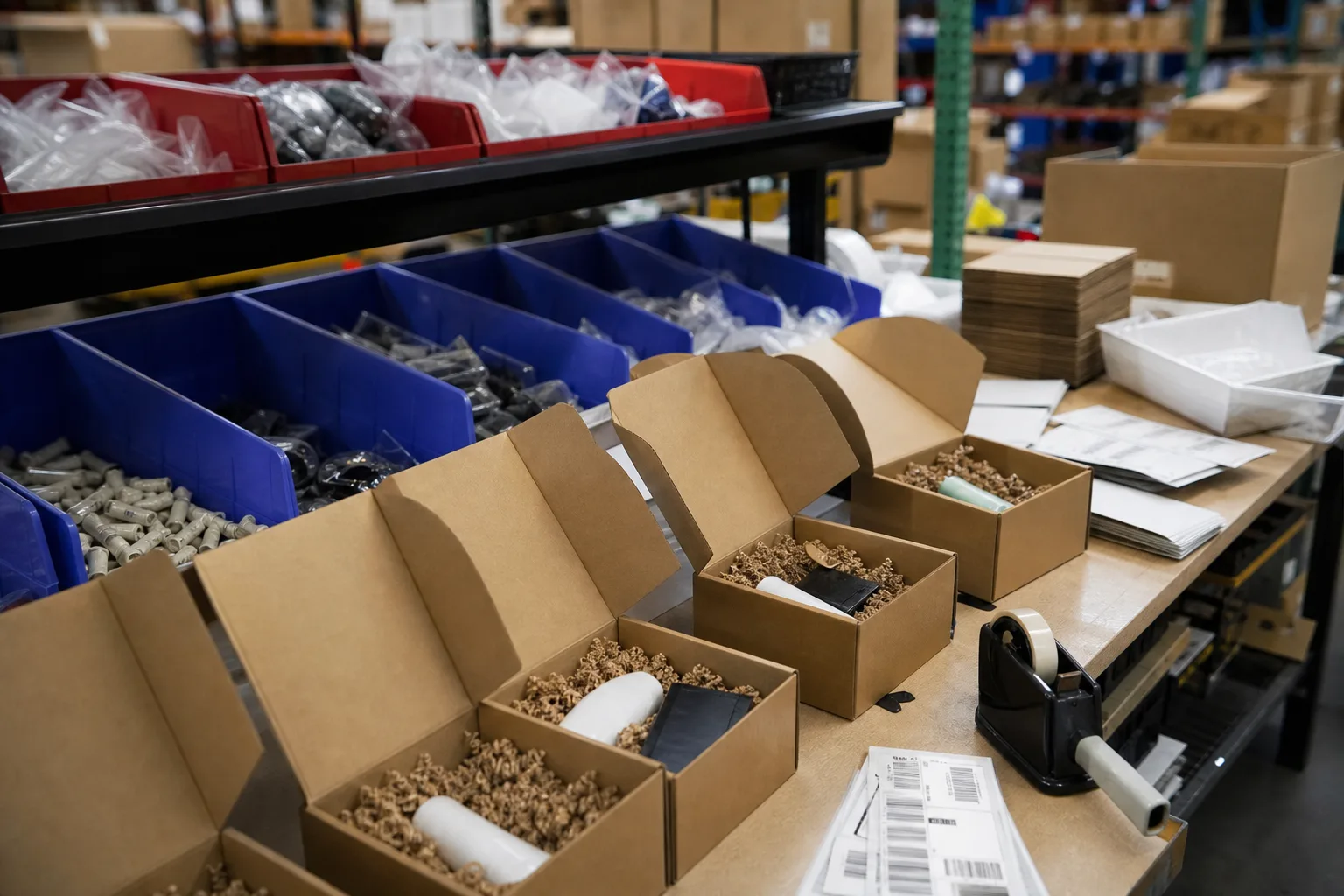
Ten years ago, handing your inventory to somebody else's building was mostly a storage decision with a shipping service attached, and the questions you asked were about square footage, pallet rates and how fast an order left the door. The answers arrived as round numbers, which should have been the first warning. What has changed is not that the buildings got better, though many did. It is that the customer now sees further into the process than you do, tracks the parcel more closely than your operations report does, and forms a judgment about your company from a box you never touched.
1. What the tracking page tells the customer before it tells you
A decade ago, a customer got a confirmation email, then a carrier number that updated once a day if the scan happened to fire. Now the same person watches a label get generated, sees the parcel sit for nineteen hours, and writes to ask why. That gap between label creation and first carrier scan is the single most common source of complaint mail that has nothing to do with your product. Ask a prospective provider for the actual distribution of that interval, not the average, and be suspicious of anything reported as a clean twenty-four hours.
The honest answer is usually a range, wider on Mondays and in the six weeks before Christmas, tighter in February. A provider who volunteers the range unprompted is telling you they measure it. One who quotes a single figure is telling you they quote.
2. Whether anyone assembles anything, or just picks it
The older model assumed one SKU on a shelf and one SKU in a box. Sales practice moved on. Bundles, starter sets, subscription boxes and retailer-specific packs all require somebody to build a unit that never arrived as a unit, and the labor for that has to sit somewhere. Doing it upstream at your supplier is rigid; doing it in your own spare room does not scale past a few hundred units; doing it at the fulfillment site is the arrangement that most closely matches how orders now actually arrive. This is where kitting services earn their keep, and where the pricing deserves a line-by-line read.
Ask what a built unit costs against a picked one, what the minimum run is, and what happens to the components that do not get used. Ask who owns the count discrepancy when a kit comes up one insert short, because somebody will.
3. How returns come back, and in what condition
The customer-side change here is the largest of the five. In the older arrangement, a return meant an email exchange, a printed form and a wait; now the expectation is a prepaid label inside the box or a code that generates one in four taps. That expectation is not optional, and the Federal Trade Commission is the body responsible for how shipping and delivery promises are made to consumers, which means the language on your returns page has consequences beyond goodwill.
What to check is the physical handling. Ask how a returned item is inspected, who decides whether it goes back to sellable stock, how long that decision takes, and whether refund release waits on it. A provider that holds returns in a corner for eleven days is quietly funding itself with your refunds and your reviews.
4. Where the stock physically sits, and what that does to transit time
Single-node fulfillment was normal ten years ago and is now a competitive disadvantage in some categories, though not all of them. Splitting inventory across two or three sites shortens the average customer's transit by a day or two and raises your carrying cost, your reconciliation work and your risk of showing an item in stock that is in the wrong building. The arithmetic is genuinely close for a business shipping a few thousand orders a month, and anyone who tells you otherwise without asking about your order geography is selling capacity rather than advice.
Get your own order data by ZIP code before the conversation. Then the provider's proposal can be tested against something instead of accepted.
5. What the box looks like when it is opened
The old contract treated packaging as protection. The current customer treats it as the first physical encounter with your company, photographs it sometimes, and notices when the mailer is two sizes too large and stuffed with air pillows. Presentation and protection are not the same objective, and the second-order cost of getting the balance wrong shows up as dimensional weight charges, which most shippers now pay on volume rather than mass.
So ask to see a sample outbound unit built to your specification before you sign anything, including the tape, the insert card and the void fill. Ask what a change to that specification costs mid-contract, and how much notice it takes. Small requests that require a change order every time will drift toward whatever is easiest for the floor.
The through-line in all five is that the visible surface of the operation moved outward. Ten years ago the customer saw a delivered parcel and inferred the rest; now they see the timestamps, the split shipment, the mismatched insert and the return window, and the provider you choose is effectively writing that part of your customer's experience. Read the pricing sheet, then ask for the ranges behind it.