Law
Speeding Ticket, One Prior, Insurance Renewing Soon. When to Hire and When to Handle It
A single 15-over citation with one prior in two years is the exact case where the decision to hire counsel is genuinely close, and here is how the rules decide it.
Law·Neville Pemberton
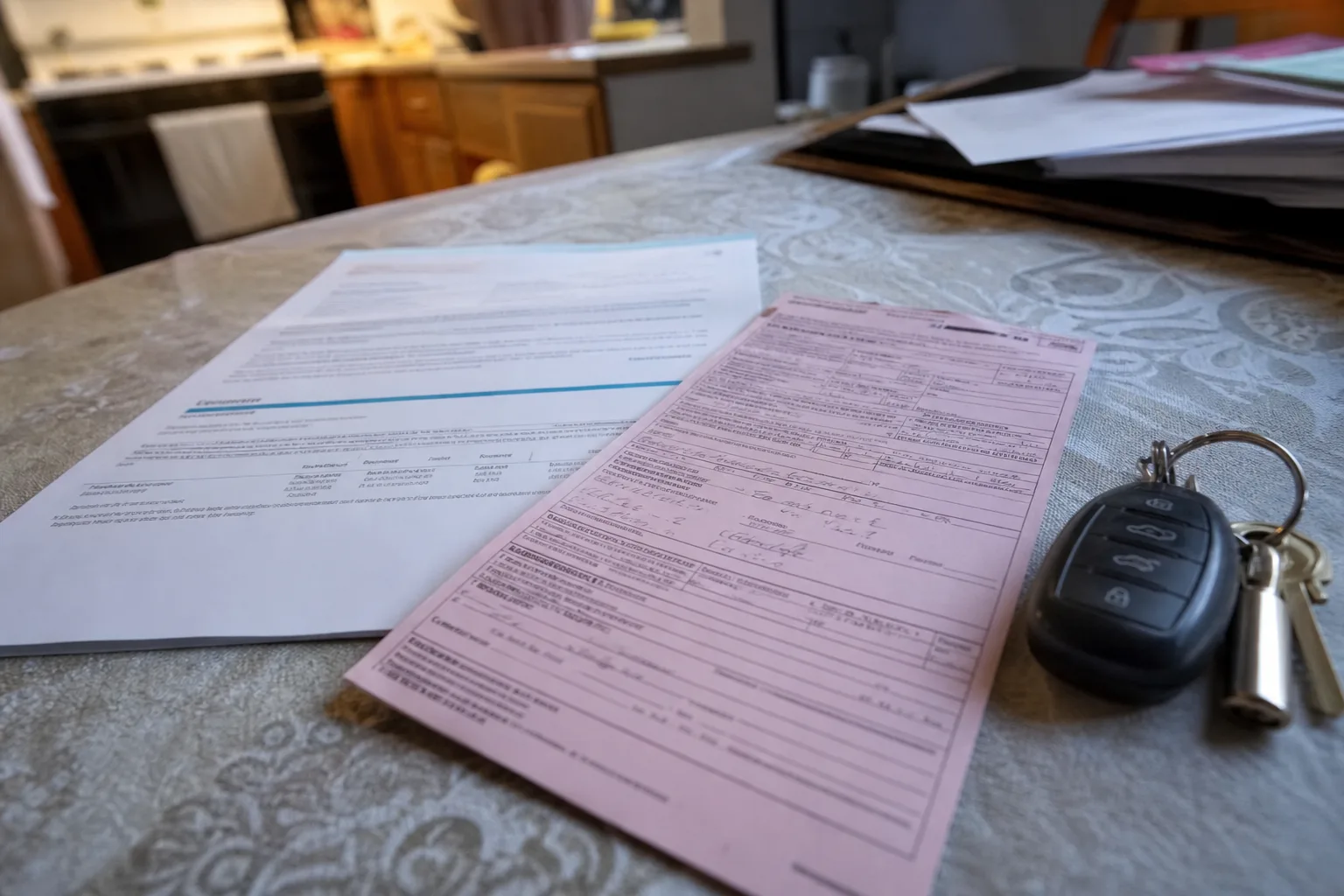
Take a single citation: 15 over on a posted 60, issued on a weekday afternoon, no collision, no passenger, no prior in the last eleven months but one about twenty months back. The fine is a few hundred dollars. The driver is insured with a carrier that reprices at renewal, and renewal is in March. That is the case where the hire-or-handle question is actually close, because the fine is affordable and the downstream cost is not, and because both answers are defensible on the facts. Most tickets are easier than this one in both directions.
What the back of the citation is really offering
Nearly every state prints three responses on the ticket: pay it, contest it, or ask for some form of reduced or explained disposition, usually called mitigation. Paying is a legal admission in most jurisdictions, and the admission, not the fine, is the expensive part, because it is what gets reported to the state driving record and from there to the insurer. Mitigation typically keeps the finding but may cut the penalty. Contesting puts the burden on the government. The deadline to choose is short, commonly fifteen to thirty days, and it runs from issuance rather than from when the driver gets around to reading it.
Two protections sit behind that choice and are worth knowing before you decide. The state has to prove the infraction, which in a radar or lidar case means some showing about the device, its calibration, and the officer's certification to use it. And the driver is generally entitled to see the evidence in advance, which is the officer's sworn statement, the notes, and any calibration records. Neither protection wins a case by itself. Both are why a contested hearing is not the empty gesture people assume, and why the second option on the ticket is frequently the wrong reflex.
The narrow case, worked through
With one prior twenty months back, the driver is close to whatever threshold the state uses to trigger a suspension review or a mandatory course, and close to whatever threshold the insurer uses to move a policy out of its preferred tier. Those two thresholds are set by different bodies, count differently, and look back over different periods, which is the single most useful fact in the whole decision. A deferral, where the state holds the ticket open and dismisses it after a clean year, exists in many jurisdictions and is often available once every several years per driver. Spending that one-time deferral on a small ticket, when a worse one may follow, is a real cost.
So the arithmetic is not the fine against the fee. It is the fine against the fee, plus the surcharge on a repriced policy across the three or five years the carrier will look back, plus whatever the deferral is worth if it is spent here instead of later. That is when a driver in this position calls a traffic ticket lawyer rather than mailing the payment, because the counsel is being bought for the sequencing decision as much as the hearing. A flat fee quoted for the whole matter is common in this work, and it is worth confirming that the number covers a continuance and a second appearance.
Where the handover goes wrong
Retaining someone is not one act, it is a transfer, and the transfer has parts that both sides assume the other has done. Counsel has to file a notice of appearance with the correct court, which means the correct court of several with similar names in one county. A written request for discovery has to go out early enough to be answered before the hearing date. The court's mail then goes to the attorney and stops going to the driver, so a notice the driver never sees is the normal condition rather than a warning sign, provided the appearance was actually filed. Confirm that it was.
The failure modes here are dull and preventable. A driver pays the ticket online in the same week they hire someone, which closes the case and forecloses everything. A driver moves and updates the address with the DMV but not the court. A hearing gets continued and the driver, told not to appear, assumes that instruction still holds for the rescheduled date when it does not. Ask for the case number, the court name, the current hearing date, and one plain sentence on whether your presence is required. Written answers to those four questions cover almost every gap in the handoff.
When it plainly does not need an attorney
Parking citations, expired registration, and equipment violations with a fix-it provision are administrative problems, not legal ones, and the correction plus a small fee closes them. A first moving violation on a clean record, in a state offering a defensive driving course that keeps the conviction off the record, usually resolves for the cost of the course and an evening. Non-moving violations generally do not reach the insurer at all. The test is whether the outcome touches the driving record and whether the record touches anything else, and when the honest answer to both is no, handling it yourself is the correct call.
When it clearly does
A commercial license changes the analysis completely, because federal standards limit what a state can do with a CDL holder's citation, including whether it can be deferred or masked, and the Federal Motor Carrier Safety Administration is the agency responsible for those driver qualification and disqualification rules. Serious violations carry disqualification periods that apply to the license itself regardless of what vehicle was being driven. Beyond that: anything charged as a misdemeanor rather than an infraction, reckless driving, driving while license suspended, any citation issued alongside a collision with injury, and any out-of-state ticket where the driver would otherwise have to appear in person hundreds of miles away. In those, counsel is the cheaper option before the first hearing rather than after it.
The case described at the top resolved the way these often do, with a contested hearing set, discovery requested, and a negotiated reduction to a non-moving violation that the state records but the carrier does not price. The deferral stayed unused. What made that available was reading the deadline on the day the ticket arrived and deciding within it.