Law
Taking an Abuse Claim to a Lawyer? What the First Meeting Actually Decides
Most people think a first legal meeting about abuse requires proof. It requires a timeline, a few names, and a clear question, and the lawyer supplies the rest.
Law·Harriet Bosworth
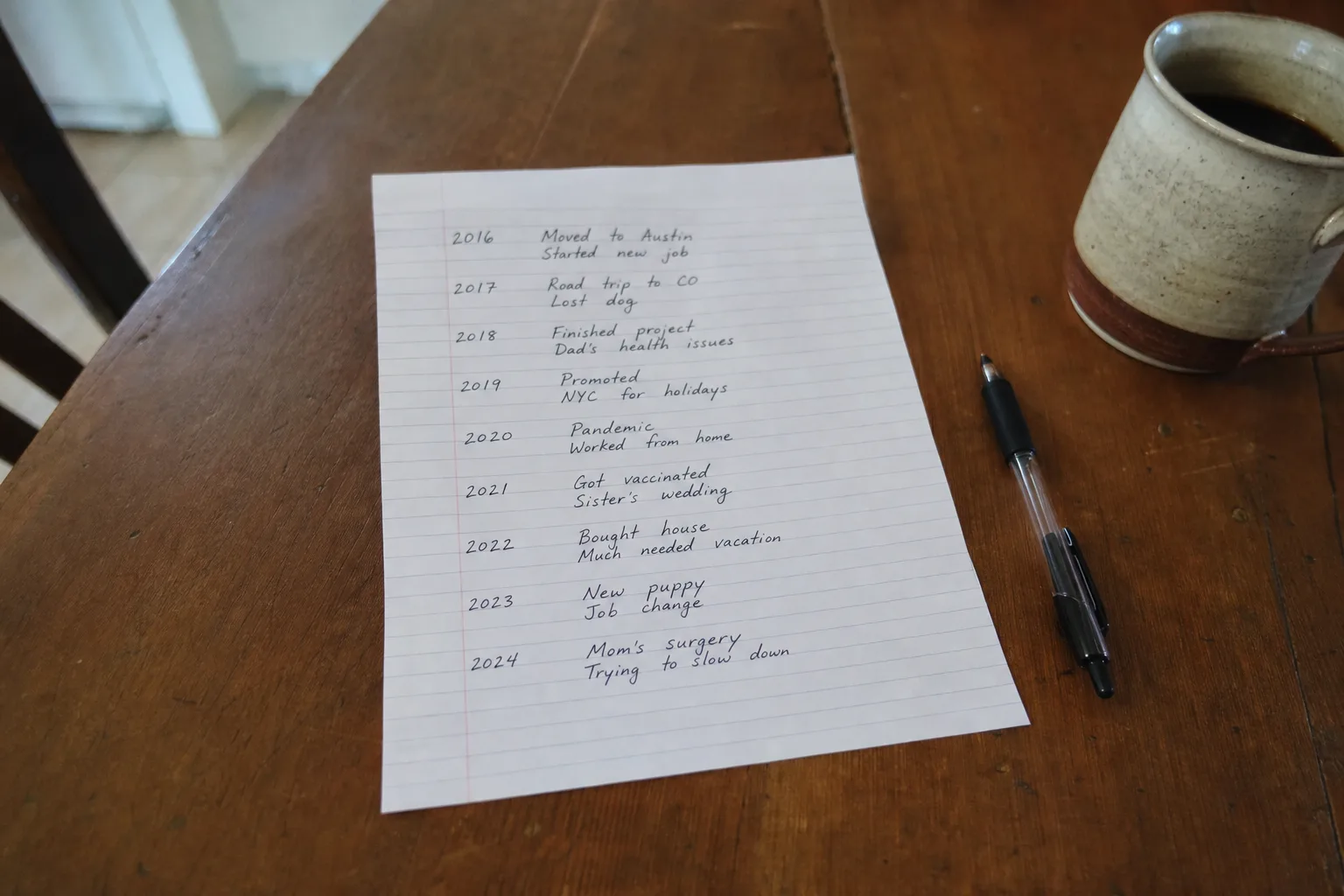
The belief that stops most people at the door is that a lawyer will want evidence, and that arriving without it means arriving with nothing. So the meeting gets postponed while someone tries to reconstruct a decade from memory, or hunt down a personnel file from an organization that has no reason to hand it over. That sequence has the work backwards. Gathering records from institutions, subpoenaing them where cooperation fails, and locating other people who reported the same conduct is the firm's job, and it is a job the firm cannot start until someone has walked in and described what happened.
Understanding why the rule of thumb runs that way makes the preparation obvious. Civil claims involving abuse almost always turn on two things a client already knows and no filing cabinet contains: the approximate timeline, and the name of the institution that had authority over the person who caused the harm. Everything else is discoverable. That is the reason the intake conversation is structured the way it is, and the reason a client who shows up with four honest sentences is better prepared than one who shows up with a shoebox and no dates.
The assumption that proof comes first, and why it does not
Criminal cases and civil cases get conflated in the public imagination, and the conflation does real damage to how people prepare. A prosecutor decides whether the state brings charges, and that decision rests on evidence the state gathers. A civil claim is different: it is your claim, brought on your timeline, and the evidence is developed through a legal process that only exists once a lawyer is engaged. Depositions, document requests, and internal complaint logs are not available to a private person making phone calls. They become available afterward. The Centers for Disease Control and Prevention is responsible for tracking sexual violence as a public health matter, and part of what that work has established is how rarely these events leave a tidy paper trail at the time.
What follows from that is a shift in what the first hour is for. The lawyer is not weighing your documents against a threshold. The lawyer is trying to establish whether a viable claim exists against an entity with the capacity to answer for it, whether the deadline has run, and whether the firm has the resources and the standing to take it on. Those are three questions with three fairly specific answers, and a client who knows they are the questions will experience the meeting as a screening in both directions rather than a test to pass.
The four things worth writing down beforehand
Write a timeline first, and let it be approximate. Seasons, grades in school, apartments lived in, jobs held, and the ages of siblings all anchor a year more reliably than a calendar does, and lawyers are used to working from that kind of scaffolding. Second, name the institution: the school district, the parish, the youth program, the hospital, the employer, the team. Third, list anyone you told at the time and anyone you have told since, because contemporaneous disclosure to a friend, a coach, a counselor, or a parent is often more useful than a record. Fourth, write down your own question, the actual thing you want answered.
That fourth item gets skipped and it is the one that changes the meeting most. Some people want money for treatment that has already been paid for out of pocket. Some want the institution's records opened. Some want to know whether their name stays out of public filings, and that is a real question with a real answer that varies by state and by court. A first consultation with a sexual abuse lawyer should end with your question answered plainly, even if the answer is that the claim is outside what the firm handles. Naming the goal in advance keeps the hour from filling up with background.
The deadline question is not the one you think it is
Most people assume that time has run out, and the assumption is usually built on a half-remembered figure from a news story about a different state. The statute of limitations in these cases has been rewritten repeatedly over the last decade, often with retroactive windows, different clocks for claims against public entities than private ones, and separate rules for claims that were suppressed by a coverup. A date that closed a claim in one state may be irrelevant in another, and the state that matters is generally where the conduct occurred, not where you live now. This is the single most common reason a viable claim never gets brought.
It is also the fastest thing to check, which is the useful part. A firm that handles this work regularly can usually tell you within the first conversation whether a window is open, closing, or already provided for by a specific amendment, because they track those amendments as a matter of routine. That is a free answer to a question you cannot reliably research yourself, and it is worth the phone call even if you decide to do nothing else for another year. Ask it early in the meeting rather than late.
What the hour feels like, and how to keep control of it
From the client's side, the hardest part is not the legal analysis; it is being asked to narrate something in a conference room to a stranger who is taking notes. You are allowed to shape that. Ask to bring someone, ask whether the person conducting the intake will stay on the file or hand it to another attorney, and ask what happens to your notes if you do not retain the firm. Ask whether you can stop and continue another day, because you can. A firm that does this work well expects the request and has a practice for it.
Two practical items close the hour. Get the fee arrangement in writing, including who advances the cost of expert reports and record retrieval and what happens to those costs if the case does not resolve in your favor. Then get the next step named with a date attached: the records they will request, the person they will call, the week they will call you back. A first meeting that ends with a task list and a return date has done its work, whether or not you sign anything that day.
The preparation that pays for itself takes about twenty minutes at a kitchen table with a pen. Four honest sentences and a question, and the professionals take it from there.