Homes
Twelve Short Sessions or Two Long Days? Comparing Upkeep Schedules You Will Actually Keep
Four ways to schedule household upkeep, compared by what each one does to the small failures people blame on bad luck rather than a missed interval.
Homes·Osman Duraklar
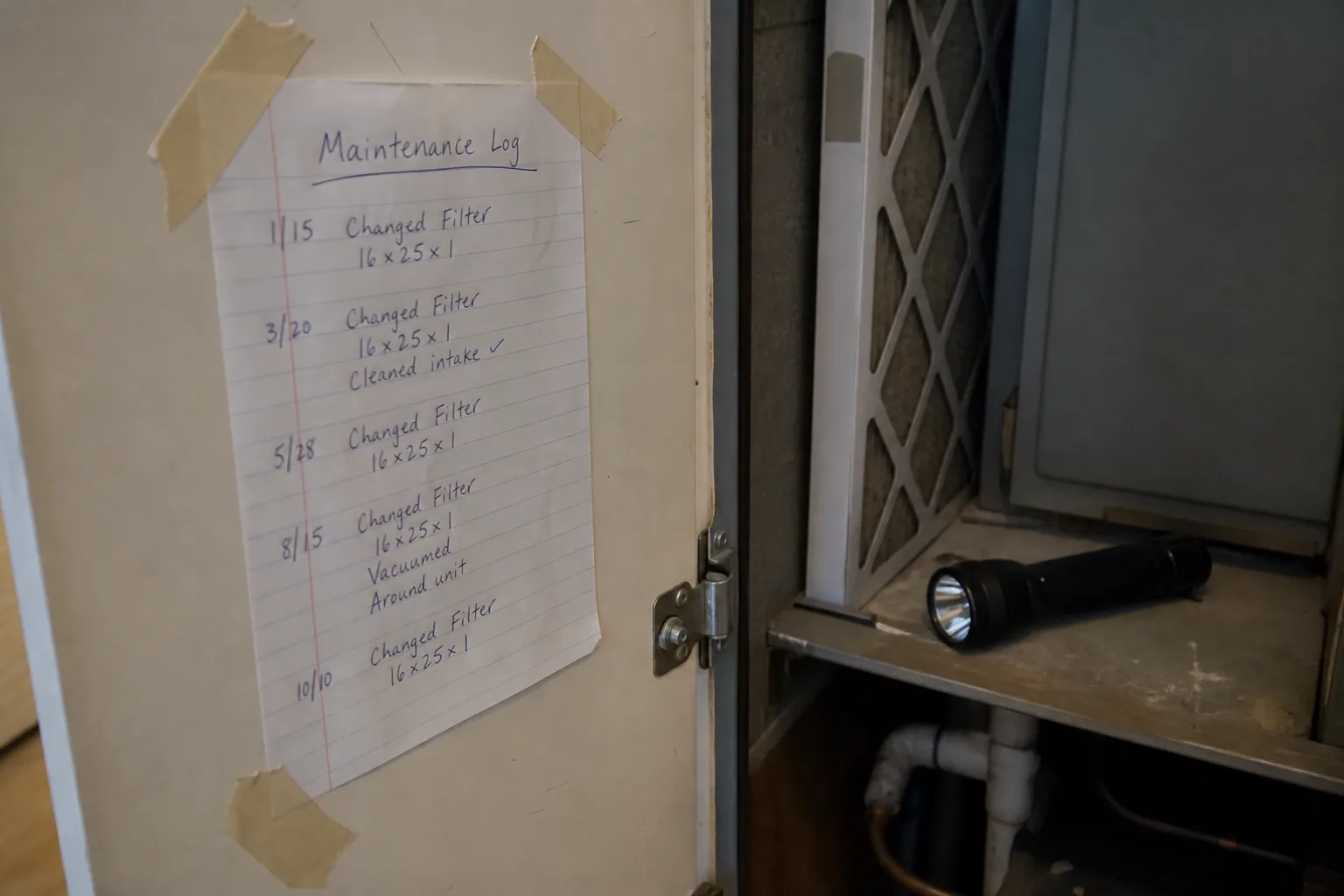
The intervals printed on filter sleeves, appliance manuals and gutter-guard packaging are almost always round, and round numbers are usually a compromise between what the engineering says and what a copywriter thought a homeowner would remember. Ninety days. Twelve months. Every six. Ask where a figure came from and the honest answer is often a test bench with a fixed dust load, a house with no pets, and nobody propping the back door open in July. That does not make the numbers useless. It makes them a starting range rather than a deadline, which changes how you should build a schedule around them.
The failures nobody files under maintenance
After you have run a few properties through a few years each, the pattern stops being about the tasks and starts being about the symptoms that arrive months later wearing a different costume. Dust reappearing on shelves four days after cleaning is usually a loaded filter pushing air around the cabinet instead of through the media. A dryer that needs two cycles is a vent, not a worn-out machine. Doors that stick in one season and swing in another are humidity the ventilation is no longer moving. None of those get written down as a missed interval. They get written down as bad luck, or a cheap appliance, or an old house.
That mislabeling is the real cost, because it redirects money. The household that blames the dryer buys a dryer. The household that blames the fridge for running warm buys a fridge, when the condenser coil behind it had a felt mat of pet hair that a brush and fifteen minutes would have cleared. A schedule's job is not moral. It is diagnostic: it keeps the cheap explanation available long enough for you to check it before the expensive one becomes the default. Everything below is compared on that basis rather than on tidiness.
The calendar interval, and what it does with a backlog
The most common structure is a date-based list: filters on the first of the month, gutters in April and October, water heater flushed each spring. It has one real virtue, which is that it survives inattention. You do not need to notice anything for the calendar to tell you what is due. Its weakness shows up the first time a month gets away from you, because date-based systems accumulate. Miss March and you now face March and April together, and the combined session is long enough to be postponed again, which is how a two-item slip becomes an eight-item afternoon by June.
People who have kept these lists for years usually end up doing one of two things to it. Either they drop the list to a count they can finish in twenty minutes, which means roughly three to six recurring items rather than the fifteen a whole-house checklist wants, or they stop carrying the backlog forward at all. Skipped items expire rather than stacking. That second rule sounds like permission to fail, and it is, but it protects the sessions that do happen. A schedule that has been abandoned records nothing. A schedule missing one month still records eleven.
Anchoring to something already on the calendar
The alternative is to stop scheduling upkeep on its own dates and attach it to events that happen whether you think about them or not. The night the cans go to the curb, the day the statement posts, the weekend the clocks change, the first mow. The advantage is compliance, and it is not a small advantage: an anchored task inherits the reliability of the event it rides on, which is why smoke alarm batteries paired with the time change get changed and the same task floating on its own anniversary does not. The constraint is that the anchor has to be genuinely fixed and has to occur at something close to the right frequency.
Where this method quietly beats the calendar is in the checks that only matter if you catch them early, which is most of them. Walking the downspout outlets each time you drag out the trash means you are looking at drainage twenty to fifty times a year instead of twice, at a cost of maybe forty seconds. Nobody would schedule that. Nobody needs to. The failure mode of anchoring is drift: the anchor changes, the mowing stops in October, and the tasks riding on it go quiet without announcing themselves, so the seasonal items still want a date of their own.
Two long days a year versus twelve short sessions
Batching everything into two or three substantial days, typically a spring pass and a fall pass, is the schedule most households actually run whether they planned it or not. It is honest about attention: rather than pretending twelve evenings will materialize, it concedes that upkeep happens when someone has a free Saturday and a ladder already out. Batching is also efficient in setup time, since the ladder, the shop vacuum and the bucket come out once instead of a dozen times, and that setup overhead is a real share of any short task. The cost is resolution. A twice-yearly pass cannot catch a slow leak in month three.
So the comparison is not which schedule is better but which failures each one lets through. Batching handles anything governed by weather, gutters, hose bibs, storm doors, condenser coils, and handles them well because the work is seasonal by nature. It handles consumables poorly. Filters, water softener salt, disposal cleaning, dryer lint traps and refrigerator water cartridges all run on use rather than season, and their intervals sit somewhere between monthly and quarterly depending on occupancy, pets and whether anyone in the house has allergies. Most experienced households therefore run both: a short recurring list for consumables, two long days for everything structural.
Checking versus doing, and the range that is the honest answer
The fourth option splits the schedule in two. You commit only to looking, on a short and frequent cycle, and let the looking generate the work. Instead of replacing a filter every ninety days, you hold it up to a light every three or four weeks and replace it when you cannot see through it, which in one house is six weeks and in another is five months. The Department of Energy oversees appliance efficiency standards and equipment labeling, and the gap between a rated interval and a lived one is exactly the space this method is built for. Inspection cycles also survive travel, illness and busy quarters better, because looking costs almost nothing.
What makes it work is writing down what you saw rather than only what you fixed. Three entries noting the filter was still clear, then one noting it was gray at the edges, gives you your own interval, sourced from your own dust, and it usually lands as a range rather than a number. That range is more useful than the printed figure, because you can plan purchasing around it and you can spot the year it shortens, which is often the first sign that something upstream, a duct, a pet, a new road, has changed.
Run any of the four for a full year and the payoff shows up somewhere other than the checklist: fewer unexplained symptoms, fewer appliances replaced on suspicion, and a much shorter list of things you would have to explain to a buyer's inspector. The schedule that earns its place is the one still being used in month eleven.