Law
Why Complaint Ladders Start With the Company, and What Changes When You Cross a State Line
The order you escalate a complaint in was built by insurers, utilities and licensing boards over decades, and it still shifts at every state line you cross.
Law·Neville Pemberton
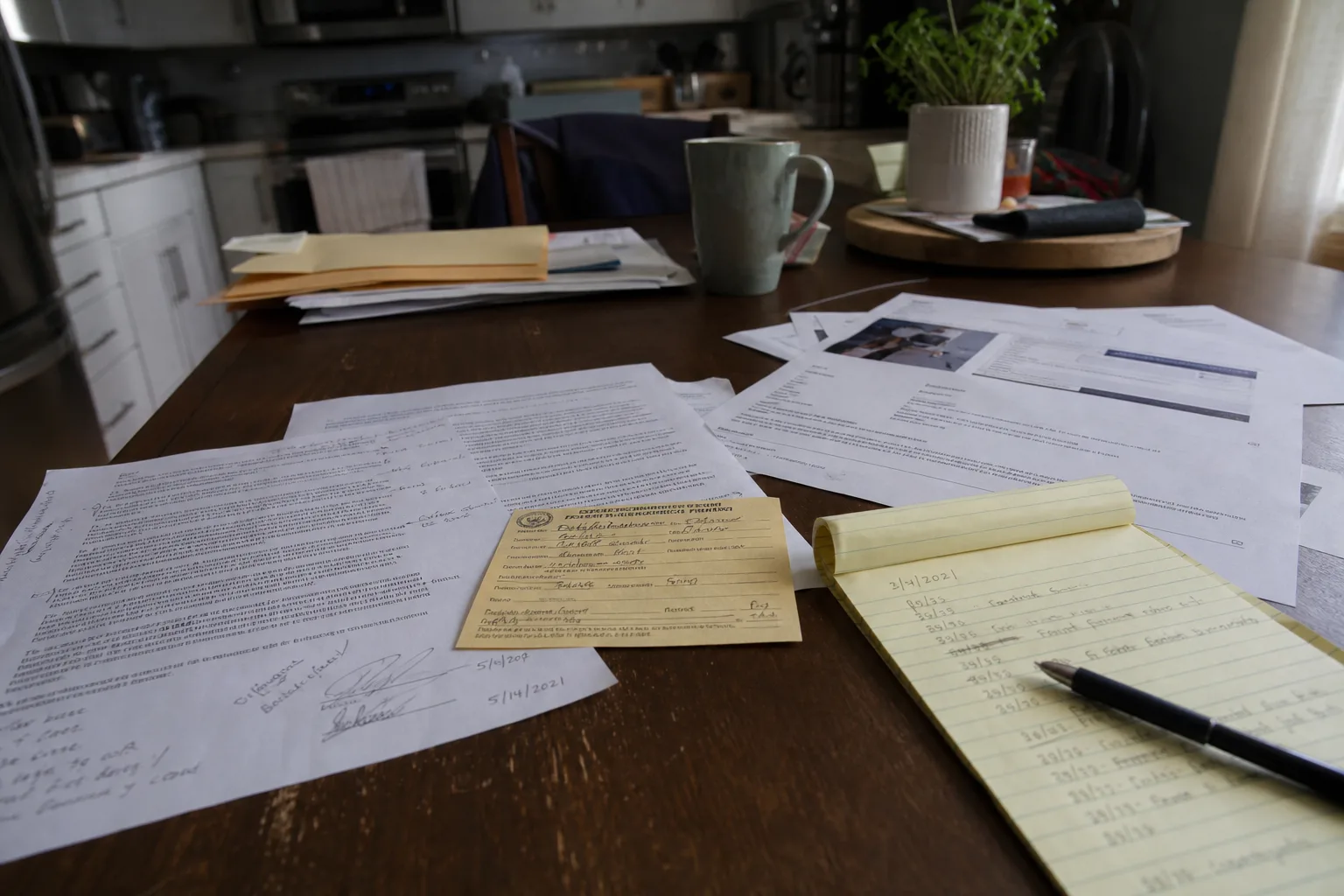
Almost every complaint process in the country asks you to do the same thing first: go back to the party you are unhappy with and give them a written chance to fix it. That instruction annoys people who have already tried, and it is not there for the company's benefit. It exists because the agencies and boards that sit above the company were built to review handovers, not to perform the original work, and a file that never went to the merchant, the carrier, or the licensee has no handover in it yet. Understanding why that rung exists tells you how to get off it quickly.
The ladder was assembled one industry at a time
There was never a single moment when someone designed a national complaint sequence. What exists now is the accumulated residue of separate fights, each settled in its own decade and its own jurisdiction: state insurance departments got complaint divisions because policyholders had nowhere else to go, utility commissions got them because a shut-off is not a dispute you can wait out, contractor licensing boards got them because a homeowner cannot repossess a foundation. Each of those bodies wrote its own intake rules, its own timelines, and its own definition of a complaint worth opening. The Federal Trade Commission oversees consumer protection at the national level and takes reports, which sits alongside rather than on top of those state channels. The result is a ladder assembled from parts that were never machined to fit together.
That history explains the shape of the forms. An insurance department wants your policy number, the date of loss, and the adjuster's name, because its authority runs to the conduct of a licensed carrier. A licensing board wants the license number and the contract, because its authority runs to the licensee. Neither is asking for proof that you are right in any general sense. They are asking for proof that the person they regulate did something they can act on, and the fastest complaints are the ones that hand over exactly that.
The handover is where most complaints die
A complaint fails far more often in transit than on the merits. The company's internal file closes with a note saying the customer was offered a resolution and did not respond. Your version says you responded twice by phone to someone whose name you did not write down. When the state office opens its review, it reads two accounts of the same conversation and has no way to prefer yours, so it asks the company for its records, receives them, and closes. Nothing improper happened. The record simply arrived incomplete, and the second reviewer inherited a file that only one party had bothered to build.
Which is why the useful work happens before the escalation, not during it. Put the complaint in writing even when a phone call would be faster, name the specific outcome you want in dollars or in work performed, give a date by which you expect an answer, and keep the sent copy. When the company responds, you now have a document that travels: their position, your position, and a date stamp on both. Regulators are good at reading that. They are poor at reconstructing it from memory.
The same complaint, three different first stops
Where you live changes the order, sometimes dramatically. In some states the insurance department will take a market conduct complaint from a consumer directly and open a file within days; in others the practical route runs through the department but resolves faster with a demand letter from an attorney, because the department's remedy is limited to compliance rather than payment. Contractor complaints vary more. A state with a licensing board that holds a bond or a recovery fund gives you a real destination for a money claim, and the board's process becomes the main event. A state with weak licensing pushes the same dispute into small claims court, where the sequence is a demand letter, a filing fee, and a hearing date.
Local rules add a second layer that people miss. Municipal building departments hold the permit file and the inspection history, and in many cities a stop-work order or a failed final inspection is the single most useful lever a homeowner has, because it interrupts payment rather than merely recording displeasure. County consumer affairs offices exist in some metro areas and not in the counties next door. Rent boards, where they exist, take precedence over general consumer channels for tenancy disputes. Checking which of these bodies your address actually falls under, before you write anything, prevents the most common wasted month.
Reading the order off the paperwork
The sequence is usually written down somewhere you already have. Insurance policies name the department and the appeal window. Contracts name a mediation or arbitration step and often make it mandatory before a lawsuit. Utility bills carry the commission's contact details in small print. Warranty documents specify a claim procedure whose omission gives the warrantor a clean defense. Read those first, follow the named step even if it looks pointless, and keep proof you followed it. The step you skipped is the one the other side will raise, and satisfying it early costs a letter and buys you every rung above.
Escalation rewards the party with the better paper trail, and the trail is cheap to build while the dispute is still small.