Family
Winter Burials, Spring Delays and Holiday Staffing. Which Funeral Costs Actually Move With the Season
Grave crews, vault setters, florists and dispatchers all price the calendar differently, and a multi-location provider's price list shows which of those charges you can decline.
Family·Osman Duraklar
A funeral bill from a large provider arrives as one document, but it is assembled from the schedules of six or seven separate trades, and several of those trades price January differently from June. The family sees a package number. Behind it sit a cemetery crew that has to get a backhoe through frozen ground, a vault company running a truck on a fixed route, a florist buying at wholesale rates that spike twice a year, and a dispatcher deciding whether a transfer happens at two in the afternoon or two in the morning. Knowing which of those people set which number is most of the work of reading the bill.
The grave itself is priced by the cemetery, not the funeral home
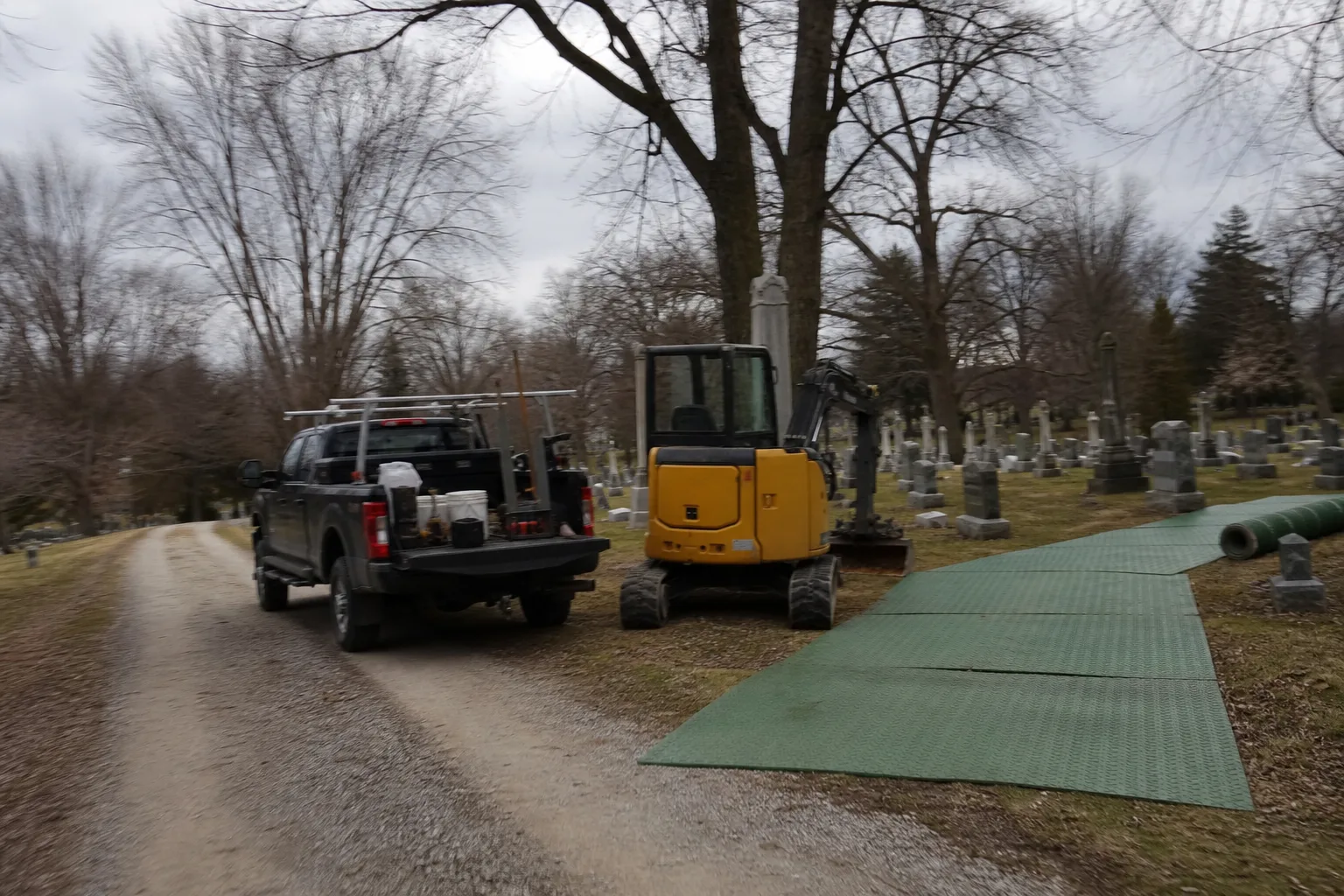
Opening and closing a grave is almost always a cemetery charge, billed by the cemetery's own grounds crew or a contractor they use, and passed through by the funeral home at cost or close to it. In cold-weather states that charge frequently carries a winter add-on covering frost penetration, thawing equipment, ground protection mats, and the extra crew hours that follow. The size of that add-on varies widely by region and by whether the cemetery is municipal, church-owned, or part of a larger group. It is worth asking for the number in writing, because it is a separate schedule from the funeral home's, and the funeral director may quote it from memory.
Winter also produces a decision most families are never told exists: delayed interment. Some cemeteries in northern climates hold the casket or urn in a receiving vault until spring, either by policy or as an option, which removes the winter opening surcharge and the tent, heater, and matting rental from the bill entirely. What it adds is a storage fee, usually modest, and a second gathering months later if the family wants one. That trade is arithmetic, not sentiment, and a good funeral director will run it for you if asked. Ask before the graveside plan is locked, because the tent and chair order goes out early.
The regional prep facility changes what the mileage line means
Larger funeral groups increasingly run one embalming and preparation facility for several locations, with the chapels operating as arrangement and visitation spaces. That structure lowers overhead and keeps licensed preparation staff working full weeks instead of on call, but it puts a vehicle on the road between the place of death, the central facility, and the chapel where the service happens. On a price list that shows up as a basic transfer charge plus mileage, sometimes broken out, sometimes folded into the transfer fee. In winter, when road conditions slow every run and the number of deaths in most of the country rises, that fleet is scheduled tightly and overnight or holiday transfers can carry a separate after-hours fee.
The line that matters more is embalming, because it is not required by law in ordinary circumstances and the Federal Trade Commission, which oversees funeral pricing disclosure through the Funeral Rule, requires providers to tell you so and to give you an itemized price list before you choose anything. Refrigeration is the usual alternative and generally costs less. Embalming becomes practically necessary when there will be a public viewing with the casket open, or when the body is traveling by air to another state, both of which are more common around the holidays when relatives are already scattered. Decide the viewing question first. The preparation charge follows from it rather than the other way around.
Flowers and food are the two lines the calendar moves most
Florists buy at wholesale, and wholesale rose and lily prices climb sharply in the weeks around Valentine's Day, Easter, and Mother's Day, which is a fact about the cut flower supply chain and not about funerals at all. A casket spray ordered in the second week of February can cost meaningfully more than the identical arrangement in October, and the funeral home's in-house florist or preferred vendor is buying in the same market as everyone else. Families who care about the flowers and not the timing can hold the shape of the arrangement and change the stems, which is where most of the saving sits. Families who do not care much can decline the spray. A casket does not require one.
Catering behaves the same way for different reasons. Reception halls, church basements, and restaurants price December weekends against every other event competing for the same room and the same staff, and a repast that would be quoted one way in late January is quoted another in the second week of December. The larger providers often have their own reception space attached to the chapel, which sidesteps outside venue pricing but comes with its own per-head charge. Getting a headcount that reflects who will actually travel, in the season when travel is hardest, is the single most useful thing a family can do to that number.
Staffing, weekends and the parts of the package you can unbundle
The nondeclinable basic services fee covers the funeral home's overhead, the arrangement conference, the paperwork, the death certificates, and the twenty-four hour availability of licensed staff, and it is the one charge you cannot decline if you use that provider at all. Nearly everything stacked on top of it can be taken separately: staff and equipment for a viewing, staff for a graveside service, the hearse, the family car, the register book and printed folders. A larger group's general price list will show all of it broken out, and the packages exist because most families prefer one number, not because the components are welded together. Ask for the itemized sheet alongside the package and compare them line by line.
Season shows up in staffing through scheduling rather than rates. Chapel and crematory slots fill unevenly across the year, and a Saturday service in a busy stretch may carry a weekend or holiday staffing charge that a Tuesday morning does not. Clergy honoraria, celebrant fees, musicians, and the newspaper's obituary line rate are all third-party charges the funeral home collects on your behalf, listed as cash advances, and each of those people sets their own price independent of the provider. Every one of them can be asked directly what a smaller version costs. Most will answer plainly, and several will offer a figure lower than the one the packet assumed.
The useful question to put to a multi-location provider is not what the funeral costs but which of these numbers is yours and which are you passing through. The pass-through items, the grave opening, the vault, the flowers, the clergy, the notice in the paper, are the ones the calendar moves, and they are also the ones a family can shop or shrink without changing the funeral home they are working with.