Law
Chasing a Six Thousand Dollar Invoice? What Changed Since 2015 and What Still Needs a Lawyer
A single unpaid invoice shows how the line between a do-it-yourself claim and a case that needs counsel has moved, and where the file still goes cold.
Law·Neville Pemberton
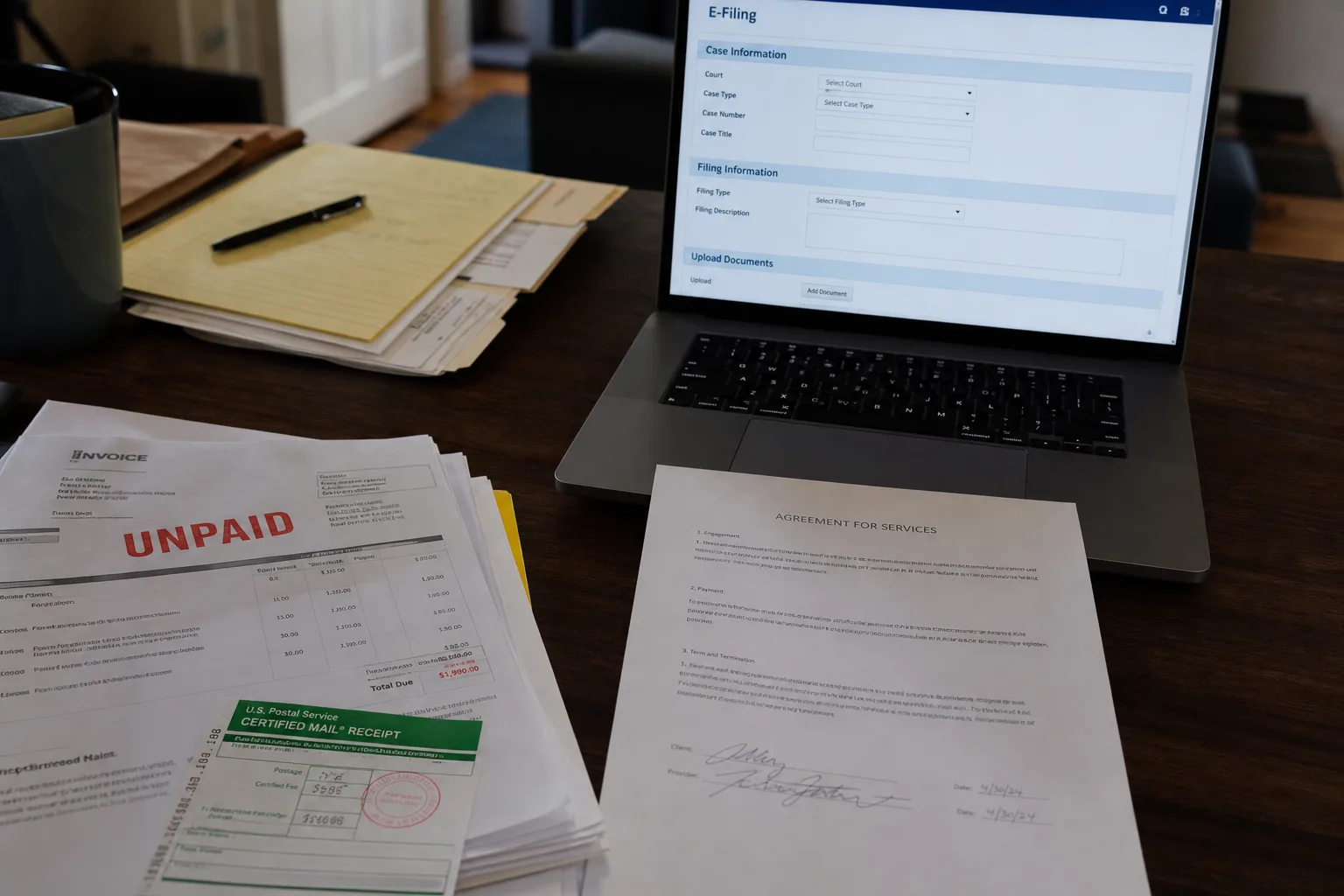
Take one narrow situation and hold it still: a sole proprietor, a signed one-page agreement, work delivered and accepted, and an invoice for roughly six thousand dollars that has now gone ninety days without payment or an argument about quality. No injury, no fraud, no partnership falling apart. Just a client who stopped answering. That single fact pattern is a useful measuring stick, because the question of whether it needs an attorney has a different answer today than it had a decade ago, and the reasons have almost nothing to do with the law itself changing.
What that invoice looked like in 2015
Ten years ago the practical first step was a phone call to a lawyer, because the letterhead was the product. A demand letter from a firm did work that the same words from you did not, and the fee for drafting it was small enough against six thousand dollars to be worth a try. If the letter failed, the next step was a filing that most people did not attempt alone: paper complaint, paper summons, a trip to the clerk's window during business hours, a check for the filing fee, and a process server hired by the firm rather than by you. The lawyer held the file the whole way.
That arrangement had a real cost beyond the hourly rate. Contingency arrangements on a claim this size were rare, because the recovery did not support the work, so the money came out of your pocket first and came back only if the defendant had assets. Plenty of small creditors did the arithmetic, decided that spending two thousand dollars to chase six thousand was a poor bet against an unknown collection prospect, and wrote the invoice off. The threshold for hiring counsel sat well below the threshold at which hiring counsel actually paid.
What moved, and what it did to the threshold
Two things shifted. Most state court systems now accept electronic filing for civil matters, including small claims in many counties, which removes the daytime trip, the paper packet and a good deal of the clerk's discretion about whether your caption is formatted correctly. And a large number of states have raised their small claims jurisdictional limits over the past decade, so a six thousand dollar dispute that once had to be filed in a general civil docket, with its pleading rules and discovery, may now sit inside a forum designed for people without lawyers. Court self-help centers publish fillable complaint forms, service instructions and fee waiver applications for free.
The effect is that the demand letter is no longer the scarce item. A letter that recites the contract date, the work performed, the amount due, the interest term if your agreement has one, and a specific date by which you will file, sent certified with return receipt, does most of what the letterhead used to do, because the credible part was always the filing threat rather than the stationery. What you are buying from a lawyer at this size has changed from the whole matter to a narrow piece of it: an opinion on whether the claim belongs in that forum at all, and what to do after you win.
The three facts that still hand the file to counsel
The first is an arbitration clause. If the agreement you signed sends disputes to arbitration, filing in small claims may get your case dismissed, and the arbitration route has its own fees and its own drafting demands. Read the back of the client's purchase order too, because their terms may have attached to yours without either of you discussing it. The second is the identity of the defendant. Suing an individual or a sole proprietor is one thing, but in many states a corporation or an LLC cannot appear in court through a non-attorney officer, and the mirror of that rule can affect how your own entity appears if you incorporated.
The third is collection. A judgment is a piece of paper that says you are owed money; it is not money. Turning it into money means locating a bank account or a receivable, preparing a writ of garnishment or execution, getting it issued by the clerk and delivered to the sheriff or marshal for levy, and doing all of that within the rules of a state you may not practice in. This is where small creditors most often stop, and it is the part that most reliably justifies a fee, because collection attorneys do it repeatedly and know which bank branch address the writ has to name.
Where the file goes cold: the handovers
Every failure in this sequence sits at a point where the matter passes from one party to another. You to the clerk, and the case is rejected because the defendant's legal name on the complaint does not match the registered entity name on the state's business filing database. The clerk to the process server, and the summons never gets served because the registered agent moved and the address on file is stale, which quietly kills a case that was otherwise sound. The court to you after judgment, when nobody tells you that enforcement is a separate proceeding you have to start yourself. Write down who holds the file at each step and what triggers the next one.
The same discipline applies when you do hire someone. Ask, before the engagement letter is signed, exactly which handovers the attorney is taking: demand only, demand and filing, filing through judgment, or judgment through collection. Ask who serves the defendant and who pays for it, who calendars the hearing date, and what arrives back on your desk when their part ends. A flat fee for a demand letter and a separate flat or contingency arrangement for post-judgment collection is a common and sensible split. The Federal Trade Commission oversees debt collection practices, and a lawyer working this file will know which conduct rules bind them once a claim moves into collection.
The honest test at six thousand dollars is not whether the problem is legal. It is whether the next step requires a skill you cannot acquire in an afternoon on the court's self-help pages, and whether the defendant has money worth reaching. Answer those two before you spend anything.