Health
First Year Keeping Your Own Records? Who Asks for Them, and When the Clock Stops
Retention rules make more sense once you know who requests a document, in which month, and what they do with it when it arrives.
Health·Harriet Bosworth
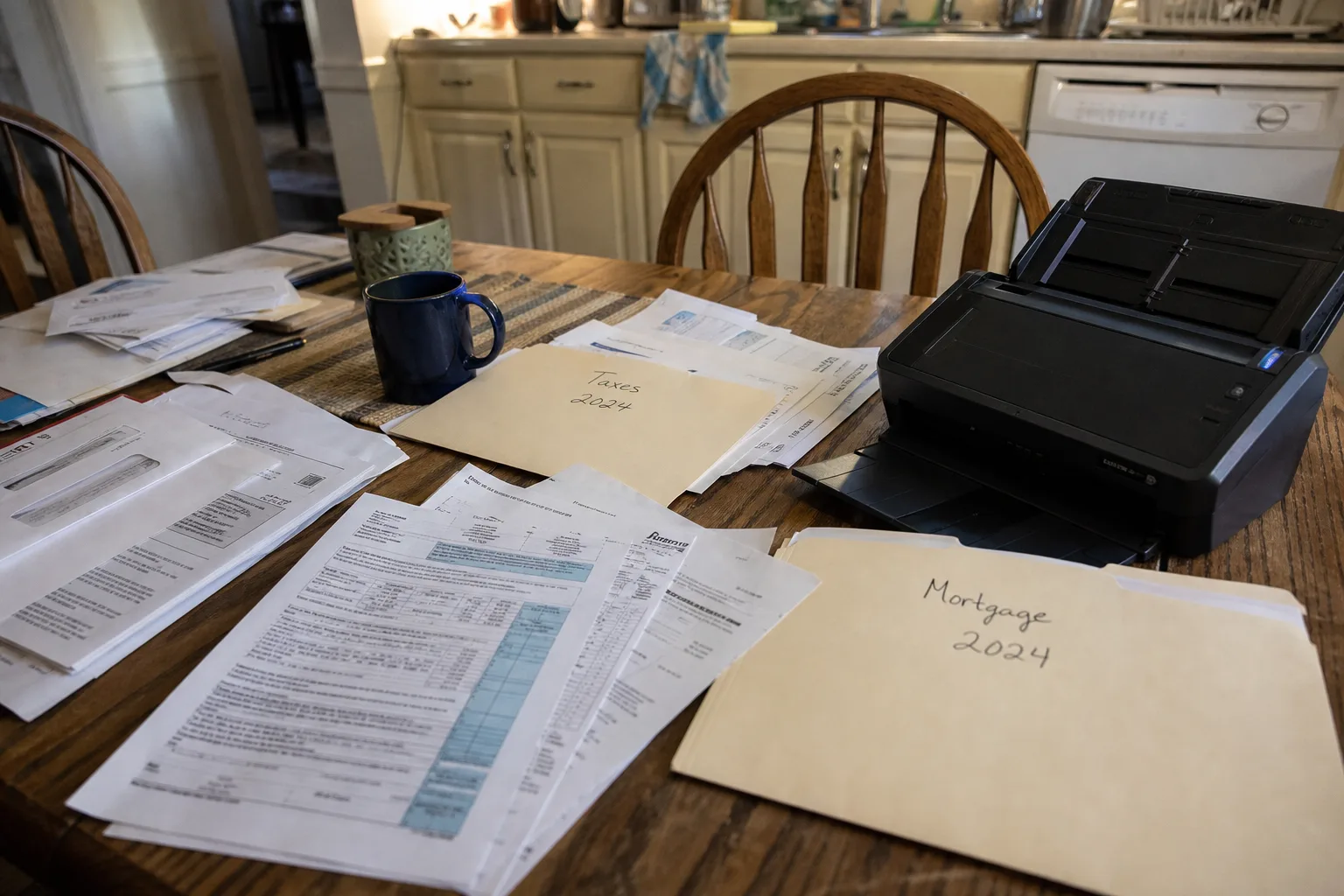
Records feel like a chore you do for yourself until the first time someone else asks for one. Then the logic reverses. A closing statement is not interesting because you own it; it is interesting because an underwriter, a preparer, or an assessor's office will one day want the exact figure on line four, and the only copy that satisfies them is the one you filed in a month when nothing was happening. The retention question, in other words, is really a question about other people's calendars, and those calendars run on seasons.
The mail arrives on a schedule, and so do the requests
Between the first week of January and the middle of February, a household receives most of the year's authoritative paper in a single burst: wage statements, brokerage and interest forms, the mortgage interest statement, the year-end escrow analysis, contribution summaries from retirement and health accounts. None of it is a surprise, and all of it is time-stamped by someone else's compliance deadline rather than your convenience. If you are doing this for the first time, the useful move is to treat that window as a receiving season rather than a reading season. Open everything, confirm the sender, and file it unread if you must, because the version that shows up in the mail or a portal in January is the version a professional will ask for in March.
Spring runs on a different rhythm. April closes the federal filing window, but the requests do not stop there. Property tax assessment notices and appeal deadlines fall in spring or early summer in much of the country, homeowners and auto policies renew on their own anniversaries, and refinance and home equity applications cluster whenever rates move. Each of those is a person asking for a document you either have or do not have. Summer and fall are quieter for incoming paper and better for outgoing work, which is when a first-timer should be reconciling, labeling, and discarding, rather than in the middle of February with a preparer waiting.
The four people whose work sits next to yours
A tax preparer is looking for substantiation and for consistency with what third parties already reported. That preparer does not want your interpretation of a transaction; they want the form the payer issued and, where a deduction depends on it, the invoice and the proof of payment as two separate things. An insurance adjuster works from a different premise, which is condition and value before the loss, so their interest is in dated photographs, purchase records, and any contractor invoice showing that a repair was actually completed rather than merely recommended. Same house, same year, two entirely different bundles.
A mortgage underwriter is the least flexible of the group, because their file has to satisfy a reviewer they will never meet. That is why they ask for consecutive months of complete statements including the blank pages, and why a screenshot of a balance never works. A county assessor's office or a local appeals board, meanwhile, is comparing your property to others and will look at a recent appraisal, a closing statement, or a contractor's estimate that establishes a condition. Once you have met these four, retention stops being abstract. You are not keeping documents. You are keeping the answer to a question someone specific will ask in a month you can predict.
Three clocks, running at different speeds
The first clock is the tax one, and it exists because assessment cannot be open forever. The IRS is responsible for recordkeeping requirements on individual returns, and the general rule most preparers work from is that supporting records for a filed return should be kept for the period during which that return can still be examined, which for ordinary returns is measured in a few years from the filing date and runs longer where income was substantially understated or where no return was filed at all. Practically, that means a preparer will tell you to hold a year's substantiation for several years, not several months, and to date the folder by tax year rather than by when the paper arrived.
The second clock is ownership, and it is much longer. Anything that establishes what you paid for an asset, and what you later spent improving it, stays relevant until you sell and then for as long as that sale year's return can be reviewed. That covers the closing package, the survey, permits, and every capital improvement invoice from the new roof to the finished basement. A first-time homeowner who throws away a contractor's paid invoice in year two has not lost a receipt; they have lost part of the number that decides the gain on a sale in year fifteen. Keep that category separately, because its clock ignores the tax year entirely.
The third clock is contractual, and it is set by whoever wrote the document. Manufacturer warranties, a roofing labor warranty, a builder's limited warranty, an equipment registration, and a service contract each have a stated term, and each requires proof of purchase and often proof of installation and maintenance to pay out. Insurance policies add their own reporting windows for a claim. These are the records most worth writing an expiration date on, because when the term ends, the paper genuinely stops being useful and can go.
File for the person who will ask, not for the person filing
The habit that separates a smooth second year from a chaotic one is naming. A first-timer files by source, which is how the mail arrives, and then spends March hunting through a folder called Bank. The people who request records think in categories: income, deductible expense, asset basis, insured property, account verification. Naming a file with the year first, then the category, then the sender, means that a request for twelve months of statements or every improvement invoice on the property is a two-minute retrieval instead of an evening. Scan what arrives on paper, keep the original of anything notarized or recorded, and store one copy somewhere that is not the same device as the other copy.
Purging is the other half, and it belongs to a season too. Late summer or early fall, once the filing window has closed and before the January burst begins, is when you can safely discard the categories whose clocks have run out: expired warranties, superseded policy declarations, monthly statements from a year whose return is closed and whose account is not part of an open application. Keep a short written note of what you discarded and when, which sounds excessive until the first time someone asks for something you deliberately did not keep and you can say so with a date.
Somewhere in the second year, the pattern starts working in your favor. You stop filing against a vague fear of being audited and start filing against four or five known requests that arrive in known months, which is a much smaller and much more manageable problem than the one you thought you had.