Law
Inherited a House Two States Away? The Folder That Makes the First Probate Meeting Work
A probate matter that crossed a state line shows which paperwork survives the handover to an attorney, and which local rules decide the answer before anyone opens the file.
Law·Neville Pemberton
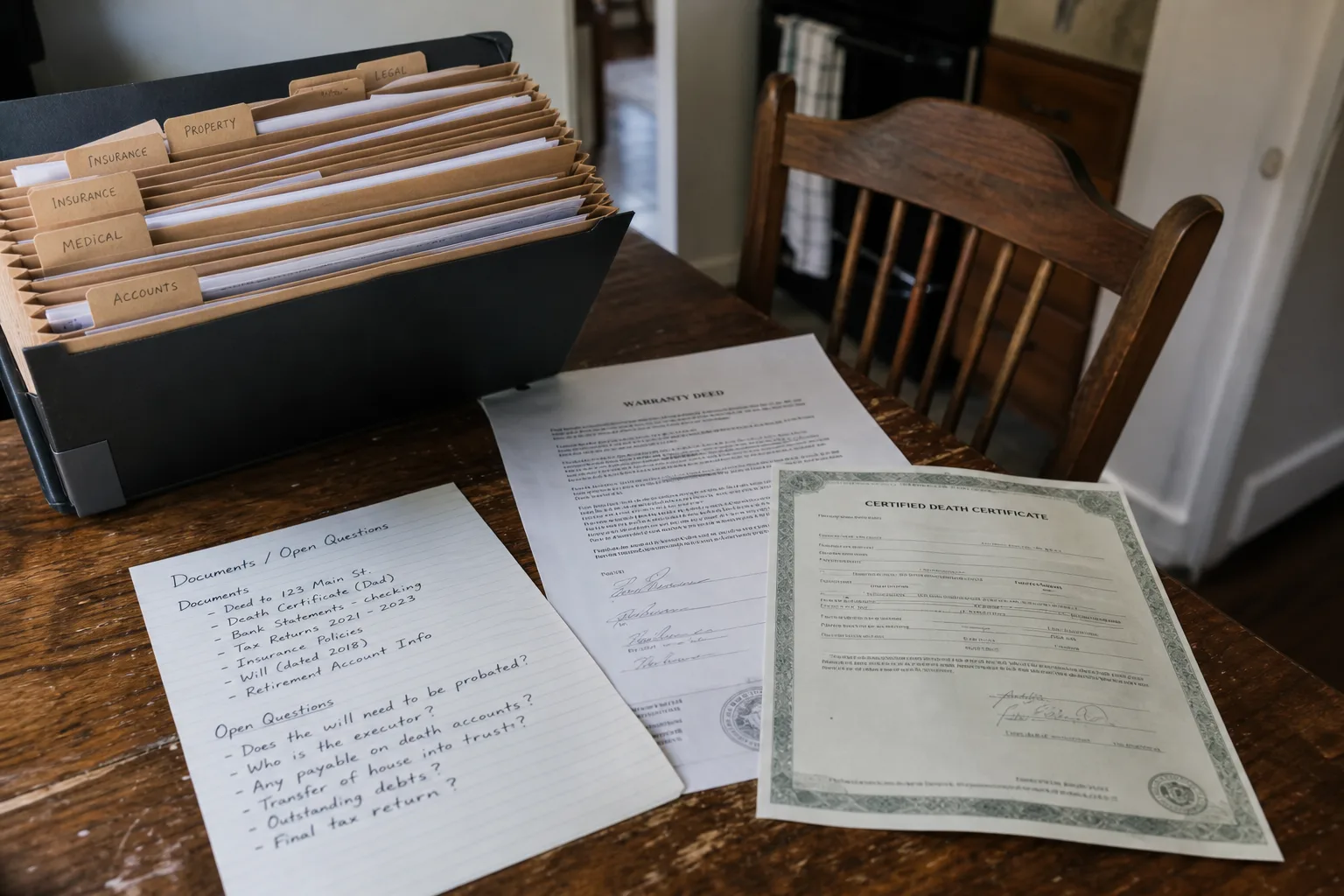
The house sat in a county in Alabama, the daughter who inherited it lived outside Cleveland, and the attorney she eventually hired practiced eleven miles from the property. That geography did most of the damage. She had spent two months gathering what she assumed a lawyer would want, built on advice from an Ohio attorney who had handled her mother's small estate a decade earlier, and arrived at the first meeting with a folder that answered the wrong state's questions. Nothing in it was useless. Very little of it was next.
Where the file actually broke
The handover is the moment a matter stops belonging to the client and starts belonging to counsel, and it fails in a predictable way: the client brings history, the attorney needs status. She had the deed, a copy of the will, a bank statement, and a folder of her father's correspondence going back years. What the attorney needed in the first twenty minutes was narrower and harder: whether the will had already been filed with the probate court in the county where her father died, whether anyone had opened an estate, and whether the clock on creditor claims had started. She did not know. Neither did the folder.
That single unknown cost most of the hour. The attorney could not tell her whether the estate qualified for a simplified procedure, could not price the work, and could not say who had authority to sign anything, because all three answers depended on a court record neither of them had looked at. A call to the county clerk the following week settled it in four minutes. The lesson is not that she should have known the law. It is that the first meeting is spent on posture, not history, and posture lives in public records.
What the local rule decided before anyone opened the file
Probate is state law administered by county courts, which means two things change as you cross a line on a map. The first is substance: the dollar threshold for a small-estate or summary procedure, whether a surviving spouse takes by operation of law, how long creditors have to present a claim, and whether the personal representative must be bonded. The second is procedure, and procedure is where the surprises collect. Some counties want the original will lodged in person. Some accept electronic filing. Some require a certified copy of the death certificate for every parcel of real property, purchased separately.
Her Ohio experience had trained her for the wrong set of forms. The county in Alabama had its own local rules, published on the court's own site, covering the form of the petition, the notice that had to run in a local newspaper, and who could serve as representative when the nominee lived out of state. That last item mattered most: several states restrict a nonresident from serving alone, or require a resident co-representative or an agent for service of process. She was a nonresident. The fix was routine once identified, and identifying it took one paragraph of a local rule.
The inventory that survives a handover
What she rebuilt for the second meeting was not longer. It was indexed. One page listed every document by what it proved rather than what it was called: date of death, identity of the decedent, ownership of the house, existence and location of the will, names and addresses of everyone who inherits, and every account with a balance and an institution attached. Beside each line she wrote where the original lived and whether a certified copy existed. Anything she could not verify went in a separate short list marked open, which is the most useful page in any folder.
Scans matter more than most people expect, because the attorney's office will index them and the client will be asked for them again. Name files so a stranger can sort them: year, then document type, then the entity. Keep a running log of every call to the county, the bank, and the insurer, with the date, the name of the person, and what they said. That log is what turns a vague recollection into a fact counsel can rely on, and it is the single item clients almost never bring to a first meeting.
The pieces that are federal, and the ones that are not
Two threads in this kind of matter do not change at the state line. An estate that holds property and earns income needs its own taxpayer identification number, and a final individual return is generally due for the year of death, both of which fall under the Internal Revenue Service, which is responsible for federal filing obligations of decedents and estates. Knowing which returns are in play lets an attorney tell you at the first meeting whether you need a tax preparer alongside counsel, and roughly when. It also prevents the common error of distributing assets before the estate's obligations are known.
The fee arrangement is the other half of the handover, and it is governed by the rules of the state where the lawyer is licensed. Ask for the engagement letter in writing, ask what the hourly rate covers, ask who does the work when the attorney is in court, and ask specifically which filings and publication costs are billed separately. In her matter the newspaper notice, the certified copies, and the court's filing fee were all pass-through costs, disclosed plainly once she asked. The house sold nine months later, on schedule, and the accounting closed without a contested claim.
The paperwork that makes a first meeting productive is thinner than most people build and more specific than any generic checklist. Pull the court record before you pull the correspondence, read the local rules for the county that has jurisdiction rather than the one you live in, and hand over an index with an open-questions page attached. Counsel can work fast from that. What slows a matter down is almost never a missing document; it is a document nobody could place in the sequence.