Personal Finance
Insuring a Ring? The Appraisal Expires, and the Replacement Jeweler Decides the Rest
A personal lines broker on scheduled jewelry: why appraisals go stale, what paperwork holds up at claim time, and the vendor at the far end who settles what you actually get back.
Personal Finance·Harriet Bosworth
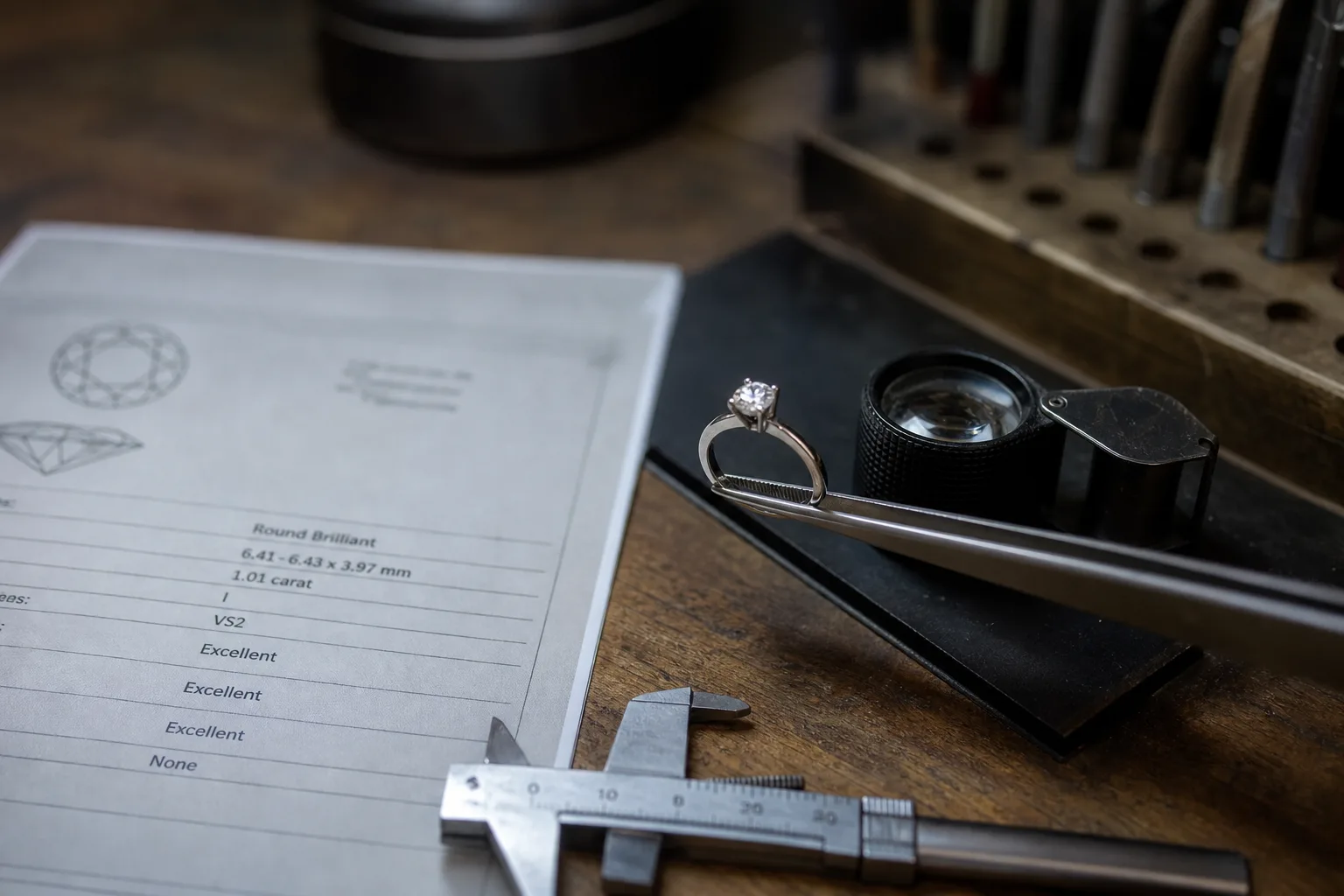
Most people buy a scheduled personal property endorsement once, staple the appraisal to the file, and never think about either again until something is gone. The practitioner interviewed here places scheduled jewelry and fine art through a regional independent agency and asked to be identified by role rather than name, since she comments on carriers she also sells. Her argument is narrow and worth hearing: the paperwork around a valuable is not a formality attached to the policy, it is the policy, and the person who ultimately determines what you receive is usually someone you have never spoken to.
The appraisal is a description first and a number second
Why do carriers care so much about the wording of an appraisal?
Because the number is the easy part and the description is the hard part. A schedule that reads "diamond ring, $14,000" tells an underwriter nothing and tells a claims adjuster less. What holds up is the specification: carat weight, measurements in millimeters, cut grade, color and clarity, the metal and its karat or fineness, the mounting style, any lab report number, and photographs from more than one angle. The Federal Trade Commission oversees how gemstone and precious metal descriptions may be used in commerce, which is precisely why a careful appraiser writes in those defined terms rather than in adjectives.
And if the description is thin?
Then the replacement is thin. Nobody is acting in bad faith. Somebody has to source an item that matches what was lost, and if the file says only that the stone was around a carat and looked white, the match will be built from the least generous reading available. The specification is the instruction sheet.
Why a five-year-old appraisal stops working
People are surprised that an appraisal expires. What actually goes stale?
Three things at once. Metal prices move, colored stone and diamond markets move independently of metal, and labor and setting costs move with everything else in the trade. A document written years ago captures a moment that no longer exists, in either direction. It can leave you underinsured, paying a claim gap you did not know you had, or overinsured, paying premium on a figure the carrier will never actually reimburse. Most personal articles forms want an updated valuation on a cycle, commonly a few years, and some tie the requirement to the item value.
Is there a version of the update that is not a full re-appraisal?
Often, yes, and this is the part that saves people money. If the original document is detailed and the item has not been altered, many appraisers will issue a market update against the existing specification for a fraction of the original fee. You are buying a current number, not a new examination. Ask for that first.
The party at the far end of the claim
Who is the person policyholders overlook?
The replacement vendor. Carriers that write jewelry at volume maintain relationships with sourcing firms and jewelers who fulfill covered losses, and on a great many policies the insurer has the option to replace the item rather than write a check. That vendor reads your appraisal, sources a comparable piece, and the settlement is effectively their quote. Your adjuster coordinates. Your agent advocates. The vendor prices. Understanding that changes what you put in the file, because the file is what they are reading.
What does a policyholder do with that knowledge?
Ask two questions before you bind. First, does the policy settle in cash, at replacement cost, or on an agreed value basis, and second, does the carrier reserve the right to replace through its own network. Agreed value settles at the scheduled figure and removes most of the argument. If replacement is on the table, ask whether you may use your own jeweler and take the carrier's allowance toward that work. Many will permit it. The answer belongs in writing, in the file, before anything happens.
The folder that makes the annual review short
What does a manageable set of records look like?
One folder per item, stored somewhere that survives the house. Original sales receipt, the appraisal and any market update, the lab report if the stone has one, photographs including one with a scale reference, and dated receipts from any bench work, resizing, retipping, or a prong check. Those service receipts do double duty: they prove the item existed and was in your possession on a date, and they demonstrate maintenance, which matters when a stone is lost from a worn setting rather than stolen outright.
How often is the review worth doing?
Once a year, alongside the homeowners renewal, and it takes about twenty minutes. Compare each scheduled value against what the piece would cost to replace today, flag anything that has drifted, and request updates on the two or three items that moved rather than the whole schedule. Add newly acquired pieces immediately, since unscheduled jewelry sits under a sublimit that is usually modest and often applies only to theft.
The through line in her account is that a scheduled item is really a small contract between three parties, one of whom never appears on the declarations page. Write the file for that third reader, keep the valuation current, and the claim becomes an administrative exercise rather than a negotiation.