Family
Memorial Ordered, Permit Pending, Foundation Unpoured. Where the Job Stalls Between Three Parties
A memorial passes through a dealer, a cemetery and a foundation crew, and the rules governing all three have shifted. Here is where the handoffs fail and what hardens permanently.
Family·Neville Pemberton
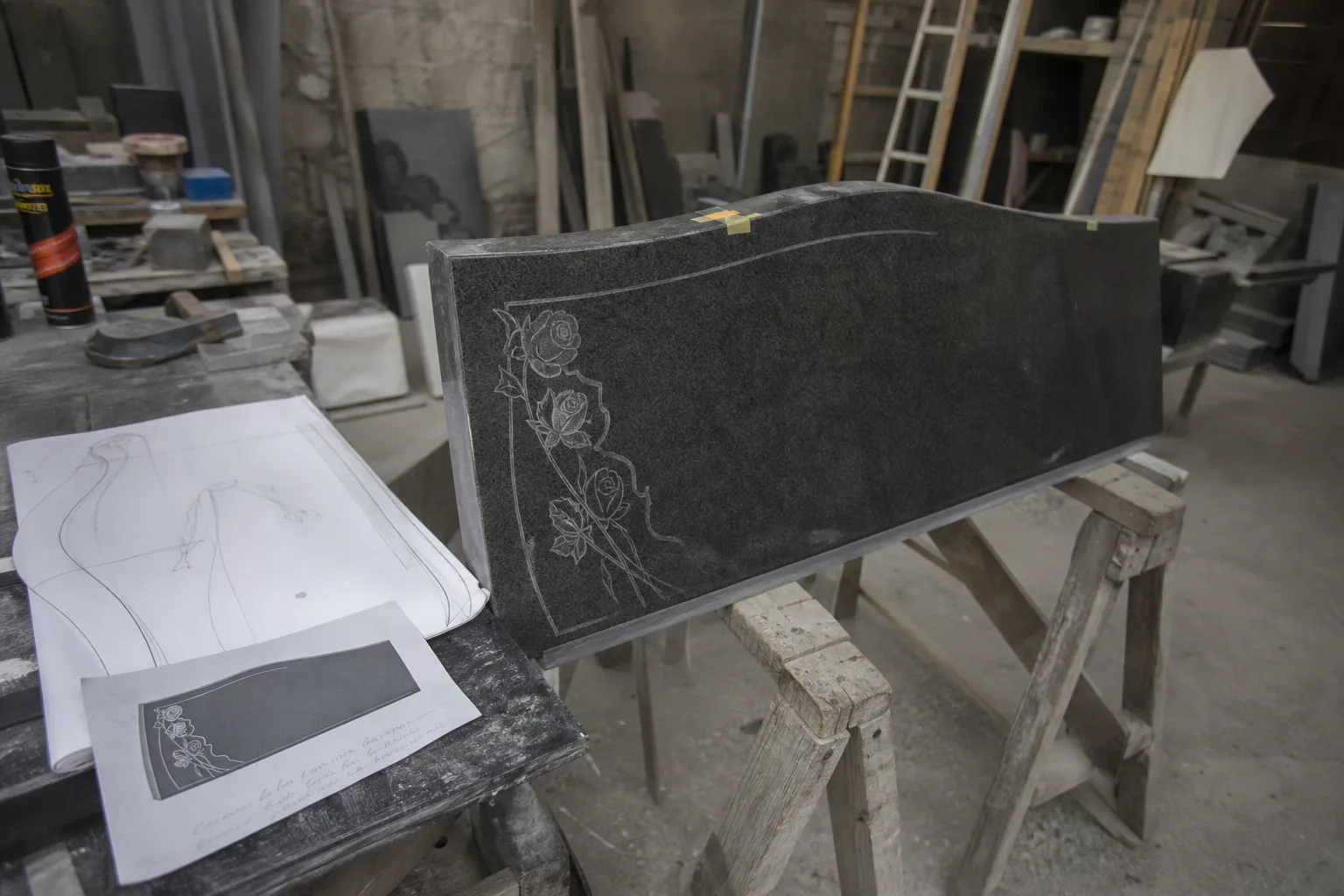
A memorial is one of the few purchases where the buyer, the seller, the installer and the owner of the ground are four different parties, and no single one of them holds the whole file. The family picks the stone. A monument dealer cuts and carves it. The cemetery approves it, sets the rules it has to satisfy, and often pours or inspects the foundation it will sit on. Each handoff is a place where a decision made in good faith becomes a decision nobody can undo, and most of the trouble families run into months later starts in one of those gaps.
What changed in the last several years, and why the rules got shorter
Two things moved at once. Cemetery ownership consolidated, with independent and church-affiliated grounds passing to larger operators that run standardized regulations across many properties, so a rule written for a section in one state now applies in another. At the same time, grounds maintenance got harder to staff and more expensive per acre, and the fastest way to control that cost is to control what sits in the grass. Flush markers mow over. Upright monuments require hand trimming, and hand trimming is labor. Rules that used to be permissive about height, base width, planting and vases have been rewritten in plainer and narrower language.
The second shift is compositional. A far larger share of families now choose cremation, which detaches the memorial decision from the burial decision entirely and pushes it into new categories: columbarium niches with fixed faceplate dimensions, cremation gardens with their own marker schedules, boulder and bench memorials, and shared ossuary walls. Those categories are newer, which means their rules are newer, and newer rules are enforced more literally because the staff enforcing them helped write them. A family assuming that a cremation memorial carries fewer constraints than a grave usually has it backward.
Supply changed too. Granite colors move in and out of availability depending on quarry output and import conditions, and a color shown in a catalog may carry a lead time measured in months rather than weeks. That matters because the memorial is frequently ordered under emotional pressure with an unspoken assumption that it will be in place by a particular anniversary. The order date and the setting date are separate facts, controlled by separate parties, and the dealer only controls one of them.
The handoff chain, written out
Here is the sequence that actually governs the job. The holder of the interment right, meaning whoever is named on the deed or certificate for that grave or niche, authorizes a memorial. The dealer prepares a drawing and a specification and submits it to the cemetery for approval against the current regulations. The cemetery approves, conditions or rejects it. A foundation is then ordered, sometimes poured by cemetery crews on a seasonal schedule and sometimes by the dealer under permit. Only after the foundation cures does the stone get set. Every step depends on the one before it, and the family typically has direct contact with only one link.
The failures collect at two joints. The first is between the funeral home and the monument dealer, which in many towns are separate businesses even when the arrangement conference makes them feel continuous. The funeral home has the correct spellings, dates and veteran status from the death certificate work; the dealer has the layout that will be carved. Nothing forces that information to travel. The second joint is between the dealer and the cemetery, where an approval that was verbal, or granted against last season's regulations, gets tested when a truck arrives with a stone that is an inch too wide for the section.
The fix is unglamorous and it works. Ask each party, in plain terms, what they are sending to the next party and when, then ask the next party to confirm receipt in writing. A single email that names the cemetery, the section, the lot or niche number, the stone dimensions and the approval date closes both joints. The Federal Trade Commission oversees how funeral providers disclose prices and itemize what a family is buying, and the same instinct applies downstream: get the specification on paper, because paper is what survives the handoff.
The choices that harden, and the ones that stay open
Some decisions are reversible at modest cost and some are effectively permanent. Wording, spelling and layout are permanent the moment the sandblast stencil comes off, which is why proof approval deserves a slow afternoon and a second reader who is not grieving. Material and color are permanent because a replacement stone is a new purchase. Orientation matters more than people expect: the direction a stone faces is set by section rules, not preference, and it determines whether the inscription reads to someone walking the path or standing in the grass. Height and base footprint are fixed by the foundation, and the foundation is concrete.
The companion stone deserves separate thought. A married couple often buys one monument with both names carved and one date left open, which saves money and guarantees a matching color and finish that may not be available two decades later. What it also does is commit the survivor to that cemetery, that section and that arrangement, at a moment when they may later want to move closer to a child in another state. There is a middle path many families miss: buy and set the stone with one side finished, and hold the second inscription as a separate future order with the dealer, documented in the file.
Genuinely open decisions include additional inscriptions on the back or the base, later cleaning and restoration, the addition of a permitted vase where rules allow it, and any digital element. Scannable plaques linking to an online memorial page are now permitted in some grounds and prohibited in others, and even where permitted, the link outlives no one's subscription automatically. Treat that as an accessory, not a foundation.
The everyday consequences nobody traces back
A year on, the memorial stops being a purchase and becomes a set of small facts about visiting. Whether you can leave cut flowers, or only a permitted in-ground vase, or nothing between mowing days. Whether a wheelchair can get within reach of the inscription, which depends on the path, the section grade and where the stone sits on the lot. Whether the marker settles and needs resetting, and whose bill that is, which the cemetery's rules answer and most families never read. Whether a mower has chipped a polished edge, and whether the dealer's warranty covers damage caused by a third party working for the ground's owner.
Those answers exist before you order. They live in the current regulations of the specific section, in the dealer's written warranty, and in the deed that names who may authorize work. Reading all three takes an hour, and it converts the permanent decisions into informed ones. Ask the cemetery for the regulations in force today, ask the dealer what they submitted and when it was approved, and ask both who pours and who inspects. The stone will be there a long time. The paperwork that made it possible should be just as easy to find.