Law
Your Photos, Texts and Notes Are Evidence. Which Ones Survive a Challenge
What separates a record that settles a dispute from one that gets waved away, from timestamps and provenance to consent rules and the number you will be asked to defend.
Law·Osman Duraklar
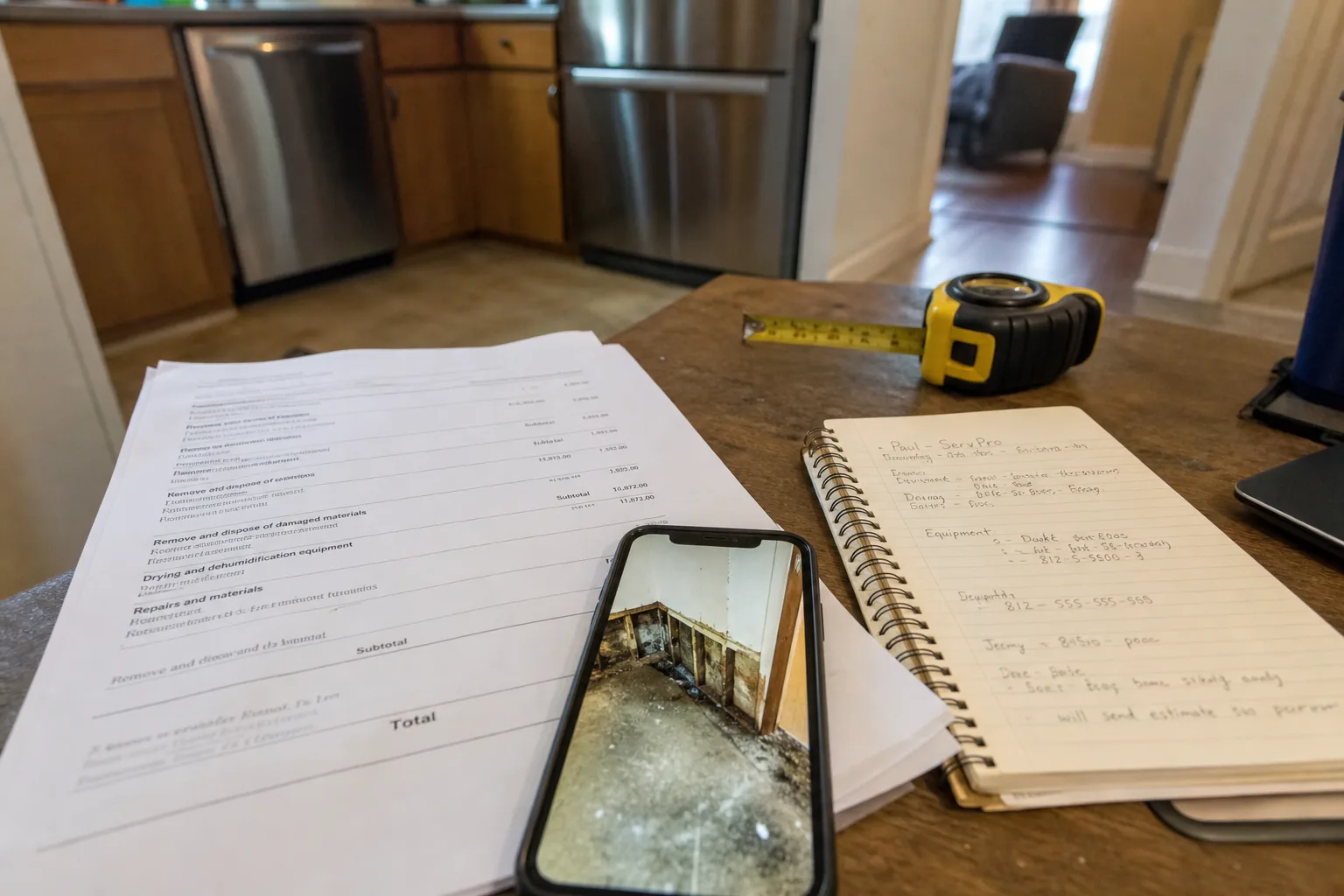
People arrive at a dispute with a folder and a grievance, and the folder is usually the weaker of the two. Not because the events did not happen, but because the record of them was assembled afterward, from memory, in a mood. Anyone who has run these through enough times, whether against an insurer, a contractor, a landlord or a card issuer, learns to sort a file quickly into three piles: material that will be accepted without argument, material that will be accepted if someone can explain where it came from, and material that will be politely set aside. The sorting rule is rarely about honesty. It is about provenance.
The record made at the time is a different species from the record made later
A note written the afternoon of the conversation, saved somewhere with a date attached, is treated as an account of what happened. A note written six weeks later, when the relationship has soured and the dollar figure is known, is treated as an argument about what happened. Both may be equally accurate. Only one is hard to attack. This is the oldest distinction in the business of proving things, and it is why the practiced complainant keeps a running log from the first phone call, before there is any dispute to log, and why the same person will tell you that the log's value is destroyed the moment it is retyped, cleaned up or backfilled.
The practical version is dull. Send yourself an email after each call, or send it to the other side: today at 2:15 you told me the joists would be sistered before the subfloor went down, please correct me if I have that wrong. That message does two things at once. It fixes the date, and it hands the other party a chance to object that they will almost never take. Silence against a written summary is not a legal admission in most settings, but a reviewer weighing two accounts will notice which one was put in writing at the time and left unchallenged for three months.
Photographs prove less than people assume, and more than they expect
A photograph on its own establishes that something looked a certain way at an unknown moment from an unknown position. What makes it evidence is the surrounding detail: the file's original metadata, which usually carries a capture date and often a location; a recognizable fixed object in frame that ties the shot to a place; a tape measure or a coin for scale; and a sequence, so the reviewer can see the same corner on three dates rather than one. The single dramatic close-up of a stain is the weakest photo in most files. The boring wide shot that shows where the close-up sits in the room is the one that does the work.
Metadata is fragile in a way that surprises people. Send a photo through a messaging app, drop it into a chat, or paste it into a document, and the capture data is frequently stripped or overwritten, leaving a file that appears to have been created the day you emailed it. Keep the originals on the device or in an untouched folder, export copies for sending, and if you ever need to establish the date, produce the original rather than the copy that has been around the block. Adjusters and attorneys ask for originals for exactly this reason, and the request is not suspicion so much as routine.
Recordings, consent, and the state you were standing in
Audio is the category where good intentions do the most damage. Whether you may record a call or an in-person conversation without telling the other party depends on state law, and the country is split: a majority of states permit recording when one participant consents, meaning you, while a substantial minority require that everyone on the call consents. The exact count shifts as legislatures amend statutes, so the honest answer is a range rather than a number, and the range is around a dozen states in the all-party camp. Cross-state calls complicate it further, since two different rules can touch the same conversation.
The consequence is not merely that an improper recording gets excluded. In several all-party states, making it is a crime and can expose you to civil damages, which turns your evidence into the other side's counterclaim. The workaround that costs nothing is to announce it: this call is being recorded, and I am happy to send you the file. Most people continue talking. Where announcing feels impossible, write the summary email instead. A contemporaneous written account you are allowed to have beats a recording you were not.
The number you will be asked to defend
Every dispute eventually reduces to a figure, and the figure is where files most often come apart. A round number is a red flag to anyone who reads these for a living, because damage does not arrive in multiples of five hundred. What holds up is a number with a visible origin: a written estimate on the contractor's letterhead with a scope of work attached, a paid invoice, a receipt with a date, a materials list with quantities. What does not hold up is a verbal figure attributed to someone who will not put it in writing, or a total assembled by adding a remembered price to a guess at labor.
Two or three independent estimates are better than one, and they are better still when they differ, because the spread tells the reviewer something true about the job. Someone who has done this repeatedly will report the range rather than pick the friendly end, and will explain the gap: one bid includes permit fees and disposal, another assumes the homeowner hauls the debris. That explanation is more persuasive than the lower or the higher number alone. Keep the estimates that came in unhelpfully low as well. Suppressing them is how a credible file becomes a contested one, and the other side usually finds them anyway.
Where the formal rules loosen, and what replaces them
Most consumer disputes never see a courtroom, and the places they do land, small claims court, an insurer's internal appeal, a state licensing board, a chargeback review, apply evidence rules loosely or not at all. Small claims judges routinely accept material that would be excluded upstairs. That looseness is not permission to be sloppy. When the formal rules step back, the decision maker falls back on ordinary judgment about which account is more likely, and ordinary judgment is unforgiving toward files that are internally inconsistent, undated, or built entirely from one party's narration. The standard becomes credibility, and credibility is mostly a function of specificity.
There is also a layer of protection that runs underneath the whole exercise. The Federal Trade Commission oversees unfair and deceptive practices in consumer transactions, and many states operate their own consumer protection statutes with their own complaint channels, which means a well-documented file often has more than one venue available to it. That matters for sequencing. A complaint filed with a licensing board or a state agency creates its own dated record, referenced by number, that exists outside your folder and outside the other party's, and which can later be produced by a third party rather than by you.
The through line is simple enough to apply on a Tuesday afternoon: keep the thing that was made at the time, keep it in its original form, and be able to say where every number came from. Files built that way tend to resolve earlier and at less expense, often before anyone has to decide anything formally, because the other side can see what the review will find.