Personal Finance
A Seven-Year-Old Appraisal and a Current Market. What the Re-Rating Actually Costs
A scheduled ring, an appraisal left untouched for seven years, and the handover between appraiser, agent and underwriter that decides what a valuables claim is worth.
Personal Finance·Neville Pemberton
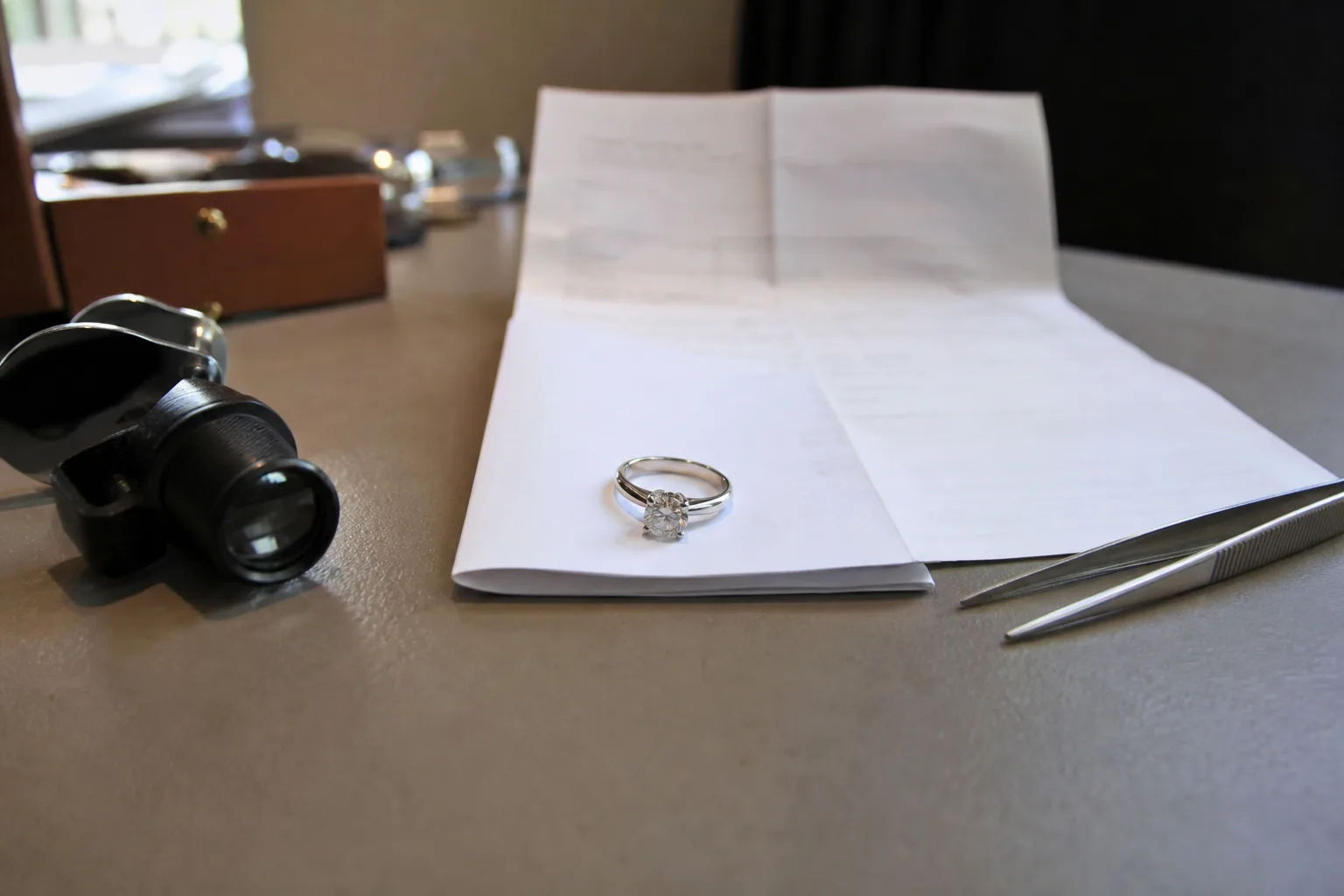
The file that produced this article belonged to a household with four scheduled items: an inherited solitaire, a second ring made from reset stones, a men's mechanical watch, and a pair of earrings that mattered more sentimentally than financially. All four sat on a personal articles schedule with a large national carrier, added at once when the household bought its first house. The paperwork was clean. The appraiser had been competent, the agent had transmitted the documents correctly, and the underwriter had accepted them without a query. Seven years later the solitaire was lost, and the clean file turned out to describe a market that no longer existed.
What the carrier was holding, and what it was not
A scheduled item is insured against a number, not against an object. The appraisal that supported the solitaire described the stone accurately, gave a carat weight, a color and clarity range, a mounting description and a valuation, and then stated the basis of that valuation, which in this case was retail replacement at the time of writing. That last clause is the whole exposure. The carrier had agreed to a figure derived from a specific market on a specific date, and nothing in the policy obligated anyone to revisit it. The household read the schedule annually on the renewal declarations and saw four familiar numbers, which felt like confirmation rather than a warning.
The handover is where this quietly fails. The appraiser's job ends when the document is signed, and a good appraiser will say in writing that the valuation is current only as of the date of inspection. The agent's job is to place the item on the schedule and forward the supporting paper. The underwriter's job is to accept or decline the amount presented. None of those three parties owns the question of whether the number is still right in year five, and because no one owns it, no one asks it. The document keeps its authority long after it has stopped being accurate.
Why the number moves even when the ring does not
Three separate forces push a valuation off its original figure, and they do not move together. Metal prices are the visible one, and a mounting that was priced when gold sat at one level is simply a different manufacturing cost later. Stone pricing is less intuitive, because grading conventions, cutting fashion, and demand for particular sizes and shapes all shift, and a stone that was ordinary in one decade can be sought in the next. The third force is retail structure: the replacement basis assumes a comparable item can be bought at retail, and the mix of independent jewelers, chain retailers, and online sellers in a given market changes what comparable actually means.
Terminology drifts as well, which matters more than most owners expect. The Federal Trade Commission is responsible for the guides that govern how jewelry materials may be described in commerce, and the vocabulary an appraisal uses to characterize treatment, origin, or synthetic content is the vocabulary a claims adjuster will read years later. An older document written to an earlier convention is not dishonest, but it can be ambiguous under current reading, and ambiguity in a claim file is resolved slowly and rarely in the owner's favor. Refreshing the language is part of what a re-appraisal buys.
What the coverage costs, and what drives that cost
Scheduled valuables are priced as a rate per hundred dollars of insured value, applied annually, and the rate is set by a short list of variables the carrier can actually underwrite. Item type dominates, because loose-stone rings worn daily present a different loss profile than a watch kept in a drawer or a strand of pearls worn twice a year. Location follows, since the carrier is pricing theft exposure by territory. Storage matters where the policy recognizes it, and a vault or bank box credit is real money on high-value items. Deductible choice, agreed value versus replacement cost, and whether the item is worn or stored complete the picture.
The important arithmetic runs in the other direction from what owners assume. Raising a schedule to a current valuation raises the premium proportionally, because the rate is applied to the value, and a household that has resisted re-appraisal for a decade is often resisting a premium increase it has already earned by owning an appreciating object. A large carrier will usually apply the increase at the next renewal rather than mid-term, and will process the change from a single document. The cost of being correct is a known annual figure. The cost of being wrong is discovered once, at the worst moment.
What the re-appraisal itself costs, and what a carrier will accept
Appraisal fees are charged by the hour or by a flat fee per item, and a reputable appraiser will not price the work as a percentage of the resulting value, because that arrangement creates an obvious incentive problem and most carriers know it. Complexity drives the hour count: a single-stone ring with existing grading documentation is quick, while a piece with multiple stones, unclear treatment history, or a mounting that needs to be valued as bench work takes considerably longer. Updates to an existing appraisal from the same appraiser generally cost less than a first inspection. Larger carriers publish credential requirements, and meeting them the first time avoids a second fee.
The household in the file did the work in a single afternoon on the three surviving items, sent one PDF to the agent, and had revised schedule amounts on the declarations at renewal. The premium rose by a proportion they could state exactly, which is a better position than the one they had occupied for seven years. The lesson they took was procedural rather than financial: they set a recurring calendar entry, three years out, addressed to themselves, because the only party with a standing interest in the accuracy of that number is the person who owns the ring.
Treat the appraisal as a perishable document with a date on it, and the handover between appraiser, agent and underwriter stops being a place where accuracy leaks out. Nobody else is going to notice that the paper has aged. The owner notices, or the adjuster does.