Careers & Jobs
Starting a Trade? The Tool List and the Folder That Set Your First-Year Cost
Entering a trade costs more than tuition, and most of the difference sits in tools bought too early and paperwork nobody told you to keep.
Careers & Jobs·Osman Duraklar
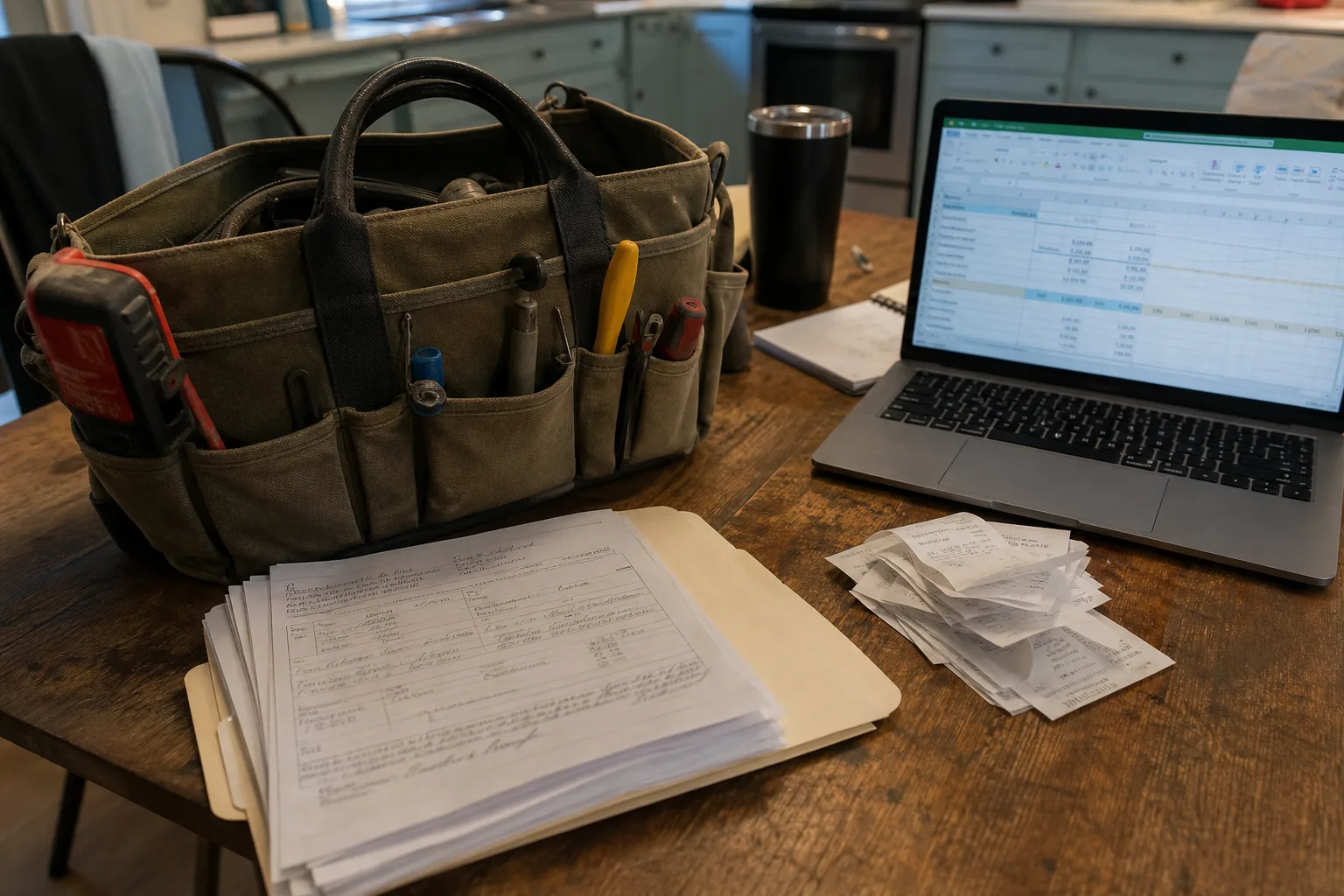
The published cost of getting into a trade is almost never the amount that leaves a household checking account in the first twelve months. Tuition or a program fee is the figure that gets quoted, because it is the only one printed anywhere, and it is usually the smaller half. The rest arrives in irregular lumps: a tool list handed over at orientation, a certification card that expires, a work boot requirement that turns out to be specific, a background check, a set of transcripts, a second vehicle when the job sites move. None of that is hidden. It is just scattered across people who each assume someone else mentioned it.
Find out who is actually writing the tool list
Three different parties will tell you what tools you need, and they are answering three different questions. A school's list is built to make sure no student is idle during a lab, so it errs toward completeness and toward things that get used once. An employer's list reflects what the company supplies, which is often more than a new hire expects, because power tools and meters are company assets that get tracked, insured and calibrated. A foreman's list is the honest one, and it is short: what you will be handed a task with on Tuesday. Ask all three, in that order, and buy against the third.
The gap between those lists is where the money is. A first-year apprentice who buys the school list outright will own items that stay in the box for two years, and will have paid retail for them during the one period when income is lowest. The same person who asks a working journeyman what came out of the bag last week will spend a fraction of that, and will spend it on things that wear out. Neither approach is wrong on the merits. One of them just front-loads the entire cost into the month you can least afford it.
Buy in the order the work arrives, not in the order the list is printed
Tool spending has a natural sequence, and it maps to what you are allowed to touch. Hand tools, personal protective equipment and whatever the site requires at the gate come first, because you cannot start without them and because they are the cheapest category. Measuring and testing equipment comes when you are trusted to take a reading that someone else relies on. Cordless platforms come last, and they come as a decision rather than a purchase, because once you own two batteries in one brand you have quietly committed to that brand for years.
The spread on any single item is wide enough that averages are useless. The cheapest version that meets a spec and the version a working crew actually carries are frequently separated by a multiple rather than a percentage, and the reason is duty cycle, not branding. A tool used twice a month and a tool used forty times a day are different products wearing the same name. For year one, the defensible rule is to buy cheap where failure costs you an inconvenience and buy well where failure costs you a day, a callback, or a hand.
The folder does more work than any tool in the bag
Every route into a trade produces paperwork that someone will demand later, usually at the worst possible moment, and usually in a form you cannot reconstruct after the fact. Signed hour logs are the obvious one. Registered apprenticeship, which the Department of Labor oversees, runs on documented on-the-job hours tied to specific work processes, and the signature that verifies them belongs to a supervisor who may not work there in three years. Get the log signed on a schedule you control, keep a copy that is not stored on a company system, and record which categories of work each block of hours fell under.
Around the hour log sits a thinner stack that matters just as much. Safety and specialty cards with expiration dates, and the date you took each one rather than the date printed on the plastic. Transcripts or completion letters from any classroom component, requested while the registrar still has your file active. Proof of the license, endorsement or medical certificate a vehicle requirement depends on. Receipts for tools, boots, books and testing fees, because whether any of that reduces your tax bill turns entirely on whether you were an employee, a contractor, or a student that year, and on paper you kept.
Keep it simple enough that you will actually maintain it. One folder, scanned at the point of receipt, named by date first so it sorts itself, backed up somewhere that is not the phone you drop on job sites. The point is not tidiness. The point is that a missing signature can cost you months of credited hours, and a missing receipt costs you the deduction quietly, without anyone telling you it happened.
What the household feels, month by month
A single earner changing trades is a household cash-flow event, and the strain rarely lands where the budget expected. Wages in a first apprenticeship year are a percentage of scale rather than scale, and they rise on a schedule tied to hours and coursework, so the low point is early and knowable. Against that, the outflows cluster: tools in the first weeks, fees at intake, fuel that scales with how far the assignments sit from your driveway. The mismatch is usually two or three months long, and a household that names those months in advance handles them very differently from one that discovers them.
The second-order costs are the ones that surprise people. Start times move earlier than an office job, which reshuffles childcare and sometimes a partner's shift. Vehicle wear accelerates, and so does the insurance conversation if a personal truck starts carrying tools. Clothing becomes a consumable rather than a wardrobe. None of it is ruinous, and all of it is predictable enough to sit in a spreadsheet before you sign anything. Ask a current apprentice one year ahead of you what their monthly outflow looks like now versus at intake, and you will get a better number than any brochure produces.
Ranges are the honest answer, so ask for the ends of them
When a program, a union hall or an employer gives you a single figure for what year one costs, ask what it includes and what the highest and lowest recent versions of that figure were. People who know the answer will give you a spread and explain what moves it: whether tools are loaned, whether books are bundled, whether testing fees repeat. People who give you a round number twice have not looked. That one question, asked of three sources, will tell you more about the route than the cost sheet does, and it costs nothing but a phone call.
Before committing, write down the three lists you were given, the folder contents you will need to produce in year two, and the two or three months where the money is tightest. Then go back to whoever recruited you and check the sheet against theirs. The corrections you get are the real orientation.