Health
Your Therapist Moved States and Your Sessions Continued. What the License Actually Covers
Licensure compacts have quietly changed which clinician can legally treat you and where, but a compact privilege settles less than most patients and practitioners assume.
Health·Harriet Bosworth
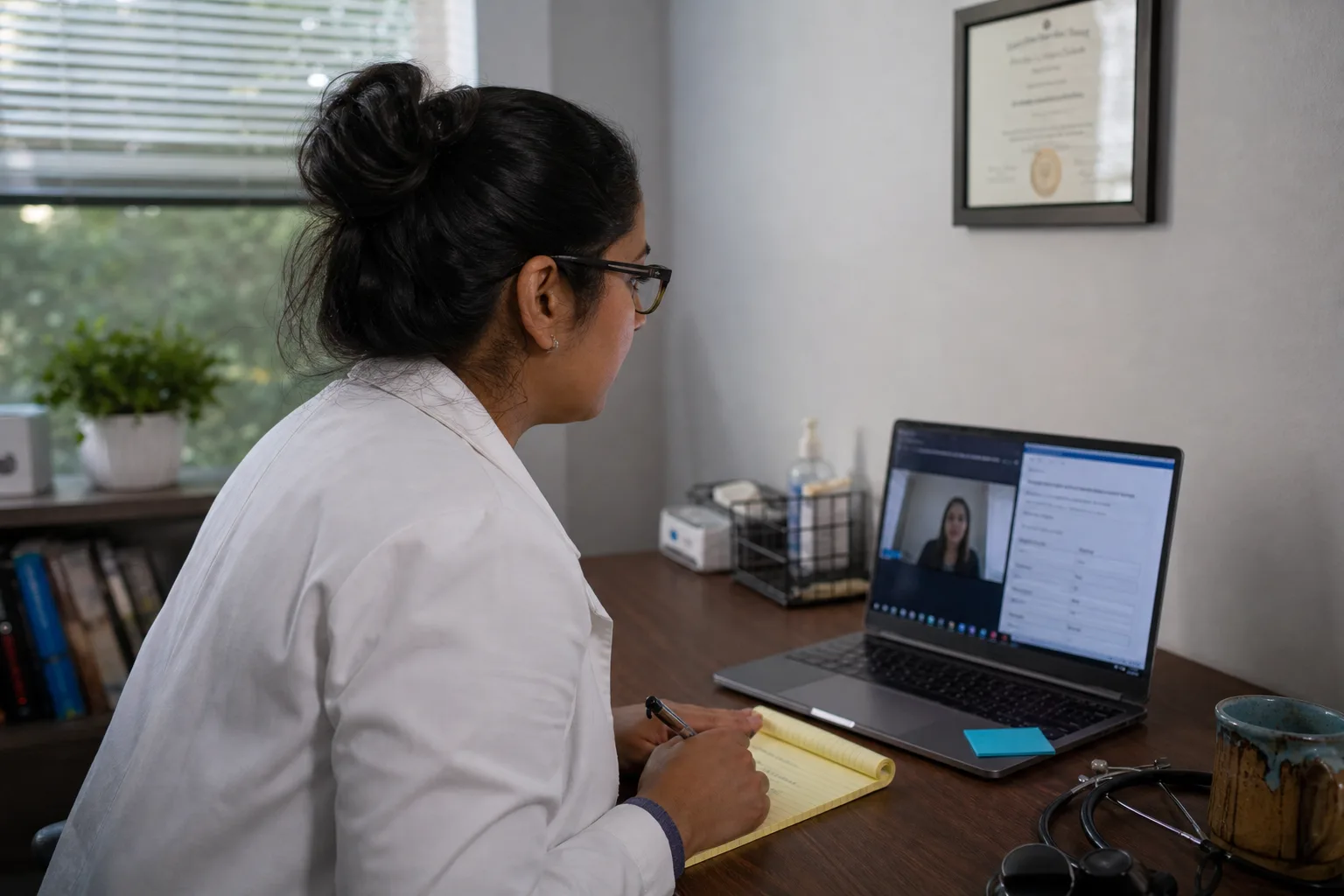
The rule that governs almost every cross-state clinical encounter is older than video calls and simpler than it looks: care is delivered where the patient is sitting, not where the clinician is sitting. A licensing board's authority runs to the borders of its state, and the person it exists to protect is the resident inside those borders. That single principle explains why a psychologist in Ohio treating a patient who has driven to Kentucky for the weekend has, in the eyes of two boards, done something that needs an answer. For years the answer was awkward. It has recently gotten better.
Why location of the patient, not the clinician, decides the license
State licensure exists because a state legislature decided that certain work carries enough risk of harm that the public needs a body able to investigate complaints, set entry standards, and remove someone's ability to practice. That body can only do those things to people it has jurisdiction over. If a clinician licensed two states away injures a resident and the home state board is the only one that can act, the injured resident is dependent on a distant agency with no particular obligation to them. So boards drew the line at the patient's location, which keeps enforcement close to the person who might need it, and that logic has survived every technological change since.
The consequence, once telehealth stopped being a novelty, was a licensing problem at scale. A clinician with a full caseload in a metropolitan area that straddles two or three states was either licensed in all of them, at full cost and full renewal burden for each, or was turning away patients who lived twenty minutes away. College students crossing state lines in September broke continuity of care by moving. Military families broke it by transferring. None of this was a failure of the underlying rule. It was a failure of the administrative machinery built around it.
What changed, and the reason it changed when it did
The mechanism that fixed it is the interstate compact, which is a statute enacted in identical form by each participating state, creating a shared arrangement that no single state could build alone. Nursing had one first. Medicine followed with an expedited pathway. Physical therapy, psychology, counseling, occupational therapy, social work, and several others have since built their own, each at a different stage of enactment and implementation, which is the detail that trips people up. A compact exists in law once enough states pass it. It becomes usable only once the commission behind it has a working data system, a fee schedule, and a process for issuing the privilege.
The acceleration came from the period when in-person appointments stopped and emergency waivers let clinicians practice across state lines temporarily. Those waivers expired. The demand they revealed did not, and legislatures that had watched cross-state care work for two years without a wave of complaints found the compact bills easier to pass. The Federal Trade Commission has long taken an interest in how occupational licensing rules affect competition and the movement of qualified workers, and that framing gave state sponsors an argument beyond convenience. Portability, not deregulation, was the pitch, and it held.
What a compact privilege guarantees, and where it stops
A privilege granted under a compact means one thing precisely: you may lawfully practice in the remote state without holding that state's separate license. It does not mean the remote state's rules stop applying to you. Scope of practice is set by the state where the patient sits, so a clinician whose home state permits a particular assessment, referral, or prescribing authority may find that authority narrower across the line. Mandatory reporting duties, consent requirements for minors, telehealth documentation standards, and the rules on what must be disclosed at the start of a remote session all follow the patient's state as well. The privilege moves the license. It does not move the rulebook.
Discipline works the same way and surprises people more. The remote state can investigate a complaint and can revoke the privilege it granted, and the home state board will generally hear about it, because the shared data systems that make compacts function are also reporting systems. A clinician who loses a privilege in one state can lose it everywhere, since most compacts condition the privilege on an unencumbered home state license. The compact also requires a genuine primary state of residence, which is verified, so the arrangement cannot be used to shop for the easiest board and then practice everywhere from a mailing address.
Two further things a privilege does not settle. It does not put a clinician on an insurance panel in the remote state, which is a separate contractual process with its own credentialing timeline, often measured in months. And it does not extend malpractice coverage automatically, because policies are written by state and by scope, and a carrier that has not been told about cross-state work may take the position that it was never underwritten. Both are solvable. Both need to be solved before the first appointment rather than after the first claim.
The checks that are worth running before the first appointment
For a patient, the useful question is not whether the clinician is licensed, which they almost certainly are, but whether they hold authority in the state the patient will physically be in during sessions, including any state they routinely travel to. Every state board publishes a license lookup, and compact privileges appear in those records or in the compact commission's own directory. Ask what happens if you move mid-course of treatment, because the honest answer sometimes involves a referral rather than a continuation, and knowing that early is worth more than discovering it in week nine.
For a practitioner or a clinic administrator, the work is tracking status by state rather than by person. A roster that records only which licenses a clinician holds will not tell you whether a privilege has lapsed, whether a state has since joined a compact and changed the cheapest route to coverage, or whether a patient's relocation has quietly moved a case into a jurisdiction nobody is authorized in. Clinics that got this right built one place where patient location, clinician authority, and payer credentialing sit together, and they check it when a patient's address changes rather than at annual renewal.
The compacts have not loosened what it takes to become a clinician, and that was never their purpose. What they changed is the friction between an established credential and the geography of the person who needs it, which is why the practical effect shows up in continuity of care rather than in standards. The verification burden is still real, and it still sits with whoever is arranging the appointment. It is now a question with a findable answer.